



In warehouse planning, many people determine the weight of the goods first, and then choose the forklift tonnage. If the heaviest goods are 1.6 tons, they purchase a 2-ton forklift; if they plan to add heavier goods in the future, they upgrade to 2.5-ton or 3-ton.
This logic seems sound, but it overlooks a crucial fact:
A forklift's ability to "lift goods" does not mean it can "complete picking, turning, and stacking within existing aisles."
In narrow aisle environments, the limiting factor for efficiency is often not the rated load, but rather the forklift's turning radius, the width of right-angle stacking aisles, pallet depth, load center, and safety distance in front of the racks. If these parameters are not included in the same calculation model, even if the forklift tonnage fully meets the requirements, problems such as repeated reversing, fork misalignment, overhead guards approaching the racks, and even reducing the number of storage spaces to allow the forklift to pass may still occur on-site.
Therefore, selecting a forklift for narrow aisle locations cannot simply be about "how many tons of forklift are needed," but also requires answering another question:
Can this forklift, carrying actual goods, complete a 90° turn and forklift entry in the narrowest possible space in one go?
I. Why are narrow aisle locations most likely to expose forklift selection errors?
Warehouse aisles are not merely passageways, but rather workspaces where forklifts perform multiple consecutive actions:
1. Approach the target location along the main aisle;
2. Slow down and adjust the forklift's position;
3. Turn approximately 90°;
4. Align the forks with the pallet holes;
5. Move forward to retrieve goods or complete shelving;
6. Reverse and straighten the forklift;
7. Drive away from the work area with the goods.
If space is insufficient at any stage, the operator will need to make additional corrections.
For example, a forklift may theoretically be able to enter a 3.2-meter-wide aisle, but if it requires three corrections to align with the pallet after carrying goods, it is not truly suitable for that aisle. After long-term operation, the following problems will manifest:
* Increased single-pallet handling time;
* Increased frequency of collisions between rack uprights and guardrails;
* Accelerated tire wear during stationary turning;
* Operators are constantly under high-pressure fine-tuning conditions;
* Vehicle queues are more likely to occur in aisles during peak hours;
* Lower-level storage locations are forced to be reduced to ensure passage;
* The efficiency of novice drivers is significantly lower than that of experienced drivers.
Frankly, many companies only discover these problems after the forklifts have been delivered. At this point, adjusting the rack layout, replacing forklifts, or reducing pallet size usually costs far more than conducting on-site measurements before purchase.
"Being able to turn" is not a passing standard
Judging whether a 2-ton forklift is suitable for narrow aisles cannot be based on whether a skilled driver can barely complete the maneuver.
A more reasonable acceptance standard is:
* A qualified driver can reliably complete the operation;
* Frequent reversing corrections are not required;
* Safe passage is possible both with and without cargo;
* A reasonable gap is maintained between the goods and the shelving;
* Efficiency does not drop significantly during peak hours;
There is still operational leeway even with minor deviations on site.
If a task can only be completed by the most skilled driver, it indicates insufficient engineering margin between the equipment and the space.
II. Turning radius, aisle width, and right-angle stacking width are not the same parameter.
This is the most confusing aspect in narrow aisle selection.
1. Minimum outer turning radius
The minimum outer turning radius usually refers to the turning trajectory radius formed by the outermost part of the forklift body when the steering wheel is turned to its limit.
It primarily reflects the forklift chassis's inherent mobility, but it typically doesn't represent all the space required for a forklift to complete stacking operations, as actual operation also involves:
* Fork length;
* Pallet and cargo length;
* Front overhang;
* Load extension;
* Body width;
* Shelf clearance;
* Attachment thickness and reach.
Therefore, even if two forklifts have similar turning radii, their actual stacking aisle requirements may differ.
2. Minimum Right-Angle Stacking Aisle Width
The right-angle stacking aisle width is typically used to describe the space required for a forklift to make a 90° turn within the aisle and deliver a pallet to its designated location.
This parameter is closer to real warehouse operations than the turning radius, but it must be further confirmed during procurement:
* What size pallet was used in the test?
* What is the length of the pallet along the fork direction?
* Does it include the specified safety clearance?
* Were side shifters installed during the test?
* What type of mast and fork configuration was used?
* Does the parameter correspond to empty load or standard load?
* Is the value for vehicle turning space or full stacking space?
If the supplier only provides a "minimum aisle width" without specifying the testing conditions, this number cannot be directly used for racking planning.
3. Existing Net Aisle Width
A so-called 3.2-meter aisle on site may not actually have 3.2 meters of usable space. The following must be deducted during measurement:
* Rack uprights and crash barriers;
* Pallets or goods protruding from the racks;
* Fire safety facilities;
* Walls, columns, and door frames;
* Temporarily stored pallets;
* Ground drainage ditches or non-driving areas;
* Rack installation errors;
* Local narrowing caused by non-parallel building structures.
Therefore, selection should be based on the actual net width at the narrowest point, not the nominal dimensions on the warehouse design drawings.
4. Cross-aisle Turning Space
Some warehouse aisles are wide enough, but forklifts cannot smoothly turn from the main aisle into a side aisle. The real limitations in this case come from:
* Aisle entrance width;
* Main aisle width;
* Racking guardrails at the entrance;
* Doorway location;
* Forklift front sway after loading;
* Whether there are walls or equipment opposite.
Therefore, measurements cannot be taken only in the middle of the racking. Aisle entrances, corners, loading/unloading platforms, and charging areas should all be included in the turning trajectory verification.
III. Why doesn't "2 tons" mean it can lift 2,000 kg in all situations?
The 2-ton rating of a 2-ton Forklift is typically the rated capacity obtained under specified load center, mast configuration, and lifting height.
A common rated load center distance is 500 mm. This roughly corresponds to a standard load with a uniform center of gravity distribution and a depth of approximately 1,000 mm along the fork direction. If the load is longer, the center of gravity shifts forward, increasing the overturning moment on the forklift.
A simplified formula can be used for initial screening:
> Rated load × Rated load center distance ≈ Actual load × Actual load center distance
Assuming a forklift has a rated load of 2,000 kg and a rated load center distance of 500 mm. If the actual load center of the load moves to 600 mm:
> Preliminary theoretical load limit ≈ 2,000 × 500 ÷ 600
> ≈ 1,667 kg
This is only a preliminary estimate and cannot replace the manufacturer's remaining load curve. Actual capacity is also affected by mast height, attachment weight, load center of gravity distribution, and dynamic operating conditions.
The following conditions will further reduce the actual usable load:
* Using a side shifter, swivel, or paper roll clamp;
* The center of gravity of the load is not at its geometric center;
* The pallet is too long along the fork direction;
* The load is not close to the fork carriage;
* Using extended forks;
* Stacking is done at a high position;
* The mast is tilted forward or the forklift is on a ramp;
* There are depressions, seams, or lateral slopes in the ground.
Therefore, a long load weighing only 1.7 tons may be more dangerous for some 2-ton forklifts than a standard-sized 2-ton pallet.
Don't solve all problems with increased tonnage
After discovering that a 2-ton forklift is insufficient, many purchasing personnel will directly choose a 3-ton forklift. However, higher tonnage usually means:
* Longer forklift body;
* Increased turning radius;
* Increased weight;
* Higher ground load requirements;
* Increased energy or fuel consumption;
* Increased tire and braking system costs;
* Increased required aisle width.
If heavy loads only account for 5% of all tasks, using a larger forklift for all daily light-load operations may not be economical. A more reasonable solution might be to retain a flexible 2-ton model and allocate a larger forklift specifically for handling a small number of heavy loads.
IV. Four Common Misconceptions and Their Hidden Costs
Misconception 1: Comparing only tonnage and purchase price
Price quotes usually place rated load, power type, lifting height, and price in the most prominent position, while turning radius and aisle requirements are often relegated to the end of the parameter list.
However, in narrow aisles, a forklift with a lower purchase price but requiring multiple adjustments will continuously result in efficiency losses.
Assuming a forklift completes 100 pallet handling operations per day, with each operation adding 12 seconds due to turning and alignment:
> 100 operations × 12 seconds = 1,200 seconds
> That's a loss of 20 minutes per day
If operating 300 days a year, a single forklift would lose approximately 100 working hours. This doesn't even account for aisle congestion, rack collisions, and tire wear.
Misconception Two: Judging Passability by Forklift Width
Forklift width only indicates whether the vehicle can enter an aisle in a straight line, not whether it can turn and stack.
A forklift approximately 1.2 meters wide can easily enter a 2.5-meter aisle, but when making a 90° turn with a 1.2-meter deep pallet, the front of the goods will create a larger sweeping area. The real potential collision point is not the side of the forklift, but rather:
* The outer corner of the pallet;
* Protruding parts of the goods;
* The tips of the forks;
* The rear corner of the forklift counterweight;
* The outer edge of the overhead guard.
Myth 3: Designing Strictly Based on Specification Table Limits
Manufacturers' minimum aisle parameters are usually based on specified test conditions. In real warehouses, the following issues may arise:
* Pallet size errors;
* Packaging deformation;
* Goods exceeding pallet edges;
* Uneven ground causing vehicle swaying;
* Inconsistent driver steering timing;
* Slight misalignment of rack uprights;
* Debris or packaging material within the aisle.
Therefore, specification table limits are suitable for vehicle comparisons, but not for using as the sole boundary for on-site design without verification.
Myth 4: Using Original Load and Aisle Data After Installing Side Shifters
Side shifters reduce lateral alignments, which is valuable for narrow aisle operations. However, they also increase attachment weight and shift the load center of gravity forward.
This is a typical engineering trade-off:
* It may shorten alignment time;
* It may also reduce high-level residual load;
* It can reduce vehicle lateral movement;
* But it may change the overall vehicle length and aisle requirements.
Therefore, after configuring the attachments, the capacity nameplate, remaining load, and right-angle stacking width must be reconfirmed; the data from the base model cannot be used.
V. A Directly Implementable Selection Process for Narrow Aisles
Step 1: Establish a Real Load Profile
Don't just record the "average load weight." At least collect:
It is recommended to focus on analyzing the maximum normal load and the 95th percentile load, rather than being led astray by a few abnormally heavy loads.
Step Two: Creating a Warehouse Space Measurement Table
Measurers should carry a measuring tape or laser rangefinder and record:
* The narrowest clear width of each aisle;
* The width of main and branch aisles;
* The diagonal space at aisle entrances;
* The spacing between rack uprights;
* The distance pallets protrude from the racks;
* The clear width and height of doorways;
* The minimum height of beams;
* The location of columns, railings, and fire-fighting facilities;
* The width and slope of ramps;
* The turning space of loading and unloading platforms;
* The access routes to charging or refueling areas.
Measure at least three locations: the front, middle, and back of the aisle. Do not assume that two rows of racks are perfectly parallel.
Step 3: Initial Screening with Parameters
Then Verifying Turning Trajectory, Initial screening can be done using the following conservative approach:
> Preliminary Space Requirements = Forklift Turning Envelope + Cargo Extension Impact + Operational Safety Margin
Due to the geometric overlap between the cargo and vehicle turning trajectories, this is not an exact aisle calculation formula, but it is suitable for quickly eliminating obviously unsuitable models.
Upon entering the final selection stage, the supplier should be requested to provide:
* Right-angle stacking aisle width corresponding to the pallet size;
* Overall vehicle dimensions with attachments;
* Standard test condition description;
* Forklift turning trajectory diagram;
* Residual load curve at a specified height;
* Capacity data at different load center distances.
If the project is large-scale, the warehouse floor plan and equipment dimensions can be imported into CAD to simulate the complete trajectory of the forklift entering the aisle from the main aisle, turning, picking up goods, and exiting.
Step 4: Conduct On-Site Testing with Cargo
On-site testing should not simply involve the forklift making one empty turn. It is recommended to use real or equivalent-sized simulated loads and complete the following actions:
1. Enter the narrowest aisle from the main aisle;
2. Complete retrieval and placement at the bottom storage location;
3. Complete retrieval and placement at the highest frequently used storage location;
4. Test the racks on both sides;
5. Test forward entry and reverse exit;
6. Repeat the operation with a driver of average skill level;
7. Record the number of corrections and the time per cycle;
8. Check the minimum distance between the goods and the vehicle body and the racks.
If the driver needs to rely on extreme steering, rapid switching between forward and reverse, or if the operating trajectory varies greatly each time, it indicates that the solution lacks safety margin.
Step 5: Compare Models Using the Same Set of Data
When comparing 2-ton, 2.5-ton, and 3-ton forklifts, the same operating condition table should be used; do not compare only the catalog data.
The ultimate goal is not to choose the largest tonnage equipment, but to find a balance between safe load, space efficiency, and TCO.
VI. How to determine if a 2-ton Forklift is a more reasonable choice?
A 2-ton forklift is generally worth prioritizing when the following conditions are met:
* Most goods are between 1.0 and 1.5 tons;
* Goods approaching 2 tons constitute only a small percentage;
* Pallet sizes are standard and the center of gravity is stable;
* Warehouse aisle and corner space are limited;
* Operations primarily involve indoor handling and rack stacking;
* Heavy-duty clamps are not frequently used;
* Lifting height is within the standard range;
* The ground is flat, with minimal ramp operations.
However, a 2-ton forklift should not be used simply because of narrow aisles if the following conditions exist:
* Goods frequently reach 1.8 to 2.0 tons;
* The load center frequently exceeds 500 mm;
* Goods are long and narrow, unevenly loaded, or have an uncertain center of gravity;
Heavy-duty attachments such as paper roll clamps and swivels are required;
Goods nearing their rated load require high-level storage;
The forklift needs to repeatedly ascend and descend slopes;
The unit weight of goods is expected to continue to increase in the future.
In this situation, a reassessment of higher-tonnage forklifts, compact chassis, racking layouts, or mixed fleet solutions is necessary.
Different Problems Require Different Solutions
This step is crucial. Because "cannot be moved," "cannot turn," and "moves too slowly" are three different problems that cannot be solved simply by increasing forklift tonnage.
VII. From Specifications to Real-World Applications: OXPLO Selection Recommendations
Taking the OXPLO CPD20 electric forklift as an example, its website specifications list the following basic data:
* Rated load: 2,000 kg;
* Rated load center distance: 500 mm;
* Two-stage 3-meter mast;
* Overall width: 1,164 mm;
* Minimum outer turning radius: 2,190 mm;
* Minimum right-angle aisle width listed in the specifications: 2,230 mm;
* Fully loaded travel speed: 17 km/h;
* Fully loaded lifting speed: 530 mm/s;
* 76.8V/280Ah lithium battery.
These parameters indicate that this model can be considered for standard pallet handling and space-constrained warehousing scenarios, but it cannot be directly concluded that "a 2.23-meter aisle can definitely complete stacking."
Before formal procurement, it is still necessary to confirm the pallet size, testing methods, safety clearances, and attachment configuration corresponding to the 2,230 mm parameter, and conduct turning tests in actual aisle conditions.
If the working conditions include outdoor roads, frequent cross-area handling, or lack of charging facilities, diesel-powered options can be further compared. However, the power type does not eliminate space constraints. Even if a diesel forklift has the same rated load of 2 tons, its operating efficiency in narrow aisles may be lower than that of an electric model if its body size and turning radius are larger.
When matching models, OXPLO recommends that customers provide at least the following information:
* Maximum normal load;
* Length, width, and height of goods or pallets;
* Center of gravity of goods and distance from the load center;
* Maximum lifting height;
* Narrowest clear aisle width;
* Main aisle and aisle entrance dimensions;
* Doorway height;
* Ground and ramp conditions;
* Daily working hours;
* Power type preference;
* Planned attachments.
Only by combining this data can we determine whether to choose a 2-ton forklift, a higher tonnage vehicle, or to readjust the racking and handling routes.
Final Pre-Purchase Checklist
* [ ] Is the maximum normal load recorded, instead of just the average weight?
* [ ] Is the actual depth of the pallet along the fork direction measured?
* [ ] Is the actual load center distance confirmed?
* [ ] Is the residual load curve obtained at the target height?
* [ ] Is the effect of side shifters or other attachments calculated?
* [ ] Is the narrowest point of the aisle measured, instead of the dimensions on the design drawings?
* [ ] Is the space between the main aisle and the side aisle checked?
* [ ] Are the test conditions for the right-angle stack width clearly defined?
* [ ] Is the field test performed using actual size loads?
* [ ] Is the single-cycle time and number of corrections recorded?
* [ ] Are margins reserved for pallet error and driver variation?
* [ ] Was the long-term TCO of different tonnage options compared?
FAQ
Q1: What is the minimum aisle width required for a 2-ton forklift?
A1: There is no fixed answer applicable to all models. It needs to be calculated considering the outer turning radius, pallet depth, front overhang, attachments, cargo protrusion, and safety clearance. The width of the right-angle stacking aisle for a specified pallet size should be prioritized, rather than just the forklift width.
Q2: Does a smaller turning radius necessarily mean it's more suitable for narrow aisles?
A2: Not necessarily. The turning radius only reflects the chassis's turning capability. Fork length, front overhang, pallet size, and attachment offset also change the actual turning envelope.
Q3: Can a 2-ton forklift handle 1.8-ton loads long-term?
A3: Further confirmation of the load center, lifting height, and attachment configuration is needed. The overturning moment of a 1.8-ton standard pallet is different from that of a 1.8-ton long load; it cannot be judged solely by weight.
Q4: If the aisle isn't wide enough, will installing a side shifter solve the problem?
A4: Side shifters can reduce lateral alignment movements, but they don't reduce the forklift's turning radius. They also increase attachment weight and load forward movement, so the remaining load capacity must be rechecked.
Q5: Is a 3-ton forklift always more efficient than a 2-ton forklift?
A5: No. A 3-ton forklift has a larger load margin, but it usually also has a larger body and turning space. In narrow aisles primarily carrying 1-ton to 1.5-ton standard pallets, a 2-ton model may have a shorter cycle time.
Q6: How can selection risk be reduced when on-site testing is not possible?
A6: Suppliers should be provided with a warehouse floor plan, the narrowest aisle dimension, pallet specifications, and lifting height. They should also be asked to provide turning trajectory diagrams, right-angle stacking width test conditions, and remaining load curves. If possible, video verification or a full-size site simulation should also be conducted.
Conclusion
The core of selecting a forklift for narrow aisle areas is not finding a machine that "just can turn around," but rather finding one that allows an average driver to complete operations safely, stably, and frequently.
Tonnage determines the load a forklift can withstand under specified conditions; turning radius determines the chassis's basic mobility; pallet size, load center, and attachments determine the machine's capacity boundaries under real-world working conditions.
If your warehouse is comparing 2-ton forklifts with higher tonnage models, submit cargo weight, pallet size, lifting height, and aisle data to OXPLO. Verifying capacity and turning space based on real-world working conditions is generally more effective than simply comparing prices in preventing future modifications and long-term efficiency losses.
Customer Distribution
 Thailand-Ayutthaya
 Thailand-Khon Kaen
 Thailand-Nakhon Ratchasima
 Thailand-Ubon Ratchathani
 Thailand-Chiang Mai
 Thailand-Phthalum
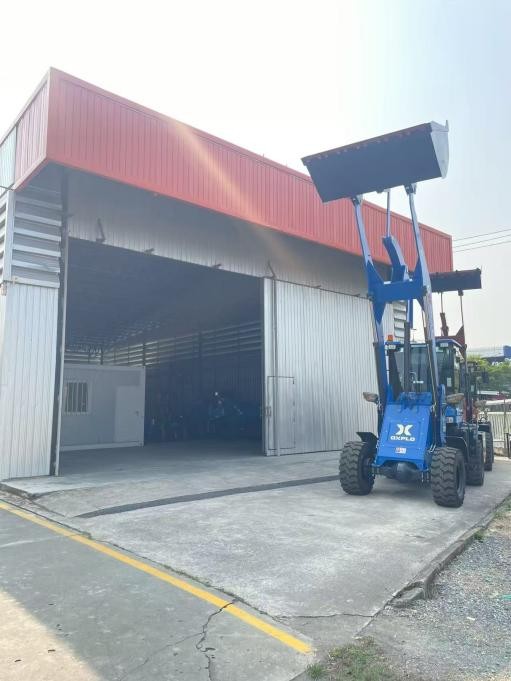
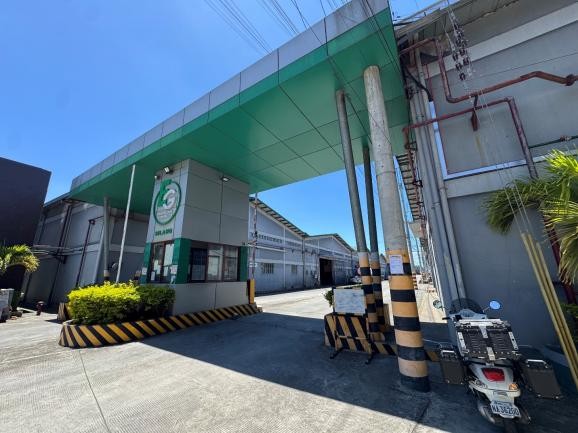
, MAGUYAM ROAD, BRGY. MAGUYAM, SILANG, CAVITE") Philippines-ELITE GLOBUS WAREHOUSE(NO. 43 - OXPOWER MACHINERY INC.), MAGUYAM ROAD, BRGY. MAGUYAM, SILANG, CAVITE
Philippines-ELITE GLOBUS WAREHOUSE(NO. 43 - OXPOWER MACHINERY INC.), MAGUYAM ROAD, BRGY. MAGUYAM, SILANG, CAVITE
OUR OPERATiONS
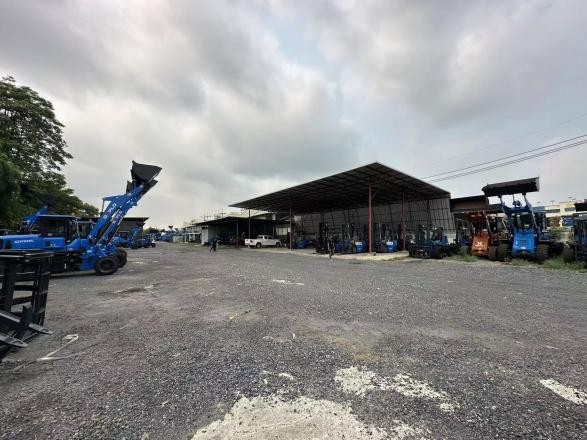
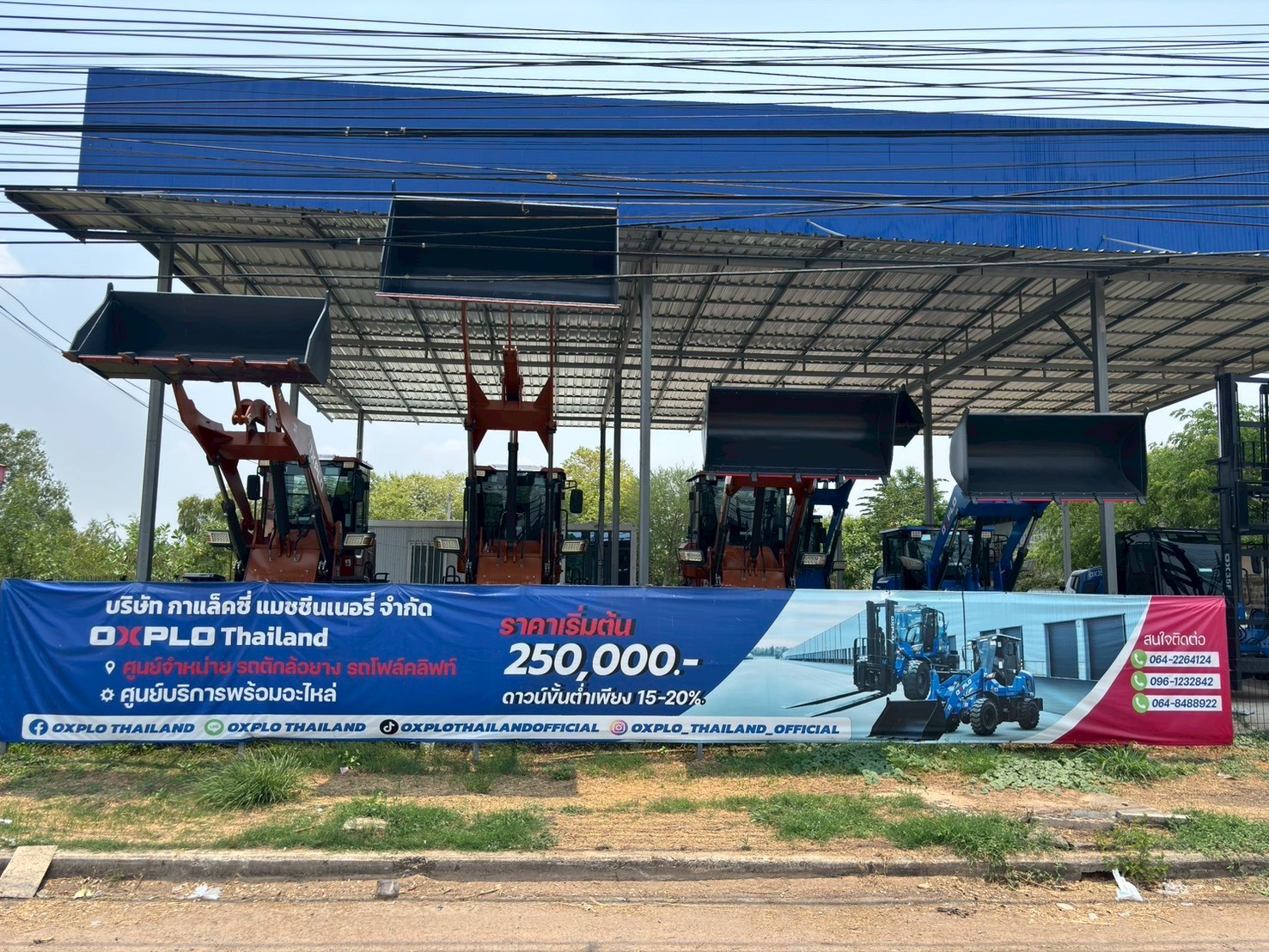
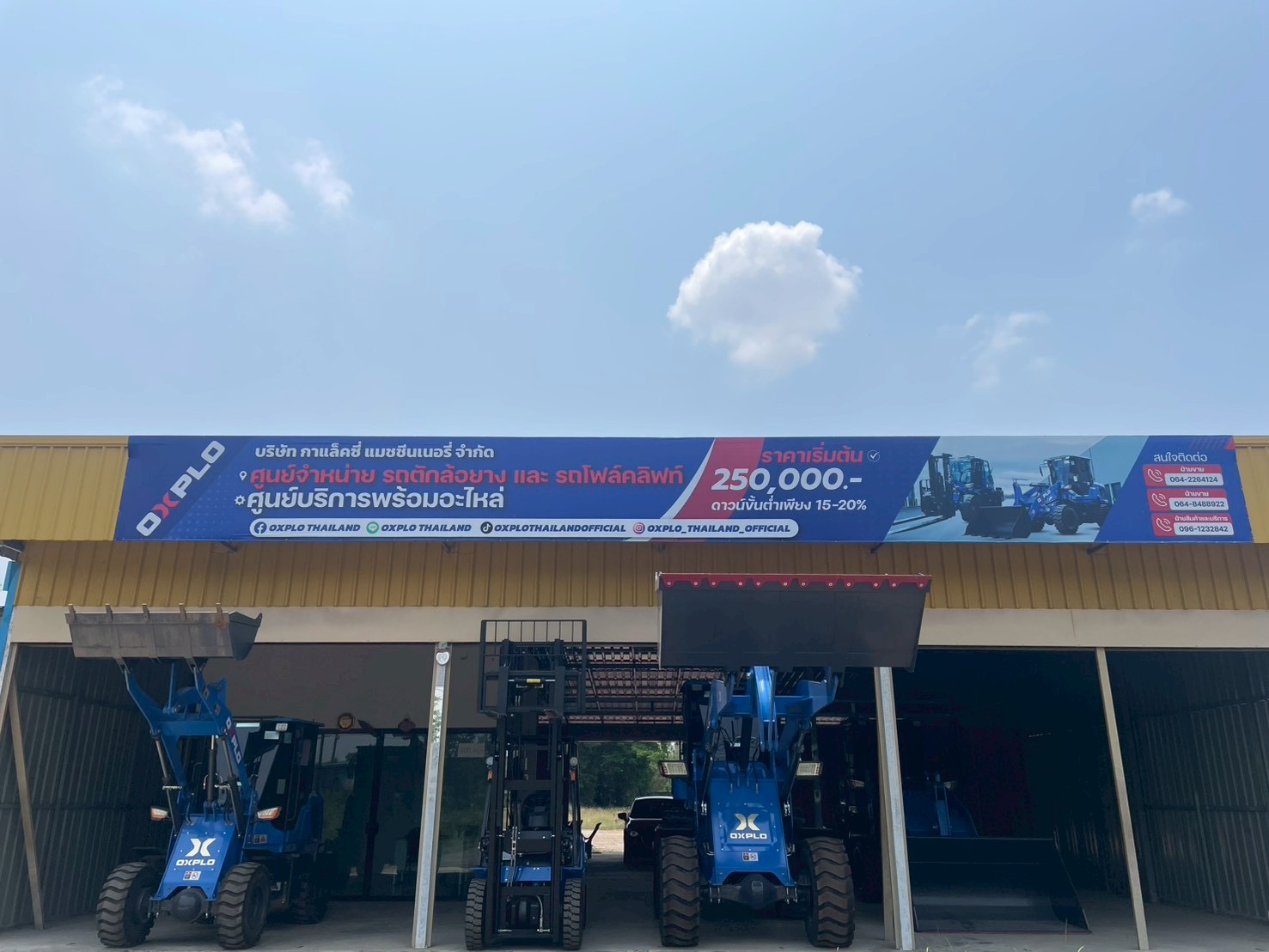
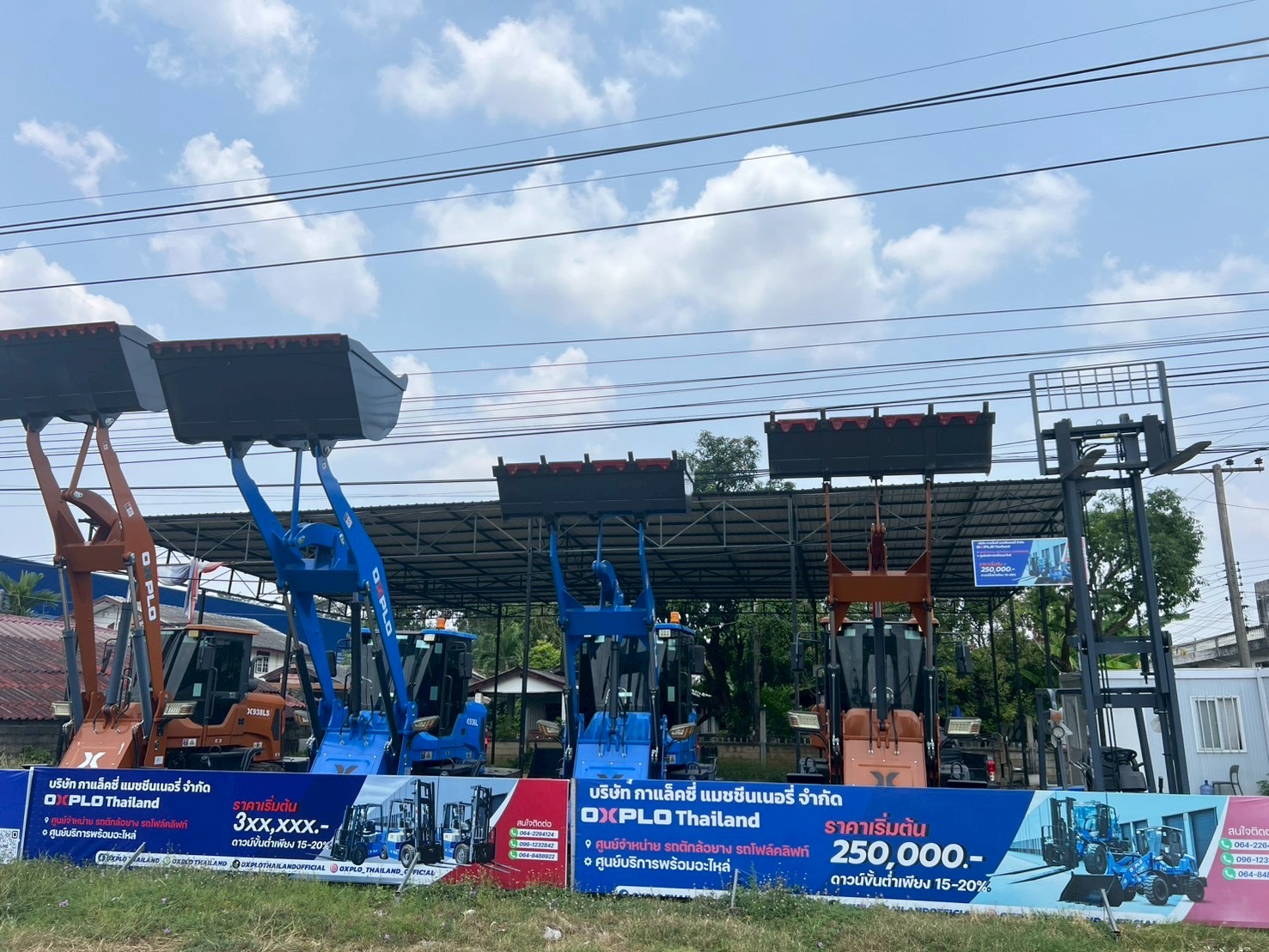
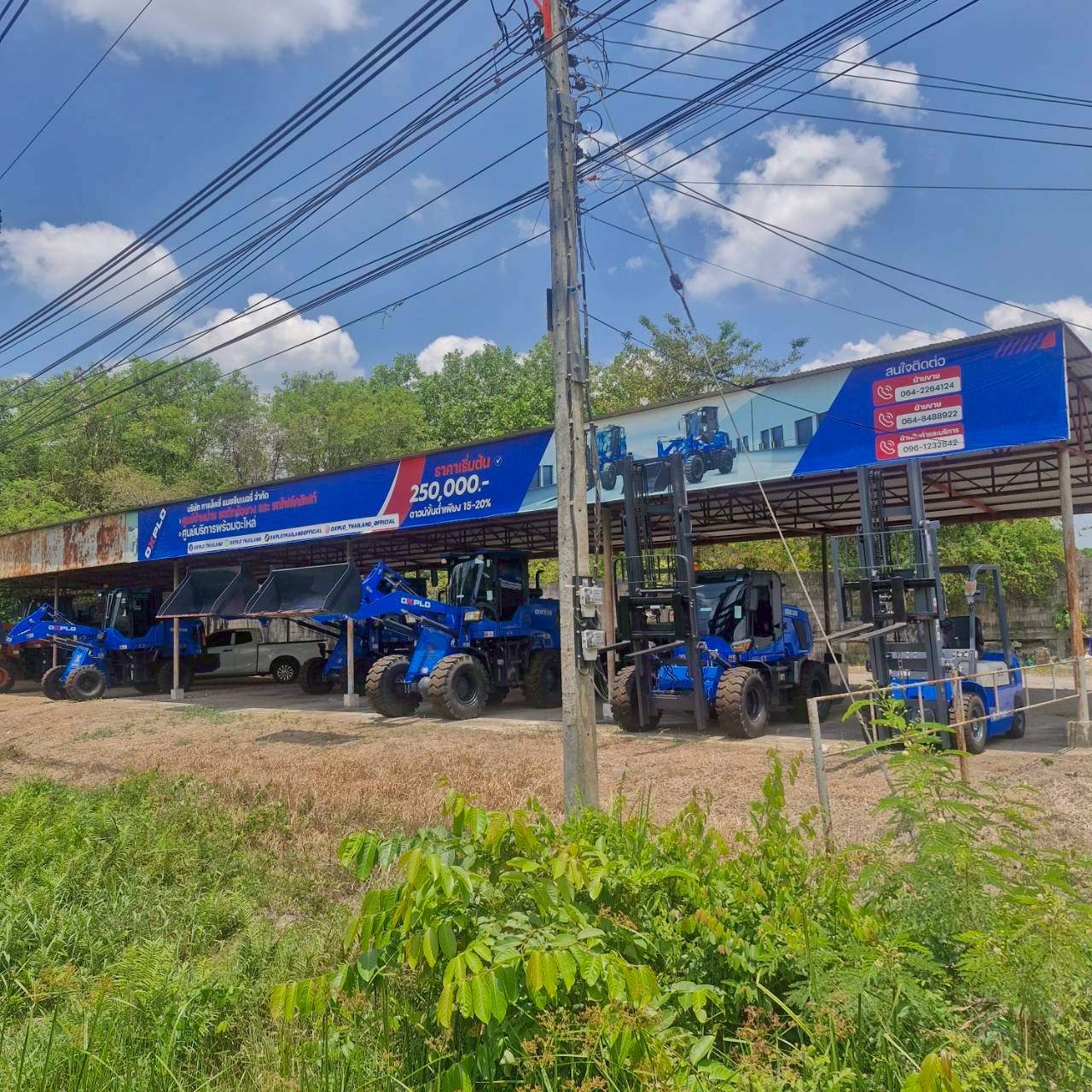
Our regional headquarters are located in Thailand, with independent operations company and service team in the Philippines. This multi-market presence enables us to provide customers throughout Southeast Asia with efficient communication, faster response times, and reliable local support.


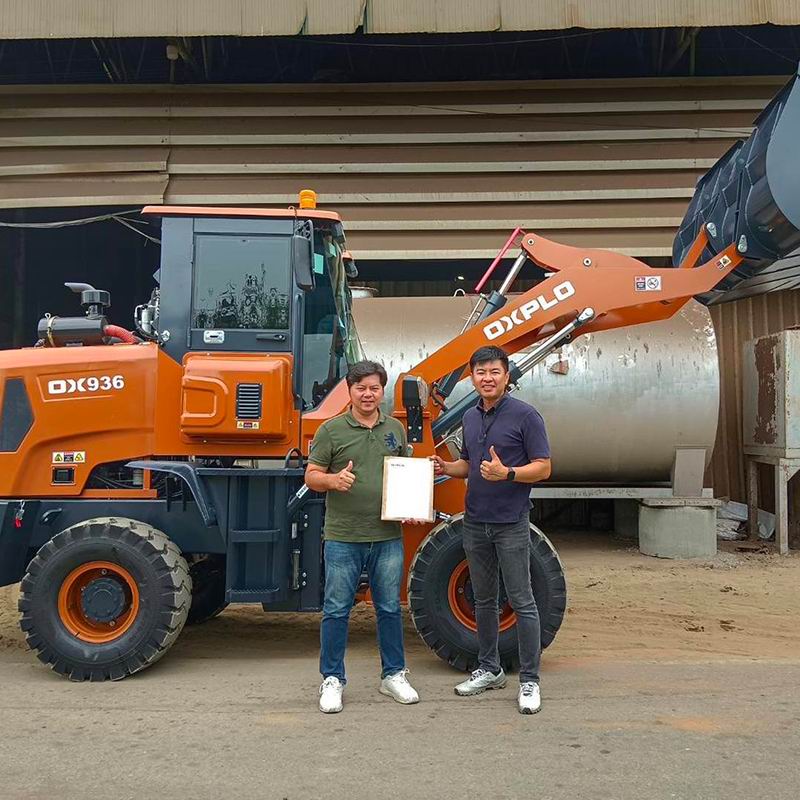
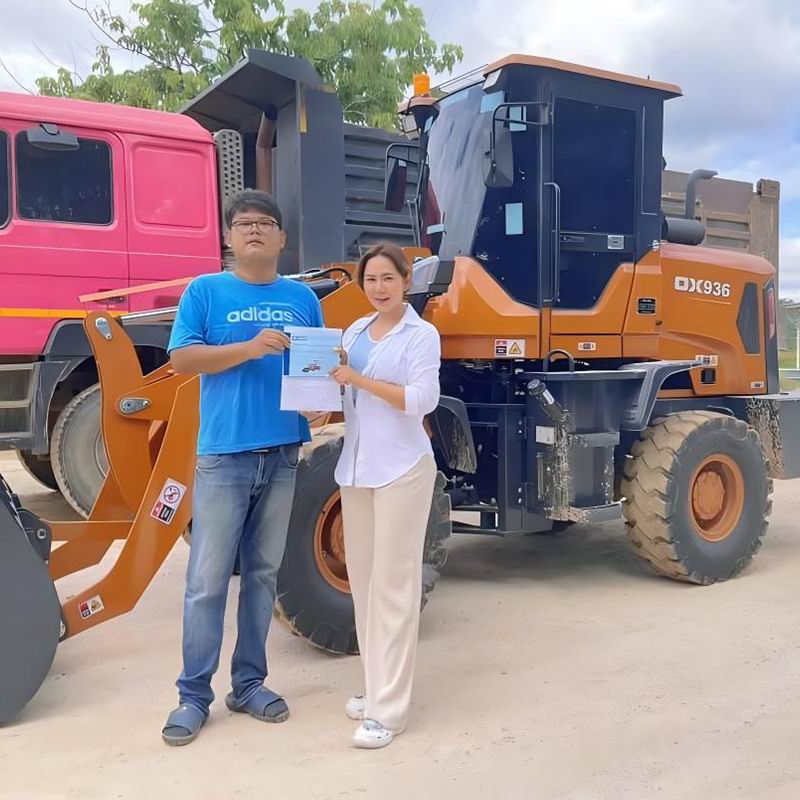
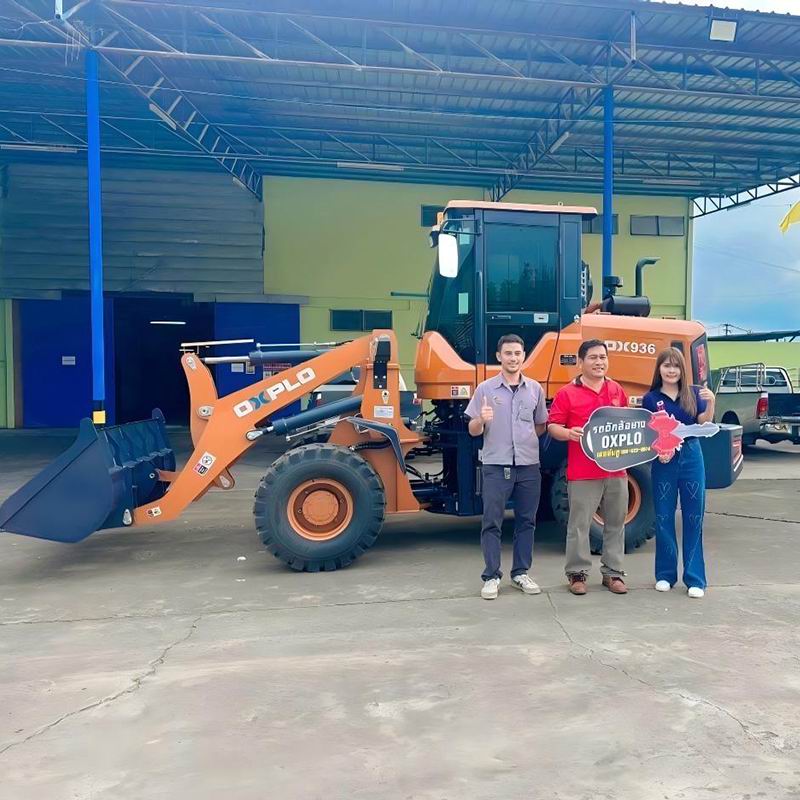
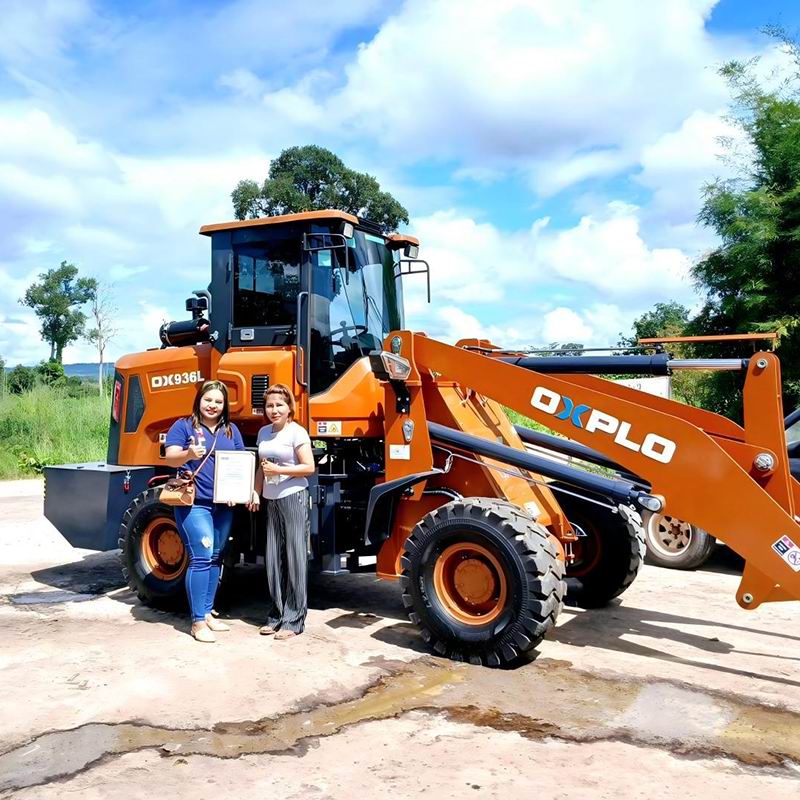
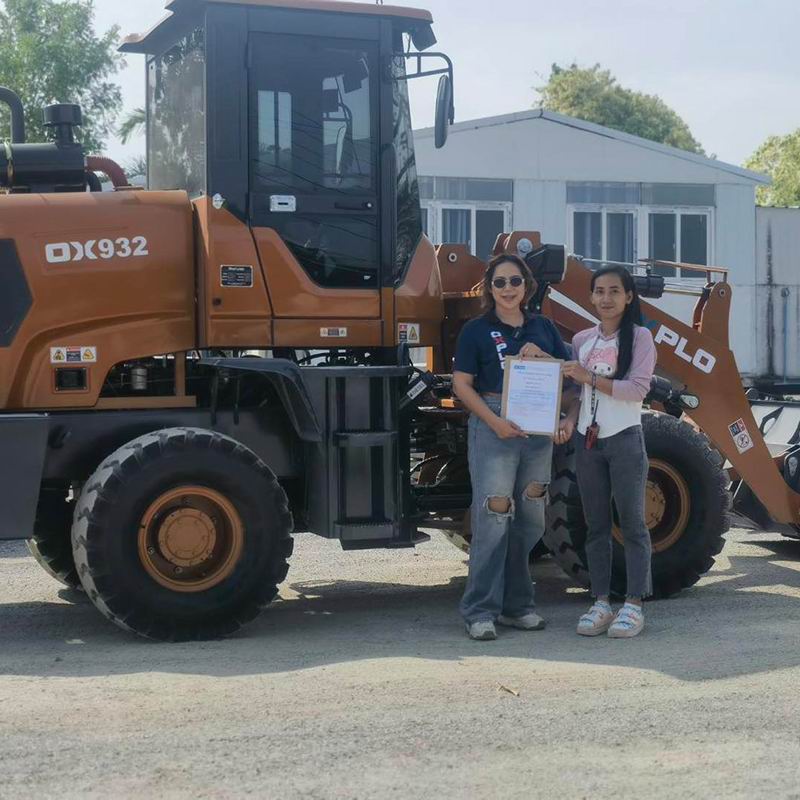
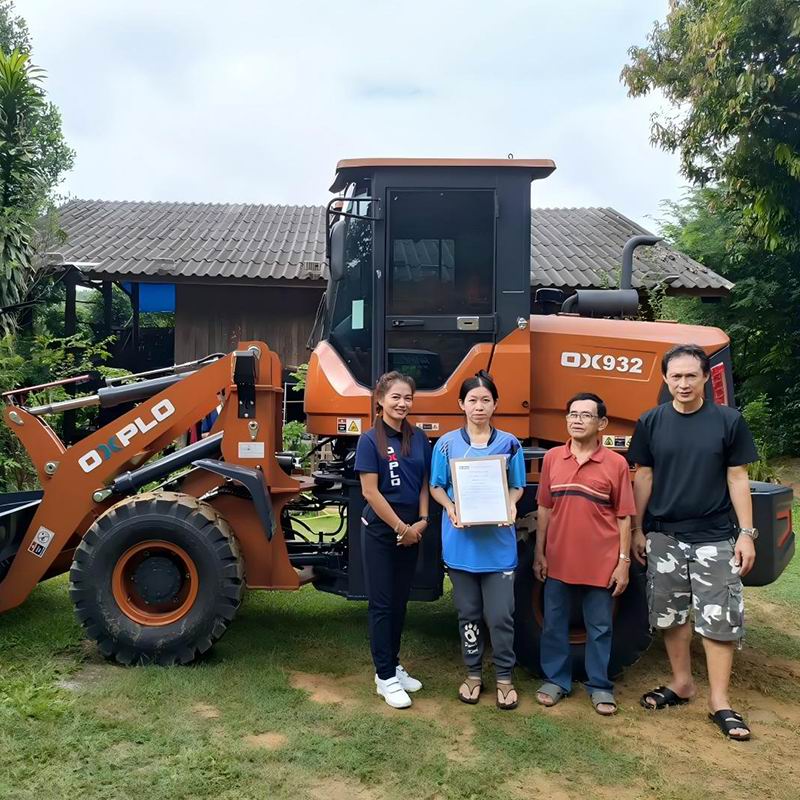
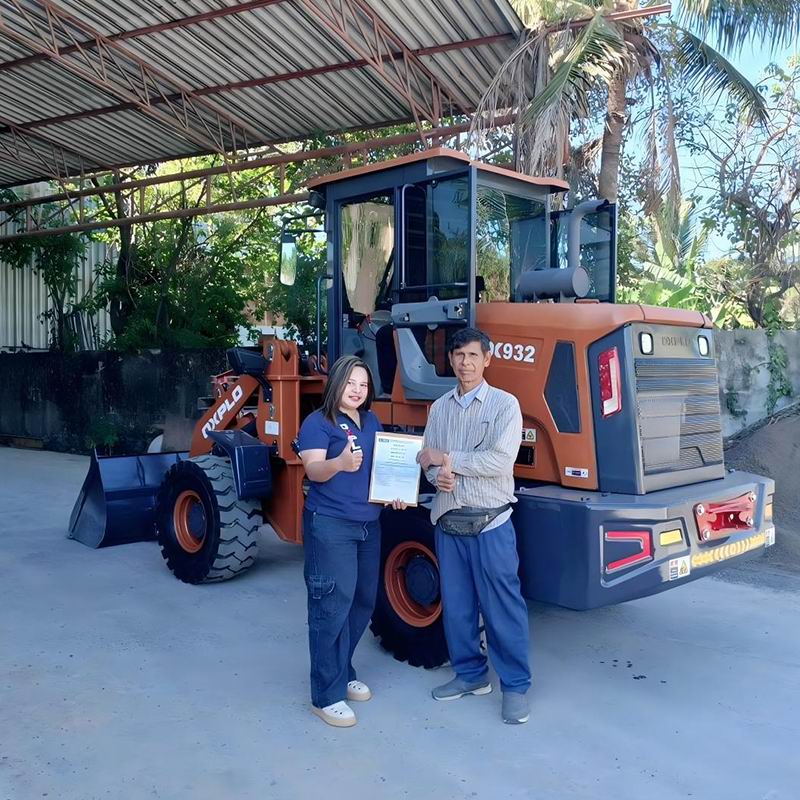
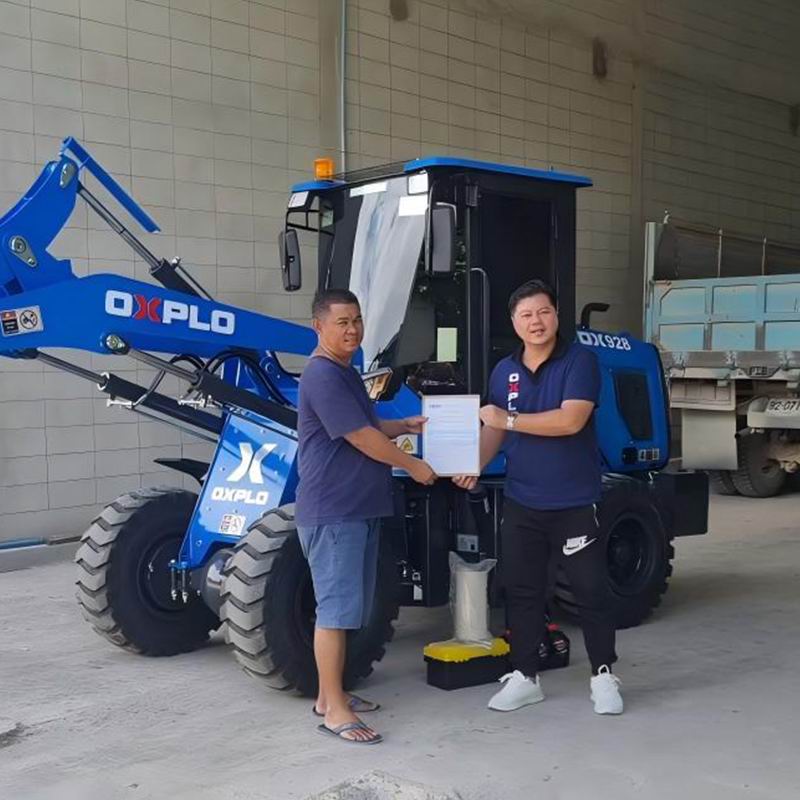
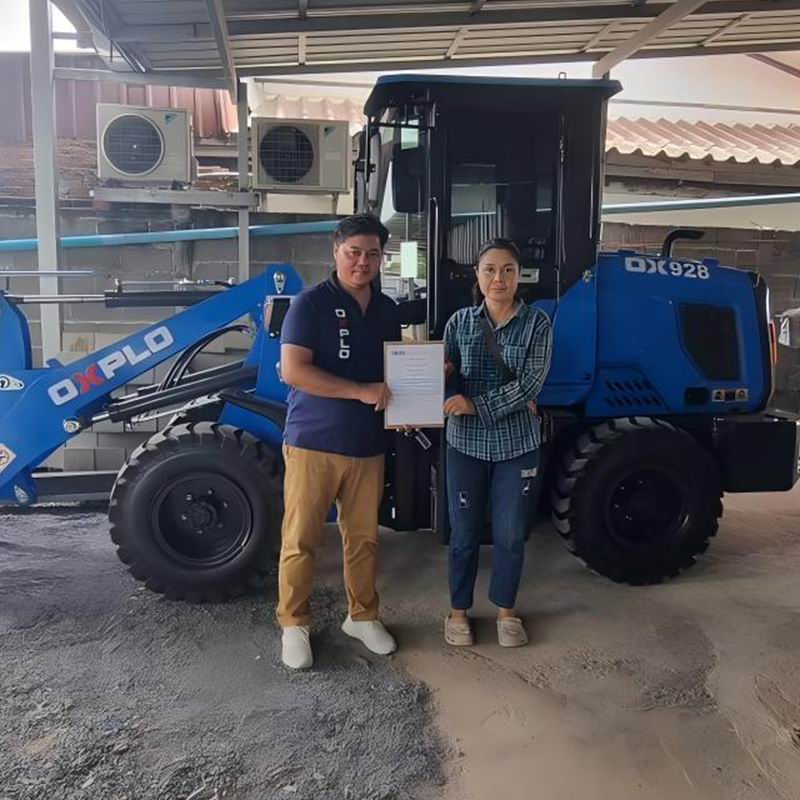
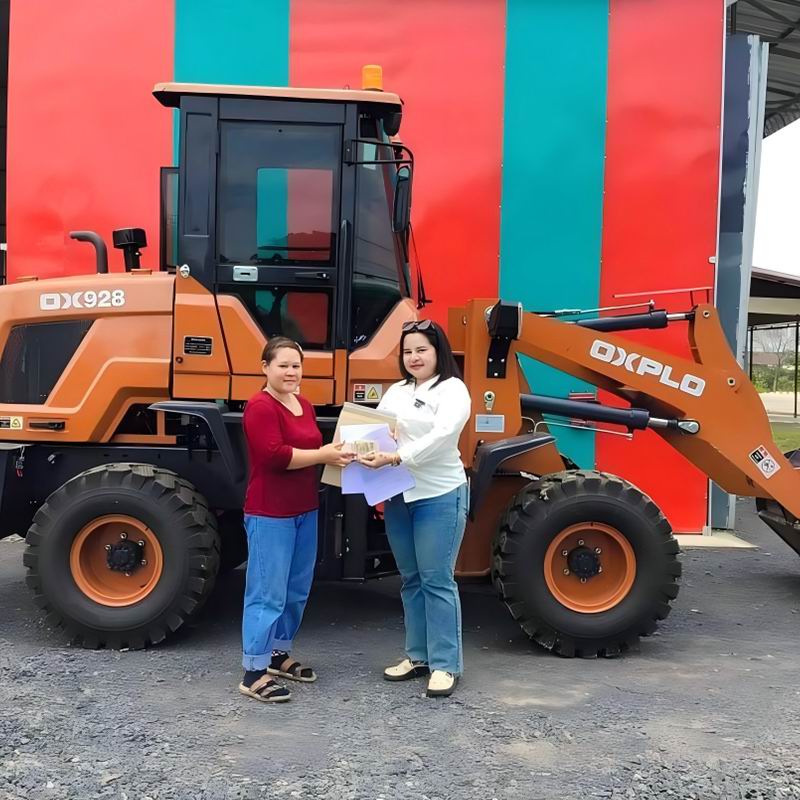
customer case
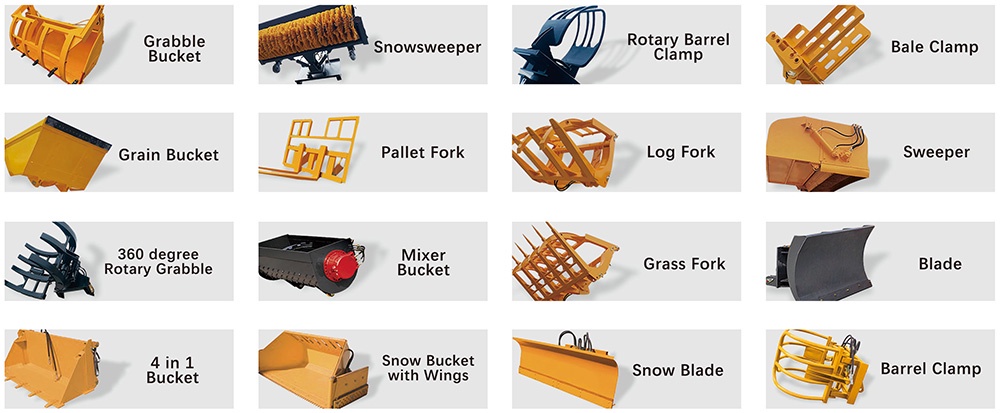
Wheel Loader Attachments
OXPLO provides a variety of spare parts support.
OXPLO's advantages
Let us introduce our products & factory to you
What makes us different
Why Choose Us
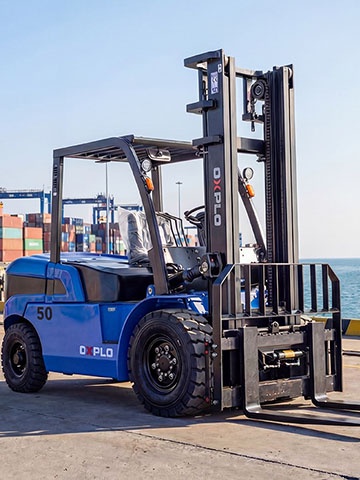
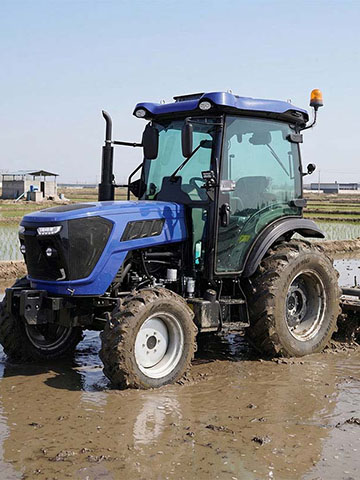
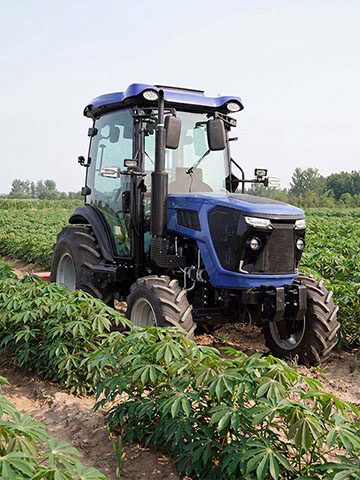
OXPLO specializes in the supply of forklifts, wheel loaders and tractors, providing reliable machinery solutions for material handling, construction and agricultural industries
Thailand Headquarters & SEAN Regional Operations
Headquartered in Thailand, with established firms and local service teams in the Philippines.
Reliable After-Sales & Spare Parts Support
We offer full after-sales care, including maintenance support and spare parts supply.
Factory Direct Supply
Direct factory operation ensures superior quality and a stable supply.
Quick Response & Service
Our local SEAN teams deliver rapid response, on-site service and expert technical help.
High-Performance Equipment
Built for tough jobs, our gear delivers robust power, steady performance and efficiency.
Application Scenarios
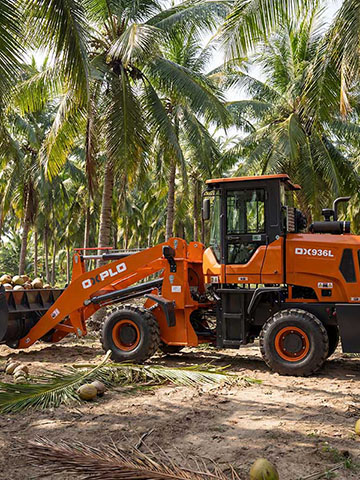
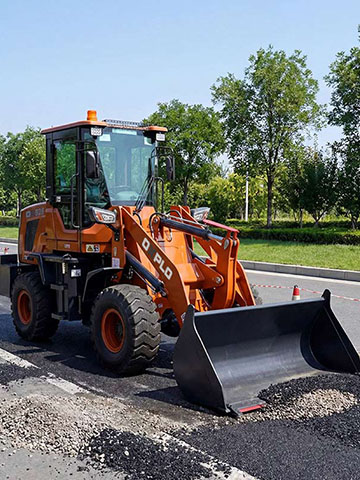
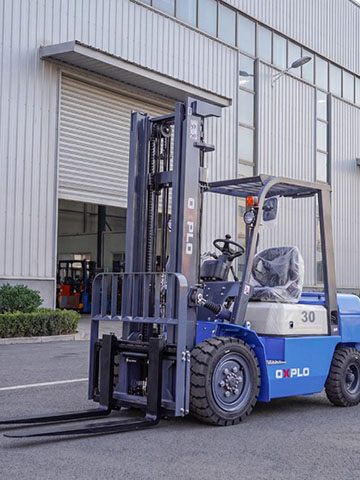
Our products are widely used in various fields such as warehousing,
construction, municipal roads, agriculture
about OXPLO
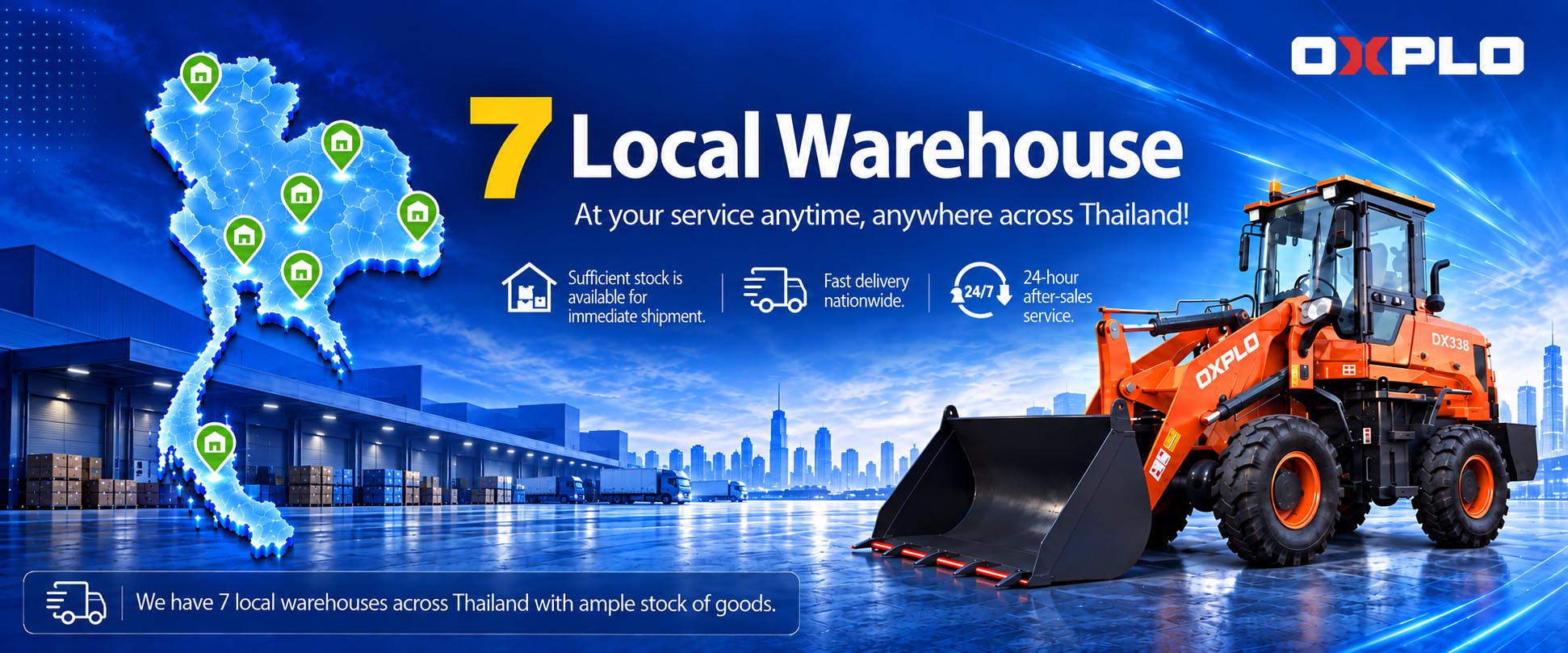
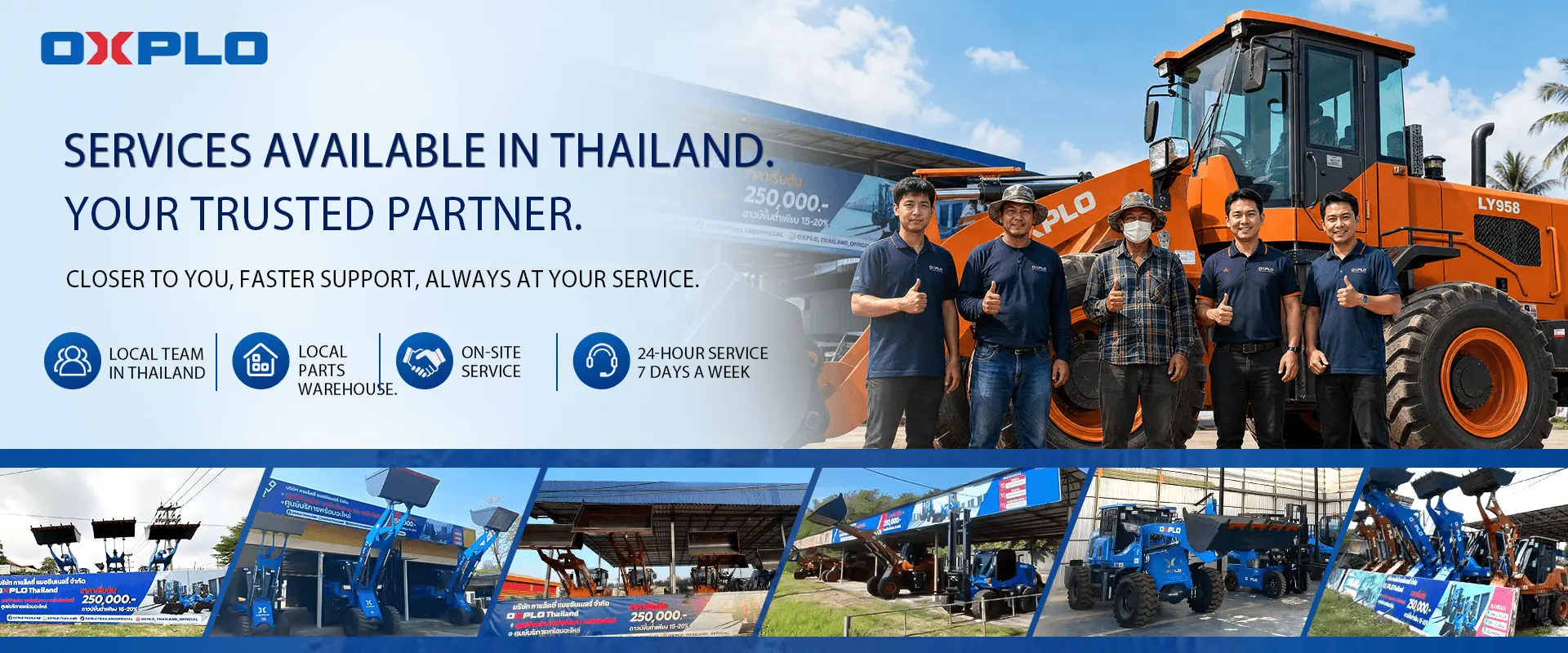
OXPLO is headquartered in Vannok District, Ayutthaya Province, Thailand, with five new branch offices in Khon Kaen, Nakhon Ratchasima, Ubon Ratchathani, Chiang Mai, and Phatthalung Provinces. The company's core competitive advantage lies in its "fast and efficient after-sales service and on-site problem-solving capabilities." OXPLO provides a comprehensive service guarantee system. Having cultivated the Thai market for many years, OXPLO not only provides excellent loaders, industrial forklifts, and off-road forklifts, but also offers one-stop service from procurement financing to after-sales support through comprehensive local support.







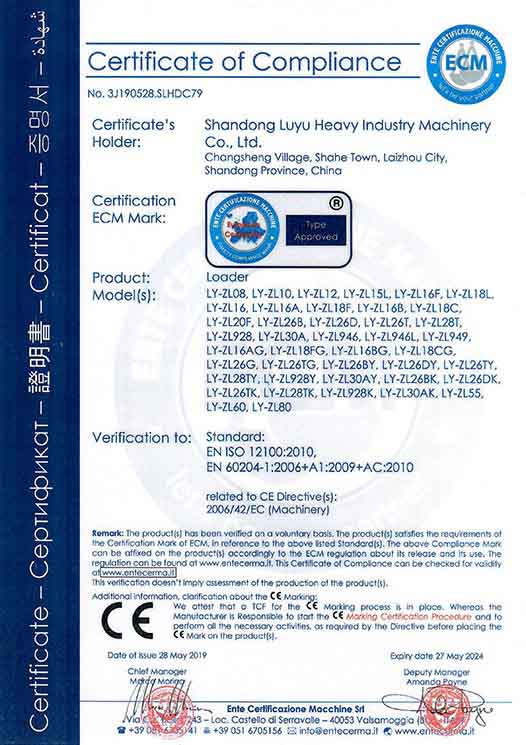
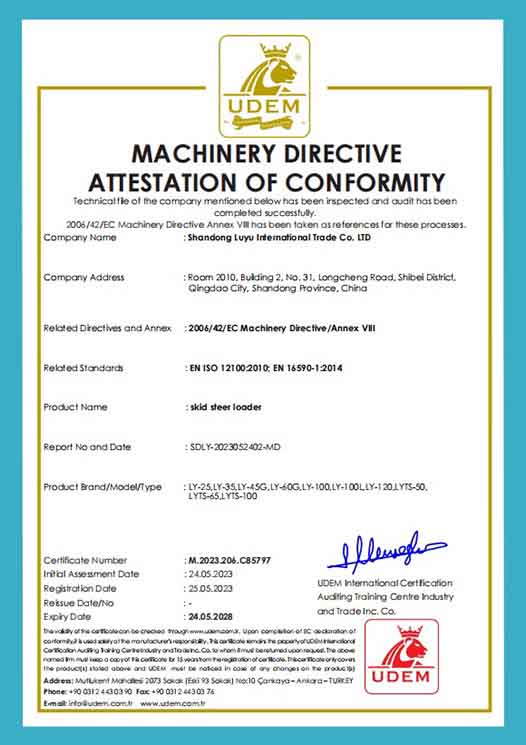
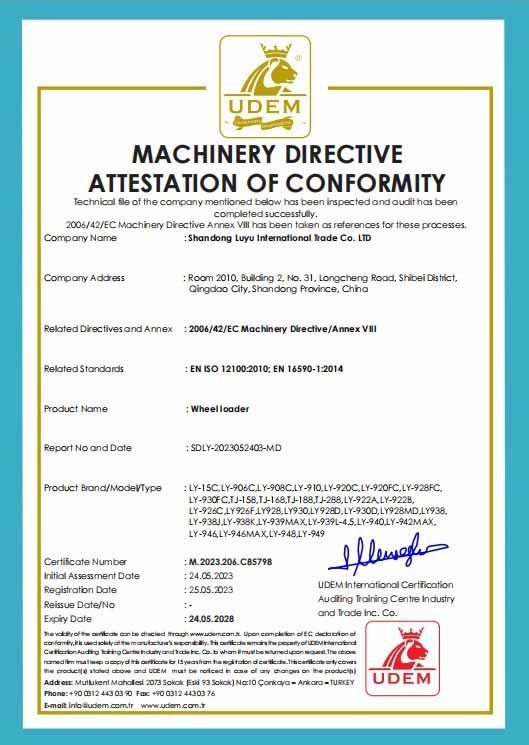
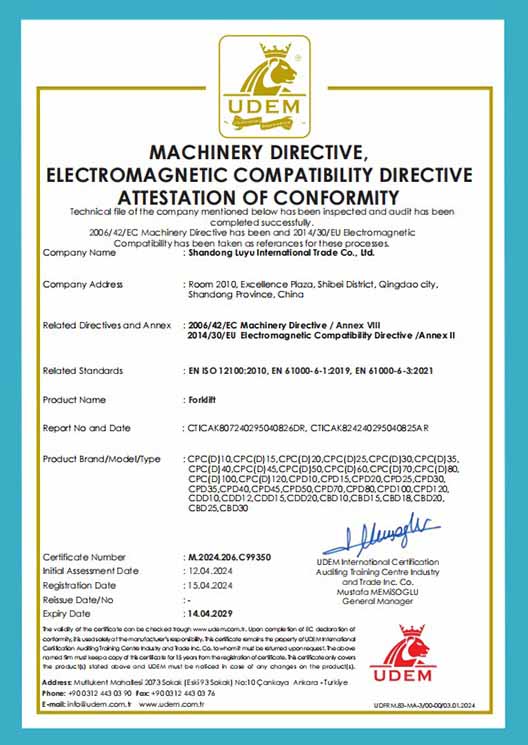
OUR CERTIFICATE
Wheel Loader FAQ
How much does a wheel loader cost?
The cost of a wheel loader varies depending on its rated load capacity, engine configuration, attachments, and optional features. Compact wheel loaders generally cost less than larger construction models. For an accurate quotation, contact OXPLO with your application requirements, preferred specifications, and destination country.
What is the fuel consumption of a wheel loader?
Fuel consumption depends on the loader size, engine power, operating conditions, and workload. Compact wheel loaders typically consume less fuel than larger models used in heavy-duty construction. Proper maintenance, efficient operating practices, and selecting the right machine size can help reduce fuel costs and improve productivity.
What is the lifting capacity of a wheel loader?
A wheel loader's lifting capacity is determined by its rated load. OXPLO offers wheel loaders with rated load capacities ranging from approximately 1.6 tons to 5 tons, making them suitable for agriculture, construction, material handling, and industrial applications. Always select a machine with sufficient capacity for your intended workload.
Can a wheel loader be used with pallet forks?
Yes. Many OXPLO wheel loaders can be equipped with pallet forks through a quick coupler system. This allows the machine to handle palletized goods, construction materials, agricultural products, and warehouse cargo, making it a versatile alternative to dedicated material handling equipment in certain applications.
How often should a wheel loader be serviced?
Regular maintenance is essential for maximizing machine performance and lifespan. Daily inspections should include checking engine oil, hydraulic fluid, coolant levels, and tire condition. Scheduled maintenance intervals vary by model and operating hours, but following the manufacturer's maintenance guidelines can help prevent unexpected downtime and costly repairs.
What is the difference between a wheel loader and a skid steer loader?
The primary difference is size, lifting capability, and maneuverability. Wheel loaders generally offer higher lifting capacities, larger buckets, and better performance for moving bulk materials over longer distances. Skid steer loaders are more compact and excel in confined spaces where tight turning and versatility are required. The best choice depends on your job site conditions and application needs.
What engine brands are available on OXPLO wheel loaders?
OXPLO wheel loaders are available with different engine configurations depending on the model and market requirements. Engine options may include reliable diesel engines designed to deliver strong performance, fuel efficiency, and easy maintenance. Please contact our sales team for specific engine options available in your region.
Do you provide operator training and technical support?
Yes. OXPLO provides after-sales support and technical assistance to help customers operate and maintain their equipment efficiently. Our team can offer guidance on machine operation, routine maintenance, troubleshooting, and spare parts support to ensure long-term reliability and productivity.