





A practical engineering and operations guide for warehouses in Thailand and Southeast Asia
I. Why Electric Forklift Fleets Run Short of Power at Shift Change
An electric forklift may have sufficient lifting capacity, yet still be unavailable when a production line needs it. In a two-shift warehouse, the operational problem often appears at 2:00 p.m.: the next team is ready, incoming trucks are waiting, and several forklifts have inadequate battery charge.
This situation is familiar to warehouses supporting automotive parts, food processing and regional distribution in Thailand. It does not necessarily mean that the battery is defective or the charger is undersized. The more common planning mistake is to purchase the trucks first and design the charging routine afterward.
Consider an illustrative six-truck warehouse in Ayutthaya that operates from 06:00 to 22:00. The first shift consumes more energy than expected during heavy unloading; drivers return to an inconvenient charging corner; then all six chargers are switched on after the evening shift. The operation now has three linked constraints: energy per shift, time available for recharging, and site electrical capacity.
Forklift Charging Room Planning must therefore start with the warehouse duty cycle rather than the dimensions of a proposed battery room. The objective is not the fastest theoretical charging time. It is to deliver enough serviceable trucks to every shift without excessive electrical investment, avoidable waiting or an unsafe charging environment.
II. Measure the Duty Cycle Before Selecting Chargers
Start with measured energy use, not the number of forklifts
Six forklifts in a light-duty retail warehouse can consume substantially less energy than six trucks of the same nominal battery capacity moving heavy pallets over long routes. Lift frequency, mast height, load center, gradients, driving distance and operator behavior all matter. A fleet average also hides the one truck assigned to the most demanding route.
For an existing fleet, collect at least one to two weeks of operating records, including the busiest production days. Record individual truck identifiers, shift start and end times, battery state of charge (SOC), charger sessions and time spent waiting. If metered energy data are available, use kWh in preference to rough percentages; SOC alone is not a calibrated energy meter.
Convert battery specifications into usable energy
A battery rated at 76.8 V and 280 Ah has nominal energy of 76.8 × 280 ÷ 1,000 = 21.5 kWh. This is a nameplate energy estimate—not a promise that 21.5 kWh can be used on every shift. The battery management system, temperature, aging and manufacturer-approved SOC limits reduce or constrain usable energy.
For a preliminary example, if a planner assumes operation between 100% and 20% SOC, the nominal energy within that window is approximately 17.2 kWh. The 20% limit is only a modeling assumption. Obtain the approved SOC policy for the actual battery before making an operating commitment.
Identify the hidden capacity problem in two-shift work
If a truck consumes 12 kWh in each of two shifts, daily demand is 24 kWh—greater than the one-charge nominal capacity in this example. The warehouse needs a charging opportunity during the working day, an alternative battery or truck arrangement, or a different duty-cycle allocation. A larger charger alone does not create an available parking window.
III. Warehouse Power Planning: Size the Peak, Then Verify the Schedule
Daily energy and instantaneous power are not the same
Suppose six trucks each use 12 kWh per shift across two shifts. The batteries need 6 × 12 × 2 = 144 kWh/day. If the total grid-to-battery charging efficiency is assumed to be 90%, the site must purchase approximately 144 ÷ 0.90 = 160 kWh/day to restore that energy. Efficiency varies by charger, battery and temperature, so use measured or documented values for the final design.
Now assume six chargers, each drawing 8 kW from the AC supply. If all six charge simultaneously, the charging load is 48 kW; limiting operation to three reduces the simultaneous charging load to 24 kW. It does not halve the energy consumed, and 8 kW here is an illustrative charger input—not a published specification of any forklift brand.
Check existing plant loads before specifying cables or protection
An older Thai factory may share one electrical service between forklifts, compressors, cold storage, production lines and lighting. A transformer nameplate cannot reveal spare capacity by itself. Review metered maximum demand, the plant single-line diagram, distribution-board space, feeder routes, power factor and harmonic behavior. A licensed local engineer should check continuous loading, protective-device coordination, cable derating and applicable Thai installation requirements.
The decision sequence is straightforward: first see whether staggered charging can meet next-shift departure times; then assess a capped or managed charging system; and consider utility upgrades if the duty cycle still cannot be served. Never treat an assumed 10–15% planning contingency as an electrical-code design rule.
Use Thai time-of-use tariffs only when the meter actually qualifies
Thailand has Time-of-Use (TOU) tariff structures for eligible customers. The published schedule commonly distinguishes weekday on-peak hours of 09:00–22:00 from off-peak hours of 22:00–09:00, with specified weekends and holidays treated differently. The applicable customer class, actual bill, demand charge and Ft adjustments must be checked rather than assuming every warehouse receives the same tariff. See the Thailand Energy Regulatory Commission tariff information.
A night-charging policy can lower energy charges for some users, but a sharp simultaneous load may influence maximum-demand costs. Compare both the monthly kWh and the billing-interval demand before recommending off-peak charging as a saving.
IV. Ventilation and Charging Safety in Thailand’s Climate
Lead-acid and lithium batteries require different hazard assessments
Forklift Battery Charging safety cannot be designed from a generic room template. Vented lead-acid traction batteries can release hydrogen during charging. Ventilation needs to address gas generation, airflow paths and ignition sources; battery maintenance may also require appropriate eyewash, electrolyte-handling and spill-response provisions. IEC 62485-3:2014 addresses traction-battery safety, including ventilation calculations for relevant battery types.
Industrial lithium-ion batteries do not normally create the same routine hydrogen-gassing condition as vented lead-acid batteries. Nevertheless, heat rejection, damaged cables, abnormal cell behavior, emergency isolation and fire response still require engineering attention. Battery-management-system protection is useful but does not replace site fire protection or emergency planning.
Heat and humidity can quietly lengthen the charging schedule
A charging point near a roof with strong solar gain or at an exposed loading dock may experience greater heat stress than an office temperature reading suggests. Chargers or battery systems may limit current when temperature approaches their operating thresholds. A plan based on unrestricted rated power can then miss the start of the next shift.
As a basic heat-balance illustration, three chargers drawing 8 kW each with assumed 90% conversion efficiency release approximately 2.4 kW of charger heat at full input. This excludes battery heat, solar gain and humidity loads. The ventilation or cooling design must be based on equipment specifications and environmental conditions; a heat-removal calculation is not a substitute for hydrogen dilution calculations or a lithium-battery fire strategy.
Charging-zone layout should protect both people and productivity
In Thai warehouse retrofits, charging spaces near loading bays can be attractive because they are accessible. They can also face rainwater ingress, vehicle impacts and pedestrian conflict. Verify canopy coverage, drainage, electrical enclosures, connector protection during actual charging, emergency access and turning paths. Mount chargers outside likely impact zones, protect cables from being run over and prohibit storage pallets from occupying marked charging positions.
A centralized charging area simplifies maintenance and supervision, but it may create unnecessary empty travel. Distributed bays can reduce driving distance while increasing feeder length and supervision needs. Select the layout with a traffic and electrical study—not solely by choosing the shortest route to the switchboard. OSHA forklift charging guidance is a useful safety reference, but local Thai regulatory compliance must be confirmed independently.
V. Multi-Shift Forklift Scheduling: Work Backward from Departure Times
The four variables a workable schedule must satisfy
Multi Shift Forklift operations are constrained by the amount of energy to add, how fast a battery is allowed to accept charge, the time before the next assignment and the minimum number of vehicles that must remain in service. A schedule fails when any one of these four variables is ignored.
For every forklift, first estimate energy for its next assignment plus an approved reserve. Then subtract the usable energy currently available. The resulting energy deficit—not the battery nameplate capacity—becomes the required recharge. Allocate available chargers to the trucks with the nearest operational deadline, taking account of battery temperatures and the manufacturer’s approved charging profile.
Worked example: six forklifts in a two-shift Thai warehouse
This illustrative planning exercise is not a customer case study or product performance guarantee. Assume six identical forklifts with approximately 21.5 kWh nominal batteries, 12 kWh energy use per 8-hour shift and a 20% planning reserve. The plant works 06:00–14:00 and 14:00–22:00, and needs at least four trucks available throughout the first shift.
A truck that starts with 21.5 kWh, uses 12 kWh during the first shift and receives an additional 8 kWh before the second shift has a modeled 17.5 kWh available at 14:00. After another 12 kWh of work, around 5.5 kWh remains at 22:00, or roughly 26% of nominal energy. These numbers illustrate an energy budget; an actual charge curve and approved SOC range must be checked.
Daytime recharge for the six trucks is 6 × 8 = 48 kWh into the batteries. With only two 8 kW AC-input chargers and 90% assumed efficiency, the absolute full-power minimum is 48 ÷ (2 × 8 × 0.90) = 3.33 hours of combined charging-bay operation. Six trucks require three rounds of two, so travel, setup, reduced charging rates and bay turnover must be added. The plan is only viable if the warehouse can continuously spare two vehicles for enough intervals.
Overnight, each battery needs approximately 16 kWh to return from 5.5 kWh to 21.5 kWh. Fleet demand is therefore 96 kWh into the batteries. Three chargers at the same assumed input and efficiency yield a full-power minimum of 96 ÷ (3 × 8 × 0.90) = 4.44 hours. Actual charging normally takes longer. With only three physical bays, the operation must also plan when the second group is moved into position.
When opportunity charging is the wrong answer
If all six forklifts are continuously required, pulling two out of service is impossible even if electricity is available. In that case, evaluate an additional truck, alternative task assignment, approved higher-rate charging, a different battery configuration or battery exchange where compatible. Faster charging cannot eliminate a shortage of operational parking time.
VI. Compare Total Cost of Ownership, Not Charger Count
The three options procurement should price side by side
A single purchase quote rarely captures total cost of ownership (TCO). Include electrical installation, charger procurement, controls, floor space, ventilation and fire-protection measures, labor required to move trucks, maintenance, battery effects and the financial consequence of lost working time.
Quantify recovered availability without exaggerating savings
Suppose a validated new process avoids 15 minutes of otherwise lost productive time per truck each day. Six trucks over 26 operating days yield 6 × 0.25 × 26 = 39 potentially recoverable truck-hours per month. This is not automatically a financial benefit: the operation must demonstrate that these hours reduce paid overtime, prevent production interruption or enable extra handling output.
Similarly, reducing simultaneous charger input from 48 kW to 24 kW can reduce the charging peak and may defer electrical expansion, but the same required kWh still need to be delivered. A defensible business case separates energy consumed, contracted or metered demand, capacity investment and productive availability.
VII. Match the Charging Plan to OXPLO Electric Forklift Configurations
Start from the load, then review the battery—not the reverse
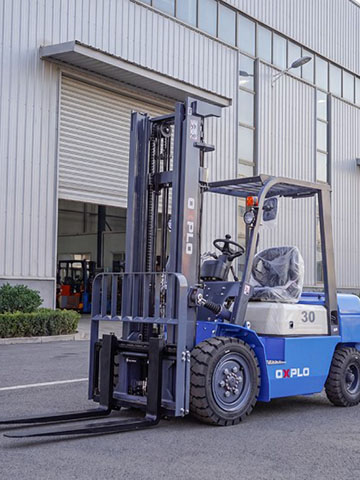
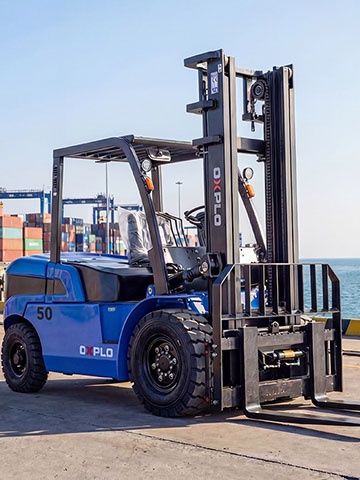
Once the duty cycle and site constraints are understood, truck selection becomes more precise. The OXPLO forklift range includes lithium-electric counterbalance models for different load classes. Their published battery data provide a starting point for a charging study, but the real operating duration must still be established against the customer’s lifting and travel cycle.
Specifications above are those currently published on the linked OXPLO product pages; confirm the offered unit, charger and battery version in the formal quotation. Battery nameplate energy is not a certified shift-runtime guarantee.
The OXPLO CPD20, OXPLO CPD25 and OXPLO CPD30 list the same nominal 76.8 V / 280 Ah lithium configuration, yet their load ratings and dimensions differ. It would be misleading to promise identical runtimes for all three. A heavier average load or more frequent mast work can change the energy budget substantially.
Why the battery management system matters in hot warehouses
OXPLO describes battery-management-system monitoring of voltage, temperature and state of charge on its lithium-electric forklift pages. Those signals support charge status monitoring and identification of abnormal conditions, which matters in Thai warehouses where ambient temperatures and workload vary during the day. A BMS is an important protection layer, not permission to use an unapproved charger or disregard thermal and fire safeguards.
An OXPLO lithium forklift also avoids routine watering associated with vented lead-acid traction batteries and produces no tailpipe emissions during electric operation. These are meaningful operating differences for indoor materials handling. They do not eliminate the need to inspect electrical connections, brakes, tyres, hydraulics, mast components and the charging system.
Aisle geometry and charging access belong in the forklift comparison
Floor layout can affect both material flow and charging convenience. For example, OXPLO publishes an outer turning radius of approximately 2,190 mm for the CPD20 and 2,515 mm for the CPD30. The correct truck depends on the load centre, lift height, pallets, attachments and aisle clearance—not on turning radius alone. Charging-bay turning movements should be checked against the selected truck footprint before electrical installation.
What OXPLO can help confirm before purchase
For a Thailand project, send OXPLO a duty-cycle summary: maximum load and load centre, lifting height, narrowest aisle, daily shift schedule, estimated energy use, minimum concurrent truck requirement, indoor/outdoor conditions and available charging supply. The OXPLO service and support page describes configuration assistance and regional support; availability, charger compatibility and service scope should be agreed for the precise destination and model.
The OXPLO Southeast Asia website lists operations in Thailand and the Philippines. This regional presence can support equipment discussions and follow-up, while local licensed engineers remain responsible for electrical design, ventilation, fire strategy and formal approvals.
VIII. Frequently Asked Questions
1. Does every lithium forklift fleet need a separate battery charging room?
No. A properly designated charging zone may be appropriate for some lithium-electric fleets, depending on equipment instructions, building use and local safety requirements. A vented lead-acid battery maintenance and charging installation can have different ventilation and chemical-handling needs. Ask the site engineering and fire-safety team to assess the actual configuration.
2. Can six OXPLO electric forklifts share three chargers?
Possibly, but only if the chargers are proven compatible and the sum of available charging windows covers the required energy before the next departures. OXPLO model count alone does not establish charging feasibility. Check approved charger inputs, charge curves, battery limits and truck availability during each shift.
3. Can OXPLO CPD20, CPD25 and CPD30 use the same charger?
Their published battery voltage and capacity are similar, but that is not enough to confirm interchangeability. Verify the connection standard, output voltage/current range, protective functions and BMS communication with OXPLO for the exact product versions before sharing charging equipment.
4. Can an OXPLO lithium forklift work for 16 hours without charging?
There is no responsible fixed-hour answer without the duty cycle. Calculate energy from payload, route length, gradients, lift frequency, operating temperature and approved SOC window. For two or three shifts, OXPLO can assess whether opportunity charging or another configuration is appropriate after the operating data are provided.
5. What should a Thailand warehouse prepare before requesting an OXPLO quotation?
Provide truck quantity, peak load, pallet dimensions, lift height, aisle width, operating shifts, minimum simultaneously required trucks, existing power supply and charging-space constraints. Use the OXPLO contact page to request model and charging-compatibility confirmation, then arrange independent local engineering review for installation work.
IX. Conclusion: Design Around the Shift, Not the Socket
Good Forklift Charging Room Planning begins with the energy and availability requirements of the warehouse. It then establishes charging windows, tests simultaneous electrical demand, designs a battery-appropriate safety environment and compares the lifecycle cost of workable alternatives. In Thailand and across Southeast Asia, high ambient temperatures, wet-season exposure and local electricity tariffs make that sequence particularly important.
For buyers evaluating lithium-electric equipment, OXPLO provides a range of forklift load classes and published battery specifications that can be incorporated into this process. The practical next step is not simply to order more chargers: it is to share the duty cycle with OXPLO, verify the truck and charger configuration, and have qualified local specialists validate the site electrical and safety installation.
Explore the OXPLO electric forklift product range or contact the OXPLO team with your shift schedule, handling requirements and charging constraints. The success measure is not how many chargers are installed; it is whether enough safe, ready forklifts are available when the warehouse needs them.
Engineering note: All power, energy, efficiency and timing calculations in this guide are illustrative planning assumptions, not approved installation values or promises of forklift performance. Verify charger data, battery operating limits, applicable Thai electrical and fire requirements, and site conditions before construction or purchase.
Customer Distribution
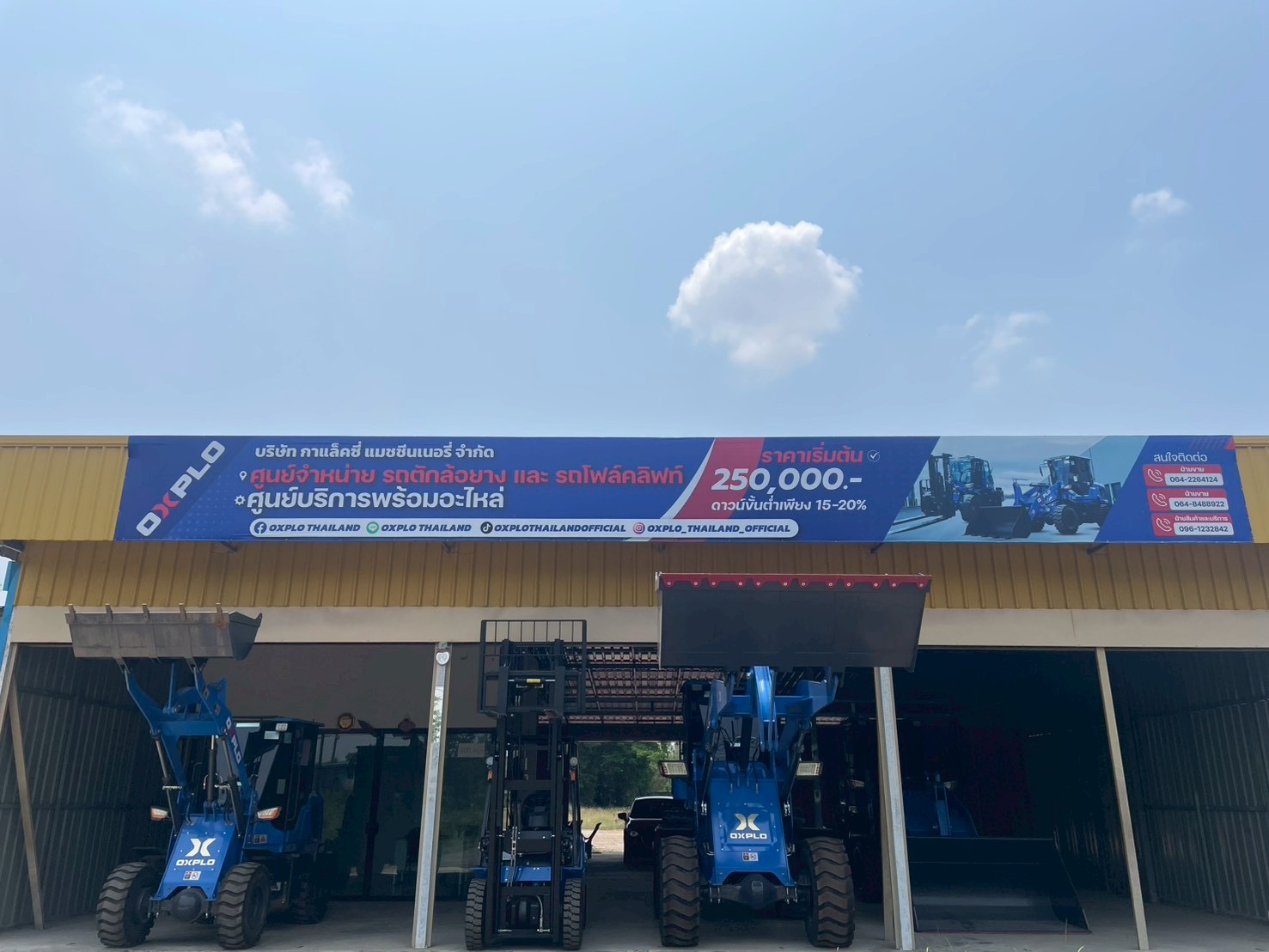
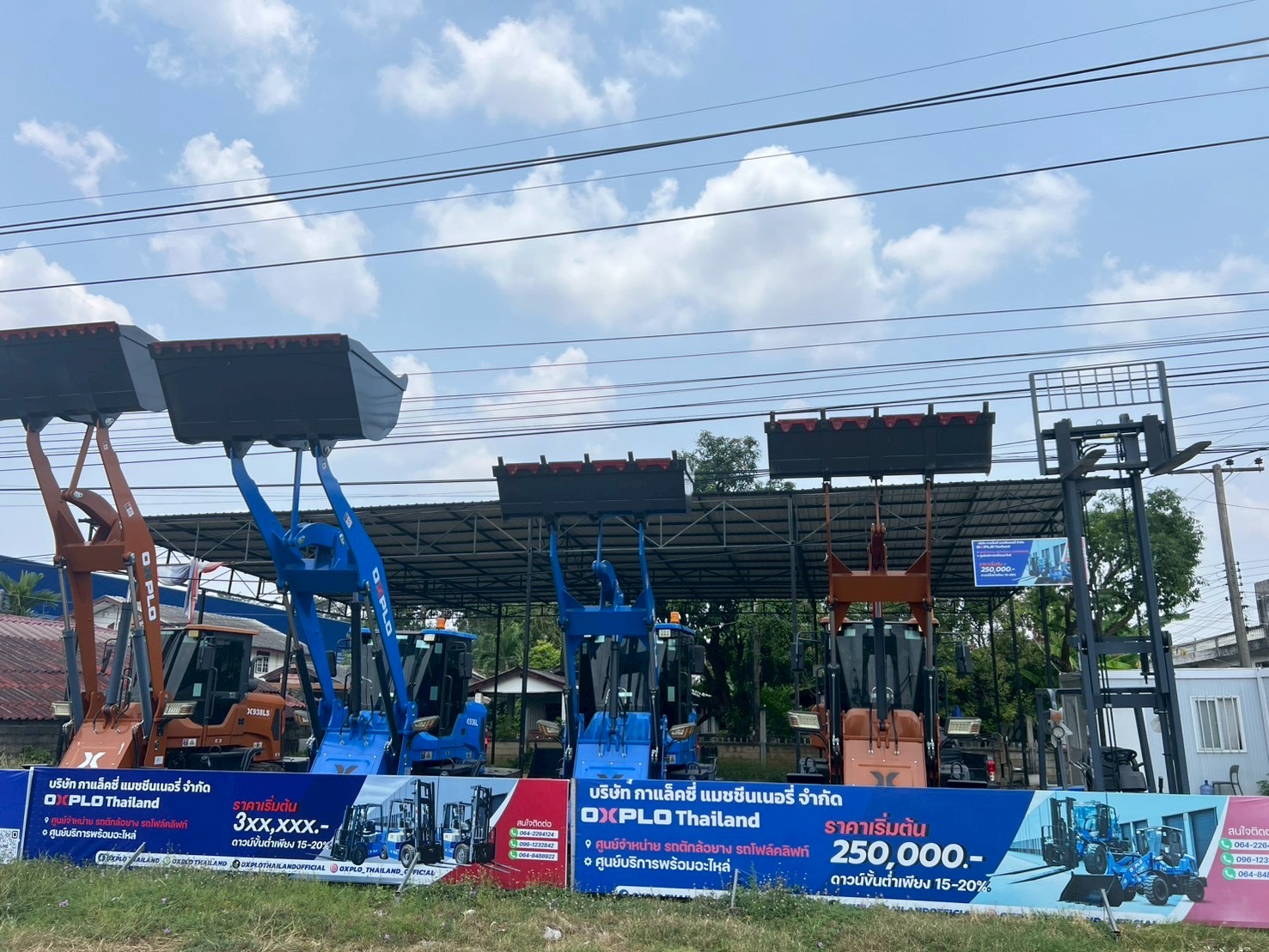
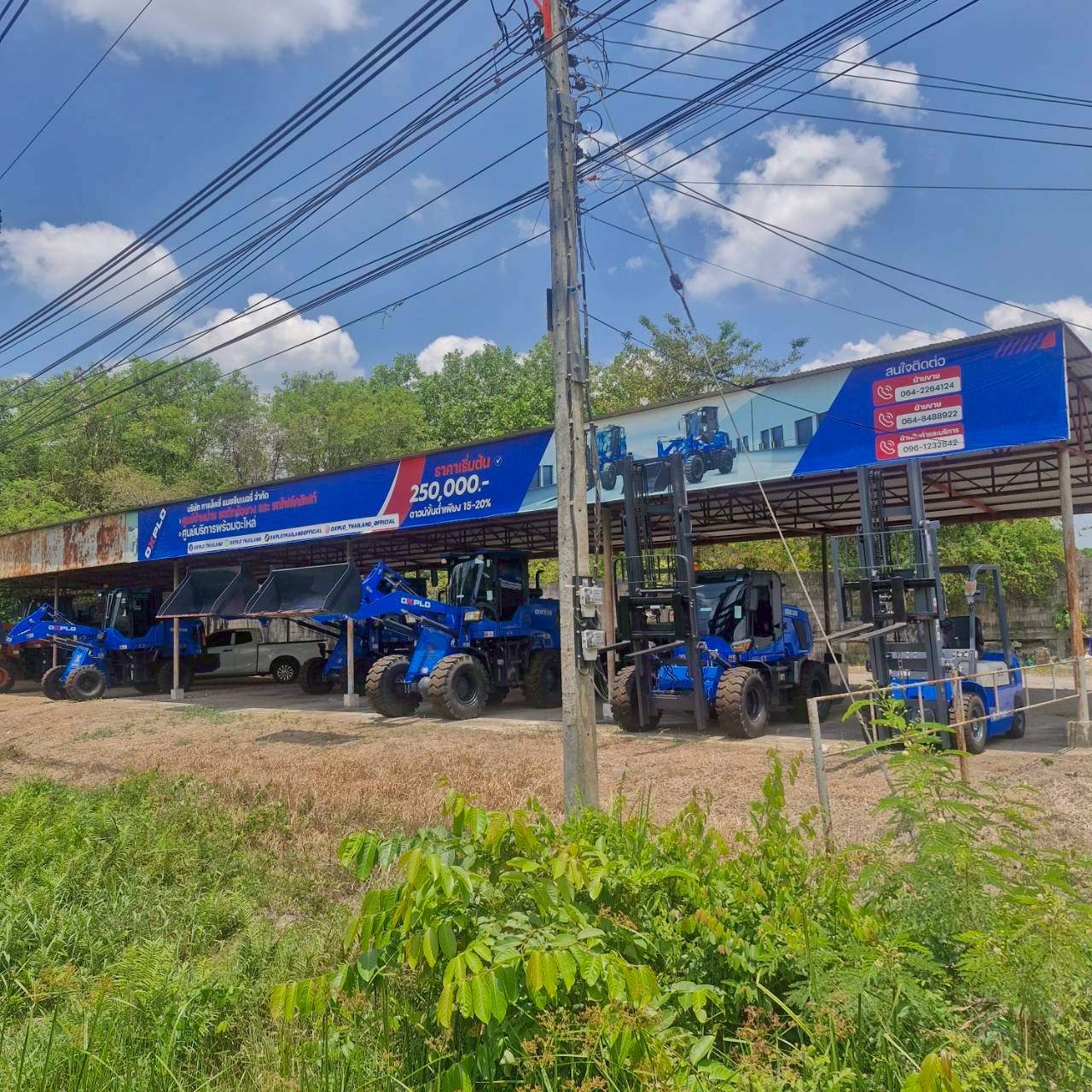
 Thailand-Ayutthaya
 Thailand-Khon Kaen
 Thailand-Nakhon Ratchasima
 Thailand-Ubon Ratchathani
 Thailand-Chiang Mai
 Thailand-Phthalum
, MAGUYAM ROAD, BRGY. MAGUYAM, SILANG, CAVITE") Philippines-ELITE GLOBUS WAREHOUSE(NO. 43 - OXPOWER MACHINERY INC.), MAGUYAM ROAD, BRGY. MAGUYAM, SILANG, CAVITE
Philippines-ELITE GLOBUS WAREHOUSE(NO. 43 - OXPOWER MACHINERY INC.), MAGUYAM ROAD, BRGY. MAGUYAM, SILANG, CAVITE
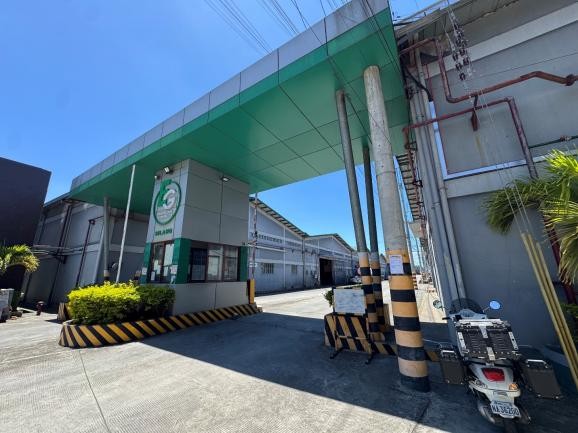
OUR OPERATiONS
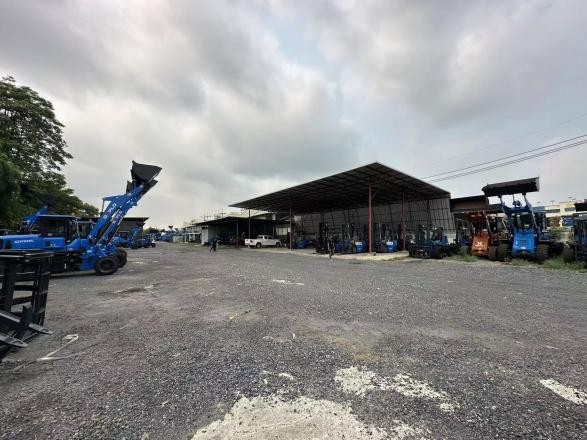
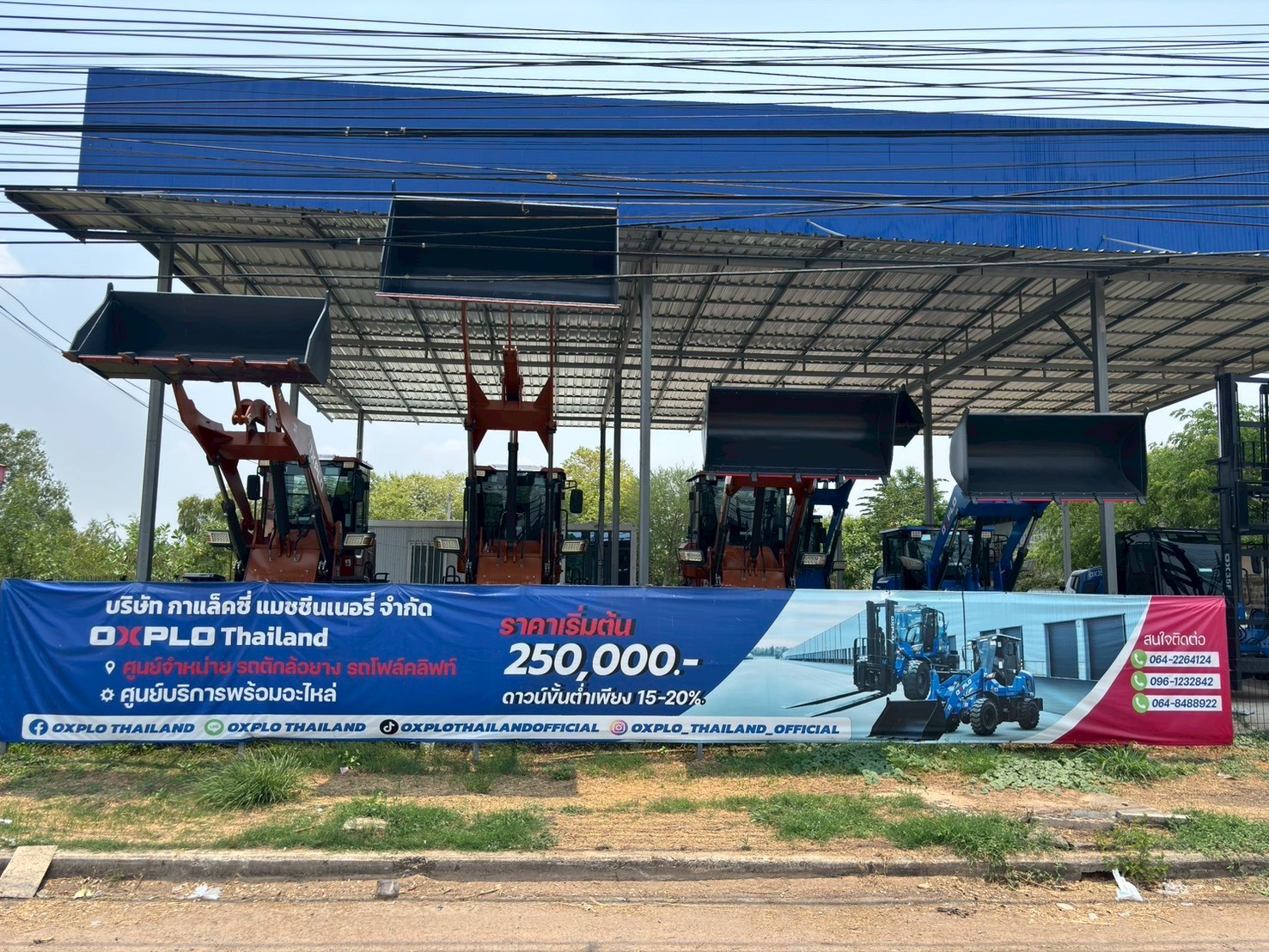
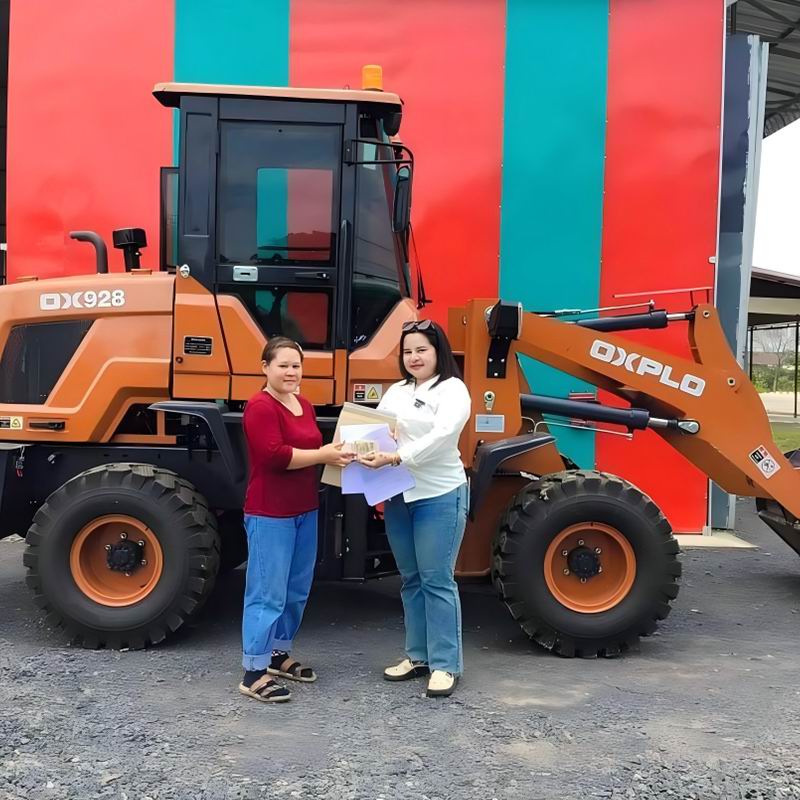
Our regional headquarters are located in Thailand, with independent operations company and service team in the Philippines. This multi-market presence enables us to provide customers throughout Southeast Asia with efficient communication, faster response times, and reliable local support.


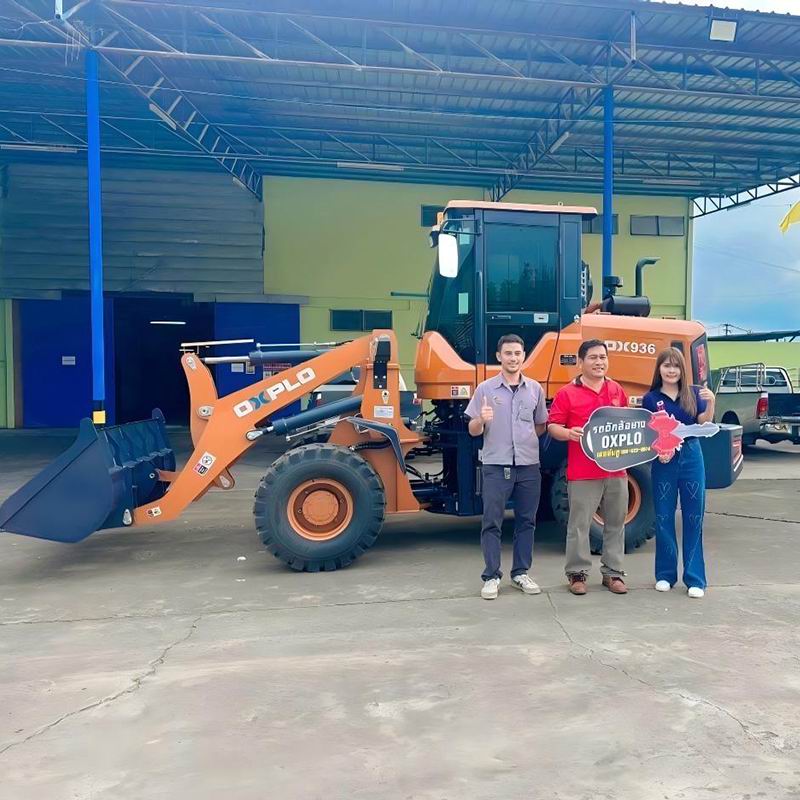
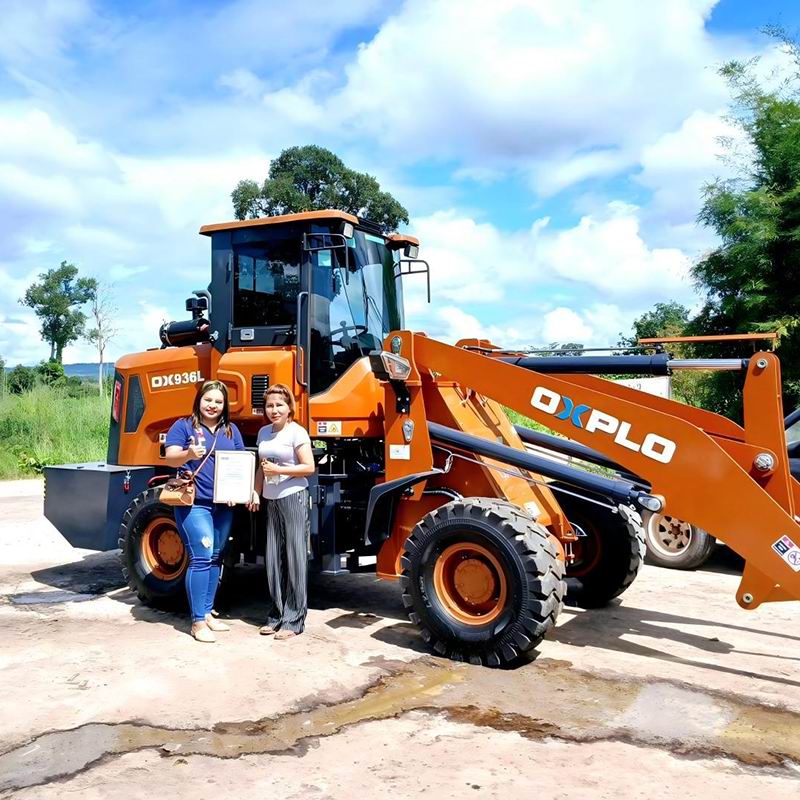
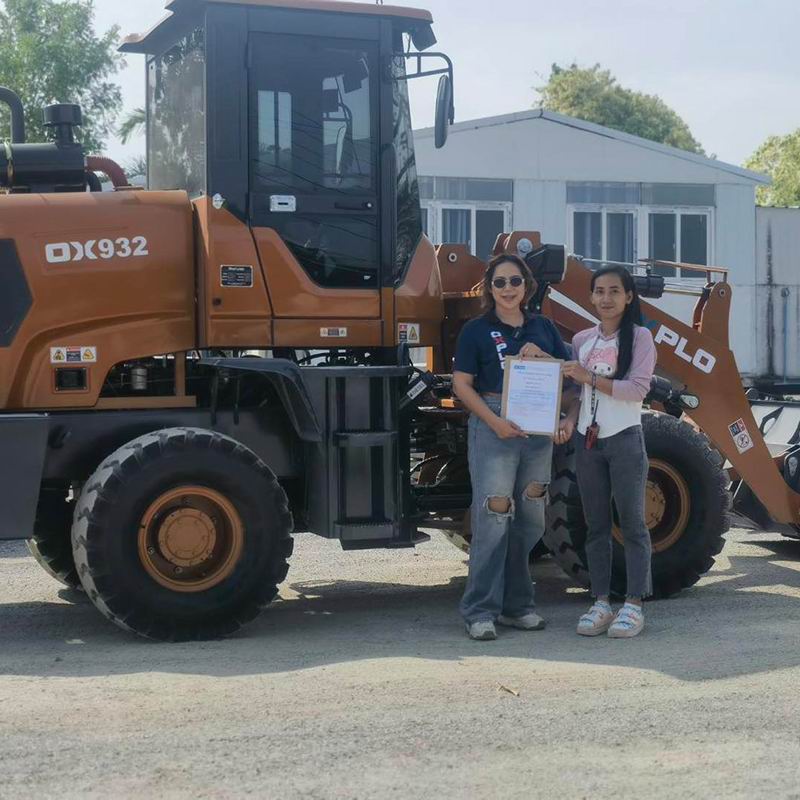
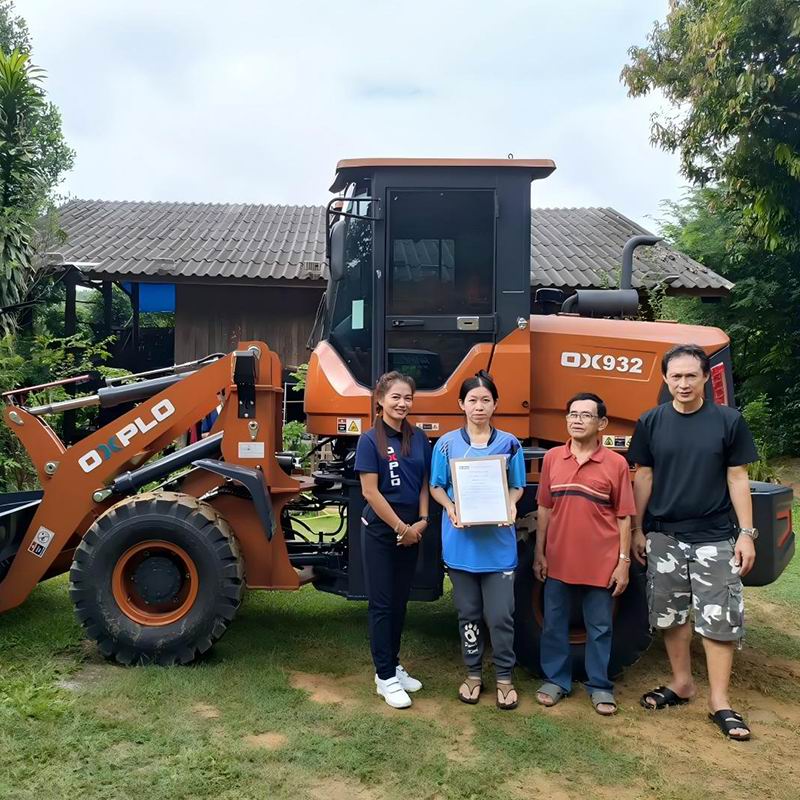
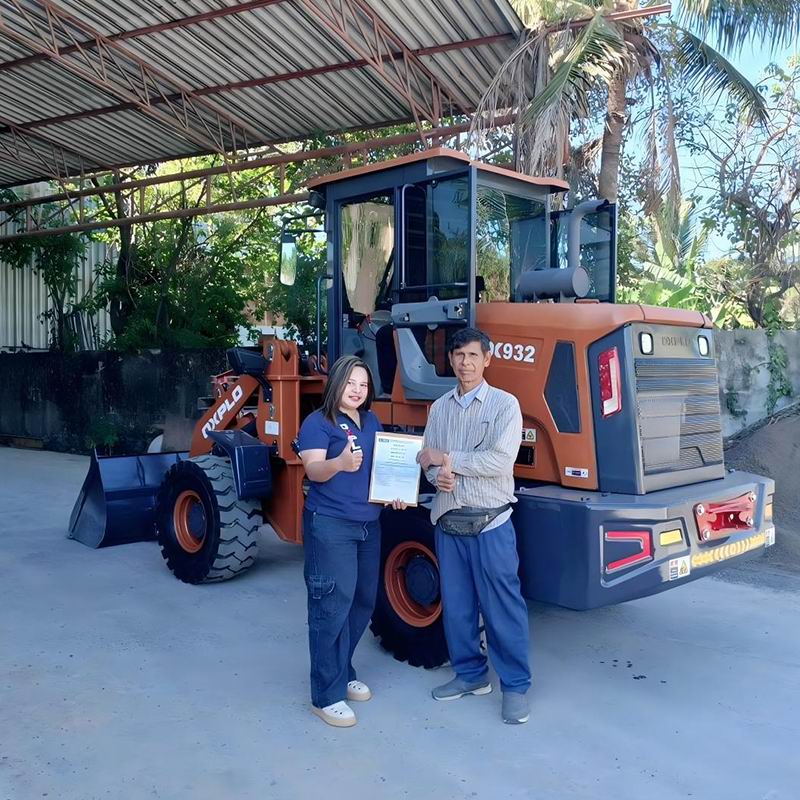
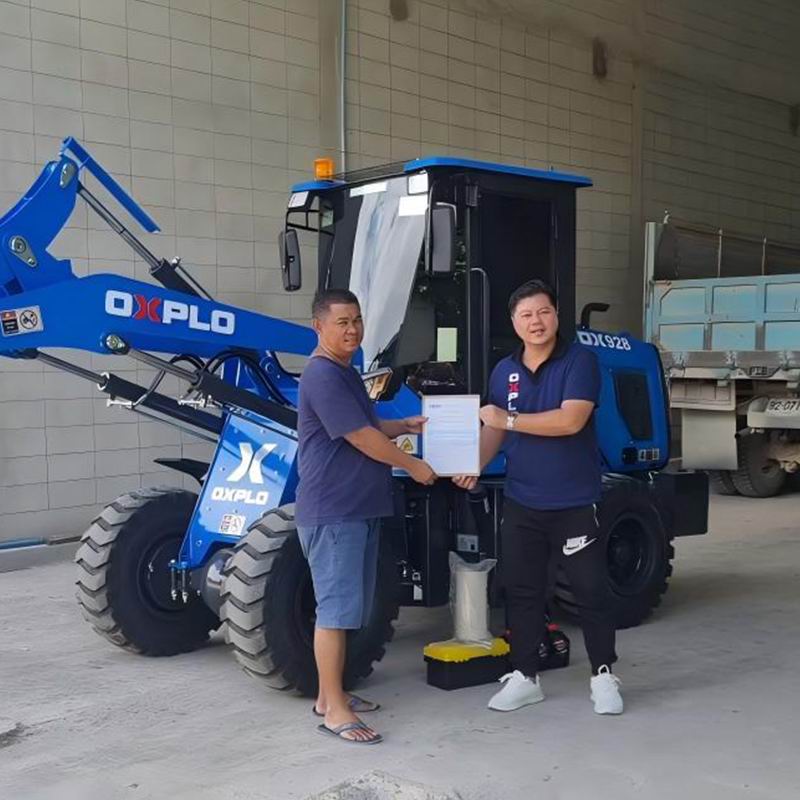
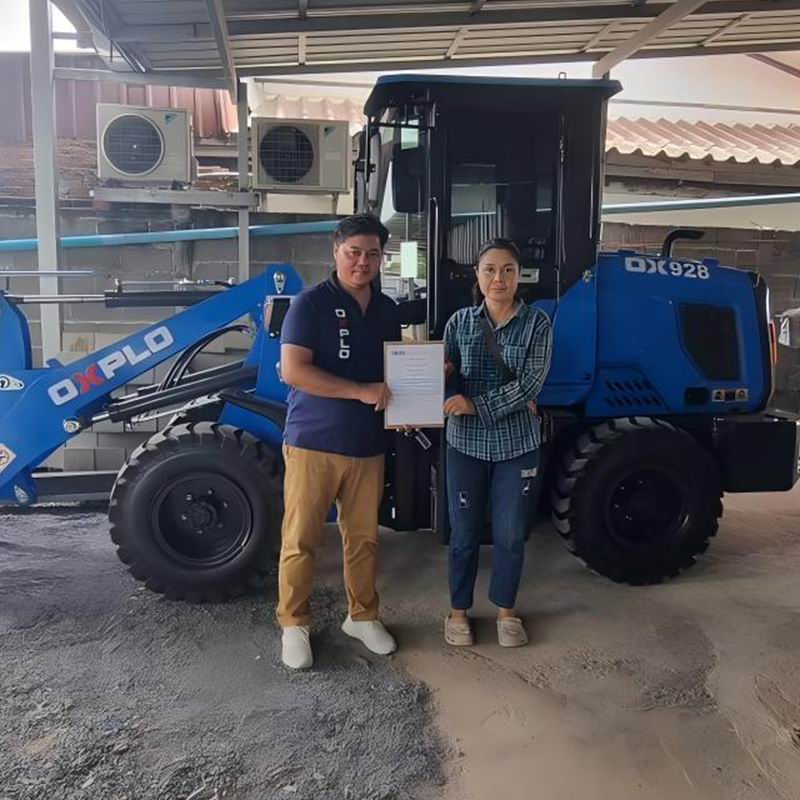
customer case


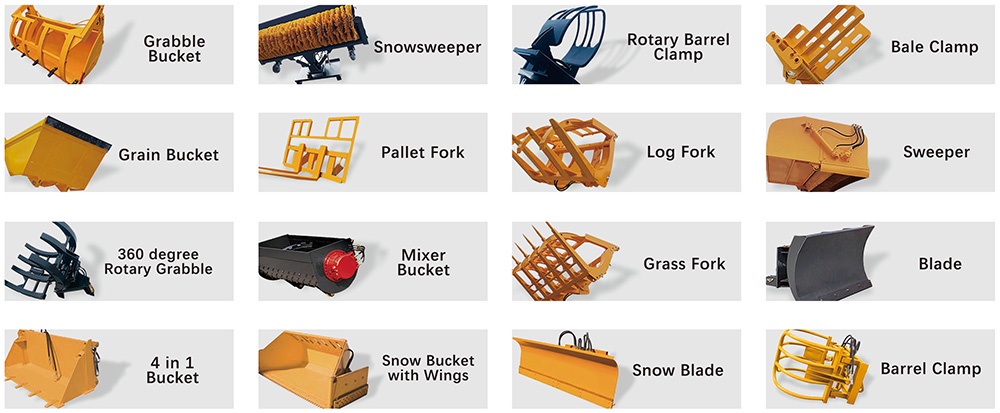
Wheel Loader Attachments
OXPLO provides a variety of spare parts support.
OXPLO's advantages
Let us introduce our products & factory to you
What makes us different
Why Choose Us
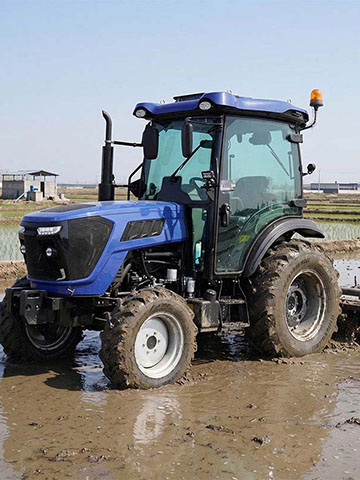
OXPLO specializes in the supply of forklifts, wheel loaders and tractors, providing reliable machinery solutions for material handling, construction and agricultural industries
Thailand Headquarters & SEAN Regional Operations
Headquartered in Thailand, with established firms and local service teams in the Philippines.
Reliable After-Sales & Spare Parts Support
We offer full after-sales care, including maintenance support and spare parts supply.
Factory Direct Supply
Direct factory operation ensures superior quality and a stable supply.
Quick Response & Service
Our local SEAN teams deliver rapid response, on-site service and expert technical help.
High-Performance Equipment
Built for tough jobs, our gear delivers robust power, steady performance and efficiency.
Application Scenarios
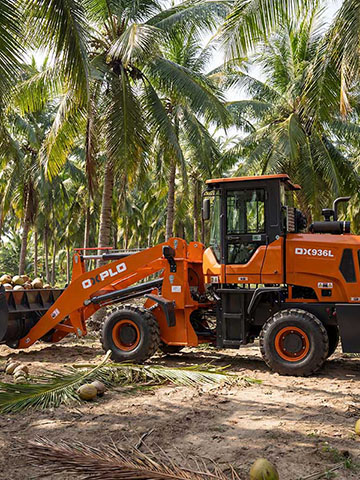
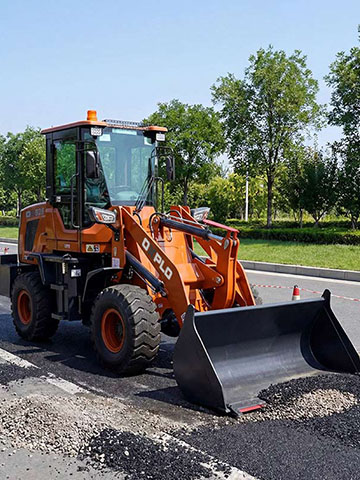
Our products are widely used in various fields such as warehousing,
construction, municipal roads, agriculture

about OXPLO
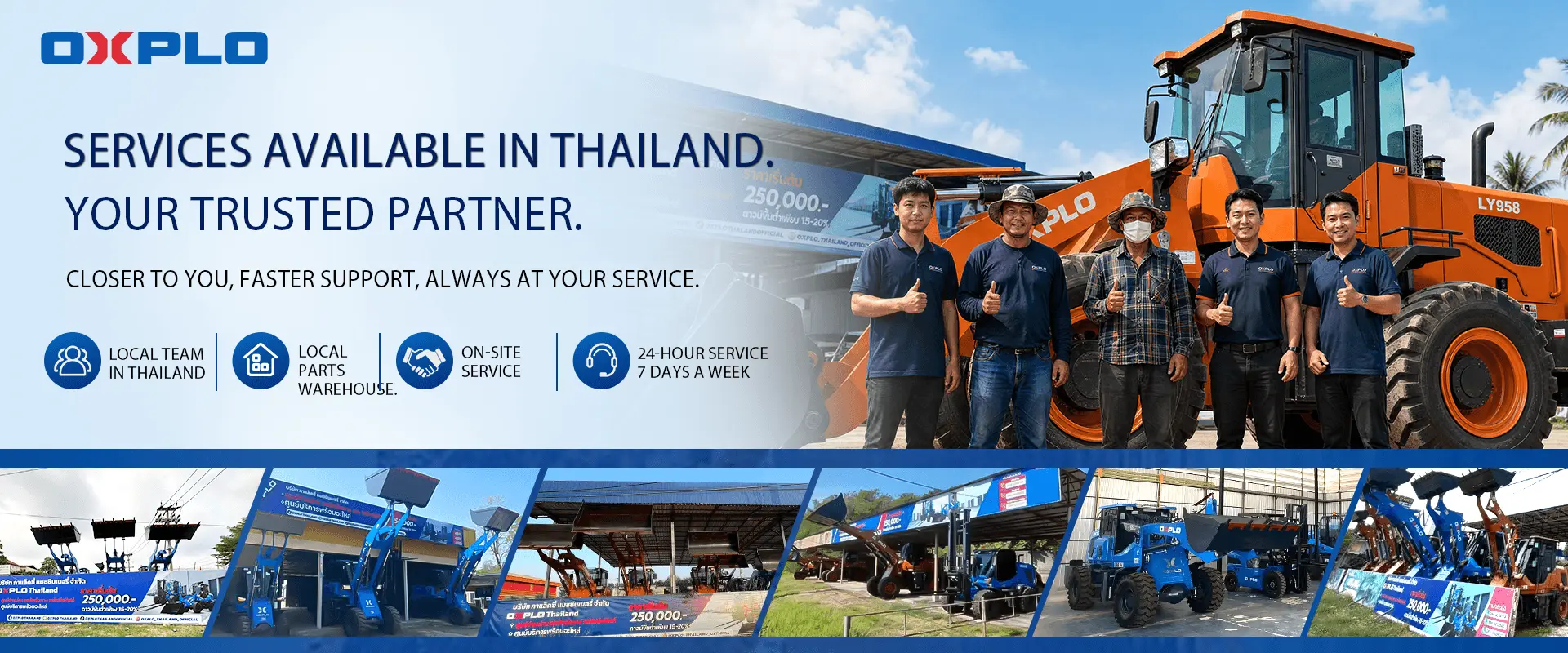
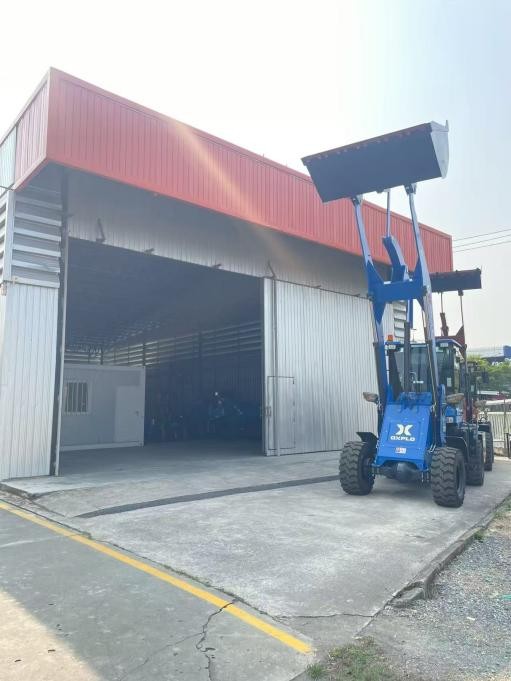
OXPLO is headquartered in Vannok District, Ayutthaya Province, Thailand, with five new branch offices in Khon Kaen, Nakhon Ratchasima, Ubon Ratchathani, Chiang Mai, and Phatthalung Provinces. The company's core competitive advantage lies in its "fast and efficient after-sales service and on-site problem-solving capabilities." OXPLO provides a comprehensive service guarantee system. Having cultivated the Thai market for many years, OXPLO not only provides excellent loaders, industrial forklifts, and off-road forklifts, but also offers one-stop service from procurement financing to after-sales support through comprehensive local support.







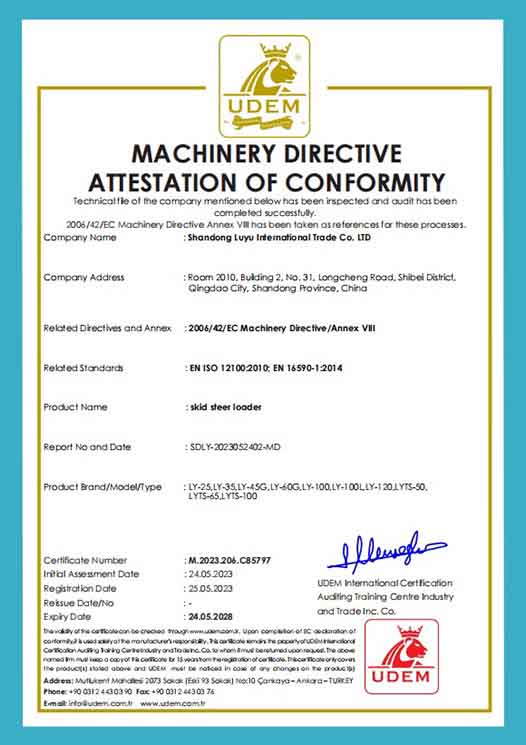
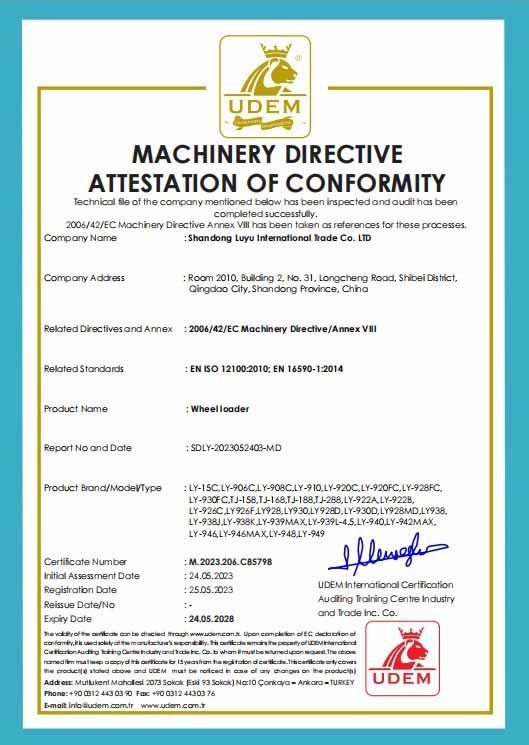
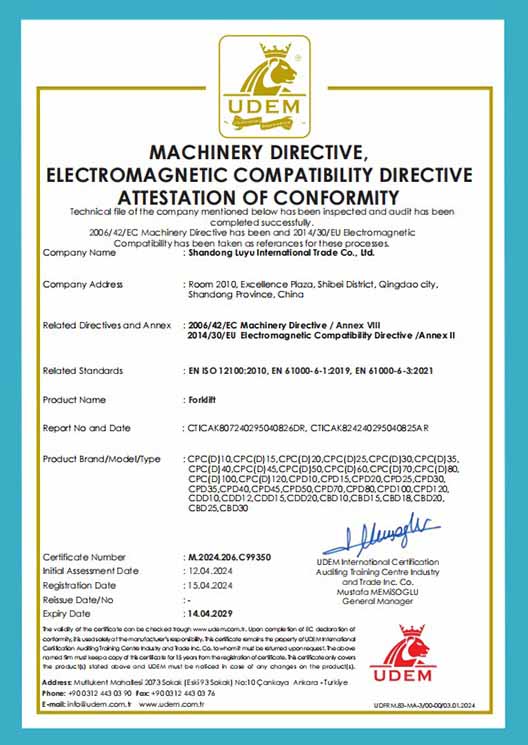
OUR CERTIFICATE

Wheel Loader FAQ
How much does a wheel loader cost?
The cost of a wheel loader varies depending on its rated load capacity, engine configuration, attachments, and optional features. Compact wheel loaders generally cost less than larger construction models. For an accurate quotation, contact OXPLO with your application requirements, preferred specifications, and destination country.
What is the fuel consumption of a wheel loader?
Fuel consumption depends on the loader size, engine power, operating conditions, and workload. Compact wheel loaders typically consume less fuel than larger models used in heavy-duty construction. Proper maintenance, efficient operating practices, and selecting the right machine size can help reduce fuel costs and improve productivity.
What is the lifting capacity of a wheel loader?
A wheel loader's lifting capacity is determined by its rated load. OXPLO offers wheel loaders with rated load capacities ranging from approximately 1.6 tons to 5 tons, making them suitable for agriculture, construction, material handling, and industrial applications. Always select a machine with sufficient capacity for your intended workload.
Can a wheel loader be used with pallet forks?
Yes. Many OXPLO wheel loaders can be equipped with pallet forks through a quick coupler system. This allows the machine to handle palletized goods, construction materials, agricultural products, and warehouse cargo, making it a versatile alternative to dedicated material handling equipment in certain applications.
How often should a wheel loader be serviced?
Regular maintenance is essential for maximizing machine performance and lifespan. Daily inspections should include checking engine oil, hydraulic fluid, coolant levels, and tire condition. Scheduled maintenance intervals vary by model and operating hours, but following the manufacturer's maintenance guidelines can help prevent unexpected downtime and costly repairs.
What is the difference between a wheel loader and a skid steer loader?
The primary difference is size, lifting capability, and maneuverability. Wheel loaders generally offer higher lifting capacities, larger buckets, and better performance for moving bulk materials over longer distances. Skid steer loaders are more compact and excel in confined spaces where tight turning and versatility are required. The best choice depends on your job site conditions and application needs.
What engine brands are available on OXPLO wheel loaders?
OXPLO wheel loaders are available with different engine configurations depending on the model and market requirements. Engine options may include reliable diesel engines designed to deliver strong performance, fuel efficiency, and easy maintenance. Please contact our sales team for specific engine options available in your region.
Do you provide operator training and technical support?
Yes. OXPLO provides after-sales support and technical assistance to help customers operate and maintain their equipment efficiently. Our team can offer guidance on machine operation, routine maintenance, troubleshooting, and spare parts support to ensure long-term reliability and productivity.