



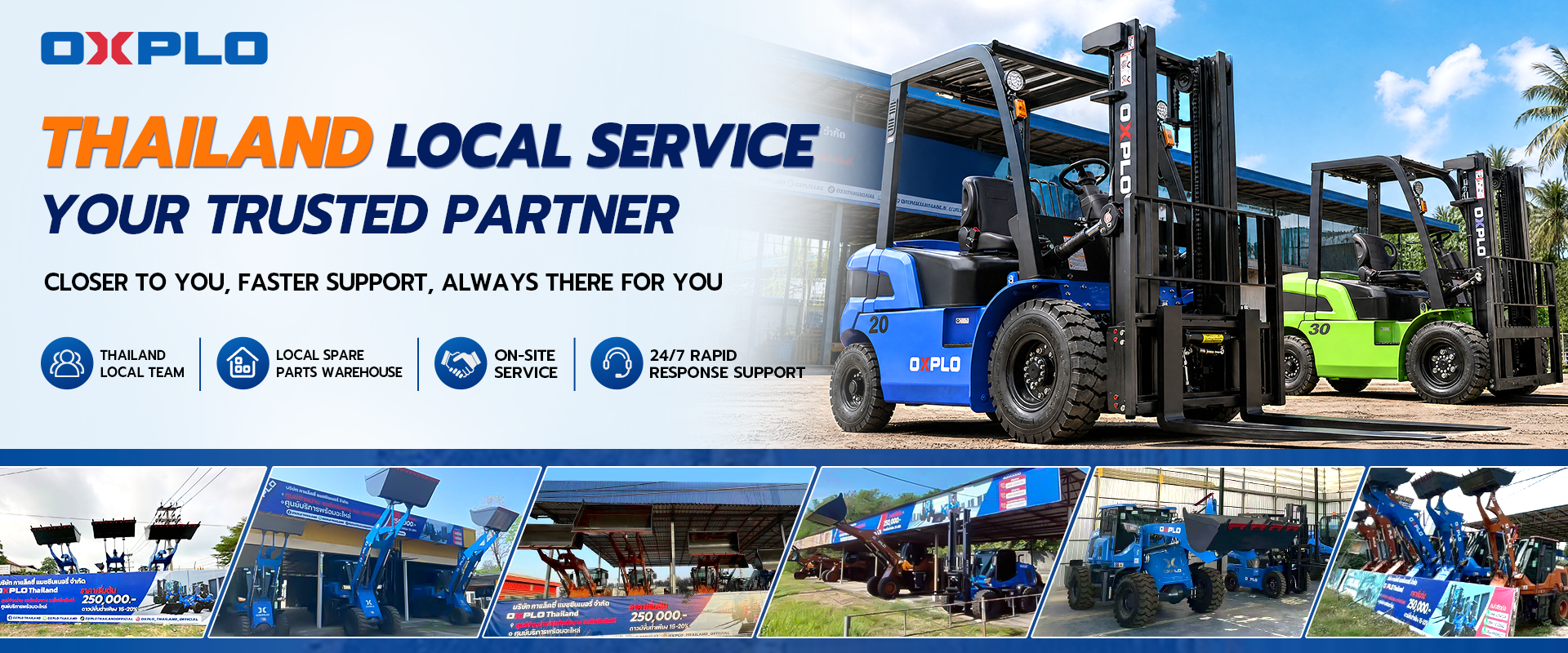
A forklift that performs adequately during normal months can quickly become a production bottleneck when warehouse throughput rises.
During a peak logistics period, inbound containers arrive closer together. Outbound orders must be staged within shorter time windows. Temporary inventory occupies travel lanes, loading bays become congested, and operators are expected to complete more pallet movements per hour.
At this point, many warehouse managers ask a simple question:
Is our current forklift capacity too low?
The question is reasonable, but forklift tonnage is only one part of the answer.
A warehouse may own several machines rated at 2,000 kg and still fail to complete its daily dispatch plan. In another operation, a single well-matched 2 ton forklift may handle the workload without difficulty.
The difference is rarely explained by rated capacity alone.
It depends on five operating variables:
1. The actual weight and load center of each pallet.
2. The lifting height required at the rack.
3. The time needed to complete one full handling cycle.
4. The percentage of the shift during which the forklift is genuinely productive.
5. The number of machines available after charging, maintenance and unexpected downtime.
This distinction matters in Southeast Asia, where warehouse and distribution activity is being supported by continued digital-commerce growth. The 2025 e-Conomy SEA report projected that the region’s digital economy would exceed USD 300 billion in gross merchandise value, increasing pressure on fulfilment, transport and material-handling systems.
The correct question is therefore not simply:
> Can this forklift lift two tonnes?
It is:
> Can this forklift fleet complete the required number of safe pallet movements during the busiest operating hour?
That is the question this guide will help you answer.
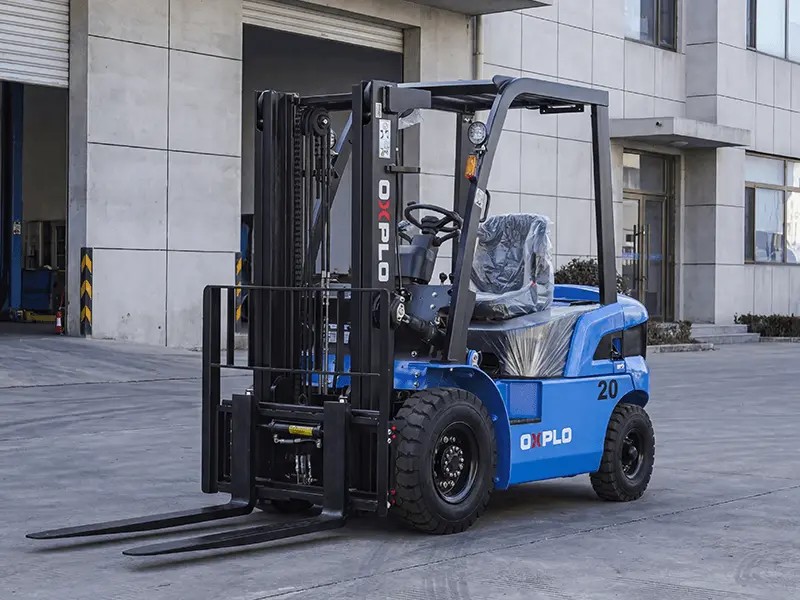
I. First Identify the Real Bottleneck: Capacity, Quantity or Workflow
When warehouse output falls behind schedule, the forklift is often blamed because it is the most visible piece of equipment in the process.
However, replacing a forklift with a larger machine will not automatically increase warehouse throughput.
A complete forklift handling cycle normally includes:
1. Receiving a task or warehouse management instruction.
2. Travelling to the pickup location.
3. Aligning the forks with the pallet.
4. Lifting and securing the load.
5. Travelling to the destination.
6. Positioning the truck at the rack or loading bay.
7. Depositing the pallet.
8. Returning for the next assignment.
Only part of this cycle involves lifting.
A more powerful truck may lift a heavier pallet, but it does not necessarily reduce:
* Waiting time at loading docks.
* Congestion at aisle intersections.
* Time spent locating inventory.
* Repeated alignment caused by damaged pallets.
* Delays while operators wait for paperwork.
* Empty return travel.
* Battery charging or refuelling time.
A simple throughput example
Suppose a warehouse operates four forklifts.
The average complete cycle takes six minutes. Under ideal conditions, each truck could therefore complete:
60 minutes ÷ 6 minutes = 10 cycles per hour
Four trucks would theoretically complete:
10 × 4 = 40 pallet movements per hour
That is only the theoretical result.
Assume that waiting, congestion, operator breaks and minor interruptions reduce effective utilisation to 75%.
The actual handling capacity becomes:
40 × 75% = 30 pallet movements per hour
If the peak requirement is 42 movements per hour, the warehouse has a shortfall of 12 movements.
Replacing every 2-tonne machine with a 3-tonne machine will not solve that shortfall when pallet weight remains unchanged. The larger machines may still complete only 30 cycles because the bottleneck is utilisation, not lifting capacity.
This is the first diagnostic rule:
> When the forklifts are rarely operating near their rated load, investigate cycle time and fleet quantity before increasing tonnage.
Observe the queue, not only the machine
During an operational audit, identify where pallets and forklifts are waiting.
If forklifts queue at the loading bay, the dock process may be the constraint.
If operators wait for instructions, task allocation may be the constraint.
If pallets block the main aisle, storage discipline may be the constraint.
If the forklift repeatedly struggles to lift long or heavy loads, rated capacity may genuinely be the constraint.
The location of the queue usually reveals the real problem.
II. Why a 2 Ton Forklift Cannot Always Lift 2,000 kg Safely
A 2 ton forklift is generally rated to lift 2,000 kg under specified conditions.
Those conditions normally include:
* A stated load center.
* A specified mast configuration.
* A defined lift height.
* Standard forks.
* A stable and evenly distributed load.
* A level operating surface.
Change one of these conditions and the usable capacity may change.
The importance of load center
Load center is the horizontal distance between the vertical face of the forks and the load’s center of gravity.
Forklift capacity is based on the rated load center shown on the truck data plate. OSHA guidance explains that when a load is not centered at the specified position, the truck’s capacity and stability are reduced. The data plate must therefore be checked before handling the load.
Consider a truck rated at:
* Rated capacity: 2,000 kg
* Rated load center: 500 mm
The rated load moment is:
2,000 kg × 500 mm = 1,000,000 kg-mm
For preliminary screening only, a simplified load-moment calculation can demonstrate what happens when the center of gravity moves forward.
At a 600 mm load center:
1,000,000 ÷ 600 ≈ 1,667 kg
At a 700 mm load center:
1,000,000 ÷ 700 ≈ 1,429 kg
This table is not a replacement for the manufacturer’s capacity chart. Forklift geometry, mast design, attachment weight and lifting height may result in a different permitted capacity.
The data plate and official residual-capacity chart always take priority.
Why pallet length matters
A procurement team may report that its heaviest pallet weighs only 1,700 kg and conclude that a 2-tonne truck provides a 300 kg safety margin.
That conclusion can be wrong.
Suppose the load is placed on a 1,200 mm-deep pallet and is evenly distributed. The load center may be approximately 600 mm.
The truck is no longer operating at the 500 mm rated condition.
The actual margin may therefore be very small, particularly when the load is raised to a high rack position.
The risk increases further when:
* The load is concentrated toward the front of the pallet.
* Packaging shifts during transport.
* Liquid moves inside a container.
* Fork extensions are used.
* The load has an irregular shape.
* Long materials extend beyond the fork carriage.
For this reason, forklift selection should never be based only on average pallet weight.
You need both weight and center of gravity.
Attachments consume capacity
Sideshifters, fork positioners, clamps and rotators improve handling efficiency, but they also add weight and move the load farther from the truck.
OSHA identifies sideshifters, paper-roll handlers, clamps and rotators as common forklift attachments. Any attachment that changes the truck’s capacity must be included in the rated configuration and reflected on the truck’s data plate.
This creates an important engineering trade-off.
A sideshifter may reduce alignment time and improve hourly throughput. At the same time, it may reduce residual lifting capacity.
The attachment can therefore improve productivity but limit the maximum safe load.
Both effects must be calculated.
III. Peak-Season Conditions That Change Forklift Performance
Southeast Asian material-handling sites frequently combine several operating environments within the same shift.
A forklift may work inside a warehouse, enter a shipping container, cross an outdoor yard and climb a dock ramp before returning indoors.
A model selected only for flat warehouse floors may struggle when the operating profile changes.
Mixed indoor and outdoor work
Indoor warehouse operations usually provide:
* Smooth concrete floors.
* Predictable travel routes.
* Controlled aisle widths.
* Standard pallets.
* Fixed charging or parking locations.
Outdoor operations may introduce:
* Uneven ground.
* Gravel or damaged concrete.
* Rainwater and mud.
* Longer travel distances.
* Ramps and gradients.
* Greater tyre wear.
The required lifting capacity may remain 2,000 kg, yet the necessary traction, ground clearance, tyres and power source may be different.
An electric truck can be a practical choice for controlled indoor operations, particularly where local exhaust emissions and noise are concerns.
A diesel truck may be more practical for extended outdoor use, changing work locations or sites with limited charging infrastructure.
Neither power source is universally correct.
The decision depends on the duty cycle.
Container and doorway clearance
Another common failure occurs when the forklift can lift to the required height but cannot enter the working area.
Before procurement, measure:
* Container entrance height.
* Warehouse doorway height.
* Dock shelter clearance.
* Cold-room doorway height.
* Sprinkler and lighting clearance.
* Overhead guard height.
* Mast height when fully lowered.
High lift height does not guarantee access.
A three-stage mast may provide greater lifting height while maintaining a manageable collapsed height, but its residual capacity must still be confirmed.
Heat and continuous operation
A forklift that can work through a standard shift under moderate demand may not perform the same way during continuous high-load operation.
Peak-season duty increases:
* Hydraulic activity.
* Brake use.
* Tyre temperature.
* Battery discharge rate.
* Cooling-system load.
* Engine operating hours.
* Operator fatigue.
A claim such as “eight hours of operation” is not useful without a defined duty cycle.
Eight hours of intermittent light loads is different from eight hours of frequent lifting, ramp travel and near-rated loads.
When evaluating an electric forklift, record:
* Loaded travel percentage.
* Average load weight.
* Lifting cycles per hour.
* Lift height.
* Ramp frequency.
* Ambient temperature.
* Available charging windows.
For a diesel forklift, review:
* Fuel consumption under load.
* Cooling-system condition.
* service intervals.
* Air-filter exposure.
* Refuelling logistics.
* Ventilation restrictions.
Rain, humidity and contamination
Moisture and dirt do not always cause immediate failure. They often create gradual deterioration.
Mud and abrasive particles can accelerate wear around:
* Mast channels.
* Lift chains.
* Rollers.
* Brake components.
* Electrical connectors.
* Steering joints.
Peak season then exposes the weakness because the machine no longer has sufficient idle time for inspection and maintenance.
This is why pre-season maintenance should be treated as capacity planning rather than routine administration.
A forklift in the workshop has zero hourly throughput.
IV. Four Expensive Mistakes in Forklift Capacity Planning
Mistake 1: Selecting tonnage from average load weight
Average weight hides exceptional but recurring loads.
Suppose a warehouse has the following load profile:
* 60% of pallets below 1,000 kg.
* 30% between 1,000 and 1,400 kg.
* 8% between 1,400 and 1,700 kg.
* 2% above 1,800 kg.
The average may appear suitable for a 2-tonne truck. However, the heaviest 10% of tasks may determine whether the operation is safe and whether a second machine type is necessary.
A more useful method is to examine:
* Maximum normal load.
* 95th-percentile load.
* Maximum pallet depth.
* Highest required lift.
* Frequency of non-standard loads.
In some operations, a mixed fleet is more efficient than using oversized forklifts for every task.
A 2 ton forklift can handle standard pallet work, while a larger truck is reserved for heavier or longer loads.
Mistake 2: Assuming a larger forklift always increases output
A higher-capacity truck normally has a larger chassis and turning envelope.
That can reduce efficiency in a narrow warehouse.
For example, the structured specification tables on OXPLO’s website list the CPD20 with a 2,190 mm outer turning radius and 2,230 mm minimum right-angle aisle width. The CPD30 is listed with a 2,515 mm outer turning radius and 2,545 mm right-angle aisle width.
The 3-tonne machine offers greater rated capacity, but requires more space.
In a warehouse designed around smaller trucks, the larger machine may:
* Need additional steering corrections.
* Increase rack-contact risk.
* Slow down at intersections.
* Reduce usable storage density.
* Require wider travel lanes.
The additional capacity must justify the space penalty.
Mistake 3: Calculating energy requirements from shift length alone
A warehouse may purchase enough electric forklifts but fail to provide enough charging capacity.
This happens when planners count machines but do not calculate:
* Charger output.
* Simultaneous charging demand.
* Electrical distribution capacity.
* Charging time between shifts.
* Distance between the working zone and charging area.
* Battery temperature and charging restrictions.
A forklift travelling to a distant charging room is not productive.
The same principle applies to diesel equipment. Refuelling delays, fuel storage and maintenance time must be included in the operating plan.
Mistake 4: Planning with zero reserve capacity
If calculations show that five trucks are required, operating exactly five trucks leaves no tolerance for failure.
A damaged tyre, hydraulic leak, battery alarm or overdue service can immediately create a capacity deficit.
Reserve capacity does not always mean purchasing another machine.
Possible methods include:
* Maintaining one backup forklift.
* Arranging short-term rental access.
* Sharing equipment between operating zones.
* Scheduling preventive maintenance outside peak hours.
* Stocking high-failure spare parts locally.
* Establishing a guaranteed service-response agreement.
The correct reserve strategy depends on the cost of delayed dispatch.
V. How to Calculate the Number of Forklifts Required
A basic fleet-sizing calculation can be expressed as:
Required Forklifts = Peak Tasks × Average Cycle Time ÷ Available Productive Minutes
A more useful version includes utilisation and availability:
N = Q × T ÷ (60 × U × A)
Where:
* N = number of forklifts required
* Q = peak pallet movements per hour
* T = average cycle time in minutes
* U = effective utilisation rate
* A = mechanical availability rate
Worked example
Assume:
* Peak demand: 36 pallet movements per hour
* Average complete cycle: 5 minutes
* Effective utilisation: 75%
* Equipment availability: 90%
The calculation is:
N = 36 × 5 ÷ (60 × 0.75 × 0.90)
N = 180 ÷ 40.5
N = 4.44
The result must be rounded up.
The operation requires at least five active forklifts.
If missing the dispatch deadline has a high commercial cost, additional reserve capacity should be arranged.
Data to collect before peak season
Do not rely entirely on manufacturer brochures.
Collecting real site data normally prevents more procurement errors than comparing nominal specifications.
VI. When Is a 2 Ton Forklift the Correct Choice?
A 2 ton forklift is commonly positioned between compact warehouse equipment and heavier industrial trucks.
It can provide a practical balance of capacity, manoeuvrability and ownership cost when the load profile is suitable.
Conditions that generally support a 2-tonne selection
A 2-tonne model is worth evaluating when:
* Most loads are between approximately 1,000 and 1,500 kg.
* Pallet dimensions are standard and consistent.
* The load center remains close to the rated value.
* Loads are stable and evenly distributed.
* Attachments do not consume excessive residual capacity.
* The required capacity at maximum lift height is confirmed.
* Aisle width is limited.
* The truck works mainly on firm, reasonably level surfaces.
This does not mean that every 1,500 kg load is automatically suitable.
The formal capacity chart still governs the decision.
Conditions that justify a larger forklift
A 2.5- or 3-tonne truck may be more appropriate when:
* Loads frequently exceed 1,700–1,800 kg.
* Long pallets move the center of gravity forward.
* Heavy clamps or rotators are required.
* Near-rated loads must be stored at high lift heights.
* The operation includes repeated ramp travel.
* Packaging is irregular or load weight varies.
* Future production growth is likely to increase unit load weight.
Conditions where increasing tonnage is the wrong response
Do not increase tonnage merely because daily throughput is low.
First investigate:
* Empty travel distance.
* Slow task release.
* Poor slotting of fast-moving inventory.
* Insufficient loading bays.
* Blocked aisles.
* Operator availability.
* Battery charging congestion.
* Repeated pallet correction.
When the current forklifts rarely approach their capacity limit, a larger truck is unlikely to solve the operating problem.
VII. Turning the Assessment into an OXPLO Forklift Configuration
Once the load profile, lift height, aisle geometry and duty cycle have been measured, the equipment configuration can be selected with far less uncertainty.
OXPLO currently lists several 2-tonne configurations for different operating conditions.
OXPLO CPD20 for controlled warehouse operations
The structured specification table for the OXPLO CPD20 lists:
* Rated capacity: 2,000 kg
* Rated load center: 500 mm
* Mast: two-stage, 3 m
* Full-load travel speed: 17 km/h
* Full-load lifting speed: 530 mm/s
* Outer turning radius: 2,190 mm
* Minimum right-angle aisle width: 2,230 mm
* Listed battery: 76.8 V / 280 Ah lithium
This configuration can be evaluated for:
* Indoor warehouses.
* Distribution centres.
* Manufacturing logistics.
* Standard pallet handling.
* Sites with planned charging access.
* Operations where turning space is limited.
The final battery and charger configuration should be confirmed against the required shift profile before ordering.
OXPLO OX20 for outdoor or flexible-duty work
The OXPLO OX20 product table lists:
* Diesel power
* Rated capacity: 2,000 kg
* Rated load center: 500 mm
* Two-stage, 3 m mast
* Full-load travel speed: 18 km/h
* Full-load lifting speed: 500 mm/s
* Full-load gradeability: 20%
* Outer turning radius: 2,300 mm
* Pneumatic tyres
* 50 L fuel tank
This type of configuration may be considered where:
* Outdoor travel is frequent.
* Charging infrastructure is unavailable.
* Refuelling speed is operationally important.
* The worksite changes regularly.
* The forklift travels between warehouses and yards.
For enclosed indoor use, ventilation and local emissions requirements must be considered.
OXPLO OX20L for higher stacking requirements
OXPLO identifies the OX20L as a 2,000 kg forklift with a three-stage, 5 m mast.
A higher mast can solve a storage-height problem, but the purchase decision should not stop there.
Ask for written confirmation of:
* Residual capacity at 5 m.
* Capacity at 500 mm and 600 mm load centers.
* Capacity with a sideshifter installed.
* Mast collapsed height.
* Free-lift height.
* Fork dimensions.
* Required aisle width.
* Final engine and transmission configuration.
The rated 2,000 kg value should not automatically be interpreted as 2,000 kg at maximum height.
Local support as part of total cost of ownership
Forklift price is visible. Downtime cost is often hidden.
OXPLO states that its Southeast Asian regional headquarters are in Thailand and that it operates a company and service team in the Philippines. Its website also lists several Thai sales and service locations, together with a Manila office and warehouse.
Before purchasing, include the following in the technical and commercial evaluation:
* Local spare-parts availability.
* Response time for field service.
* Preventive-maintenance schedule.
* Operator training.
* Attachment support.
* Capacity-plate documentation.
* Backup-machine options.
* Delivery time before peak season.
A lower purchase price can become expensive when a replacement part takes several weeks to arrive.
Final Decision Checklist
Before deciding whether your existing fleet can support the next logistics peak, complete these steps:
1. Record the heaviest normal load and pallet depth.
2. Confirm the actual load center.
3. Obtain the residual-capacity chart for the required lift height.
4. Include attachment weight and forward offset.
5. Measure the full handling cycle.
6. Calculate peak hourly pallet movements.
7. Apply realistic utilisation and availability factors.
8. Measure aisle, doorway and container clearances.
9. Review ramp, floor and outdoor conditions.
10. Verify charging, refuelling and maintenance capacity.
11. Plan reserve equipment or service coverage.
12. Compare forklift models using the same site data.
A 2 ton forklift can be an effective choice for standard warehouse and logistics tasks, but only when its rated conditions match the real load.
When heavy loads, long pallets, high racks and attachments occur together, a larger-capacity model may provide the safer operating margin.
When load weight is moderate but orders still fall behind, the real solution may be an additional truck, better warehouse slotting or shorter handling routes.
Peak-season planning should therefore move beyond the question of tonnage.
The objective is not to purchase the largest machine.
The objective is to build a forklift fleet that can complete every required movement safely, consistently and at an acceptable total cost.
OXPLO can support this process by reviewing load weight, pallet dimensions, stacking height, aisle width, floor conditions and shift requirements before recommending a 2-tonne electric forklift, diesel forklift or higher-capacity configuration.
FAQ
Q1: How much can a 2 ton forklift actually lift?
A1: A 2 ton forklift is generally rated to lift 2,000 kg at a specified load center and under defined mast conditions. Actual capacity may be lower when the load center increases, the load is raised higher or an attachment is installed. Always follow the data plate and manufacturer’s residual-capacity chart.
Q2: Can a 2 ton forklift lift a 1,800 kg load?
A2: Possibly, but load weight alone is not enough to make the decision. Pallet depth, center of gravity, lift height, attachment configuration and ground conditions must also be considered. A 1,800 kg long pallet may exceed the safe capacity of some 2-tonne configurations.
Q3: Is a 2 ton electric forklift suitable for two-shift operation?
A3: It can be, provided that battery capacity, charger output, operating intensity and available charging windows are correctly matched. Calculate energy requirements from the real duty cycle rather than shift duration alone.
Q4: Should I buy a larger forklift or add another 2 ton forklift?
A4: Choose a larger forklift when existing equipment lacks safe residual capacity. Add another forklift when the main problem is insufficient hourly handling cycles. Cycle-time measurement helps distinguish between the two problems.
Q5: Is a 3 ton forklift always more productive than a 2 ton forklift?
A5: No. A 3-tonne truck normally requires more turning and aisle space. In a narrow warehouse, the larger machine may take longer to position and may reduce storage density.
Q6: What information should I provide when requesting a forklift quotation?
A6: Provide maximum load weight, pallet dimensions, load center, maximum lifting height, aisle width, doorway clearance, floor condition, ramp gradient, operating hours, power-source preference and required attachments.
Customer Distribution
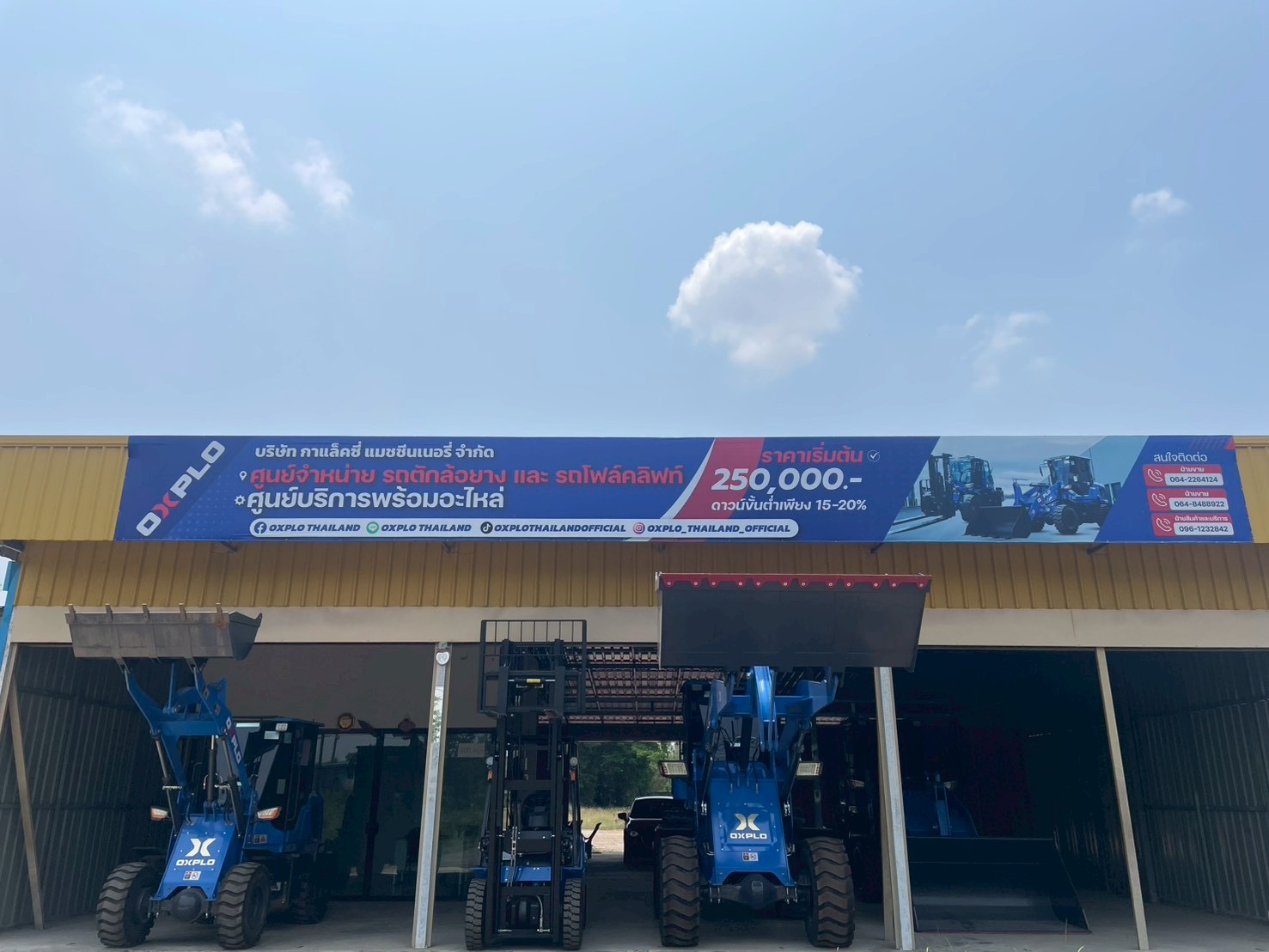
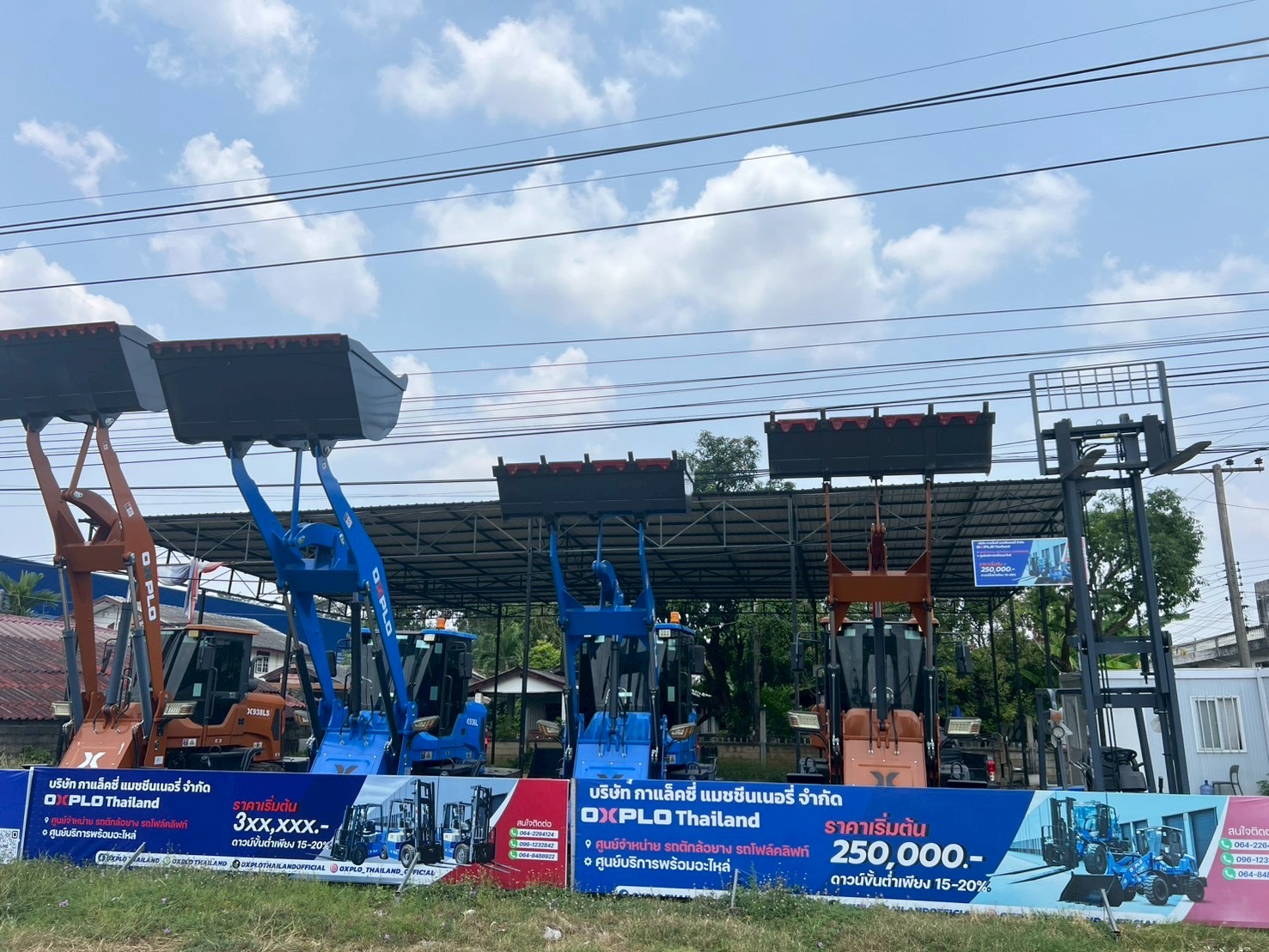
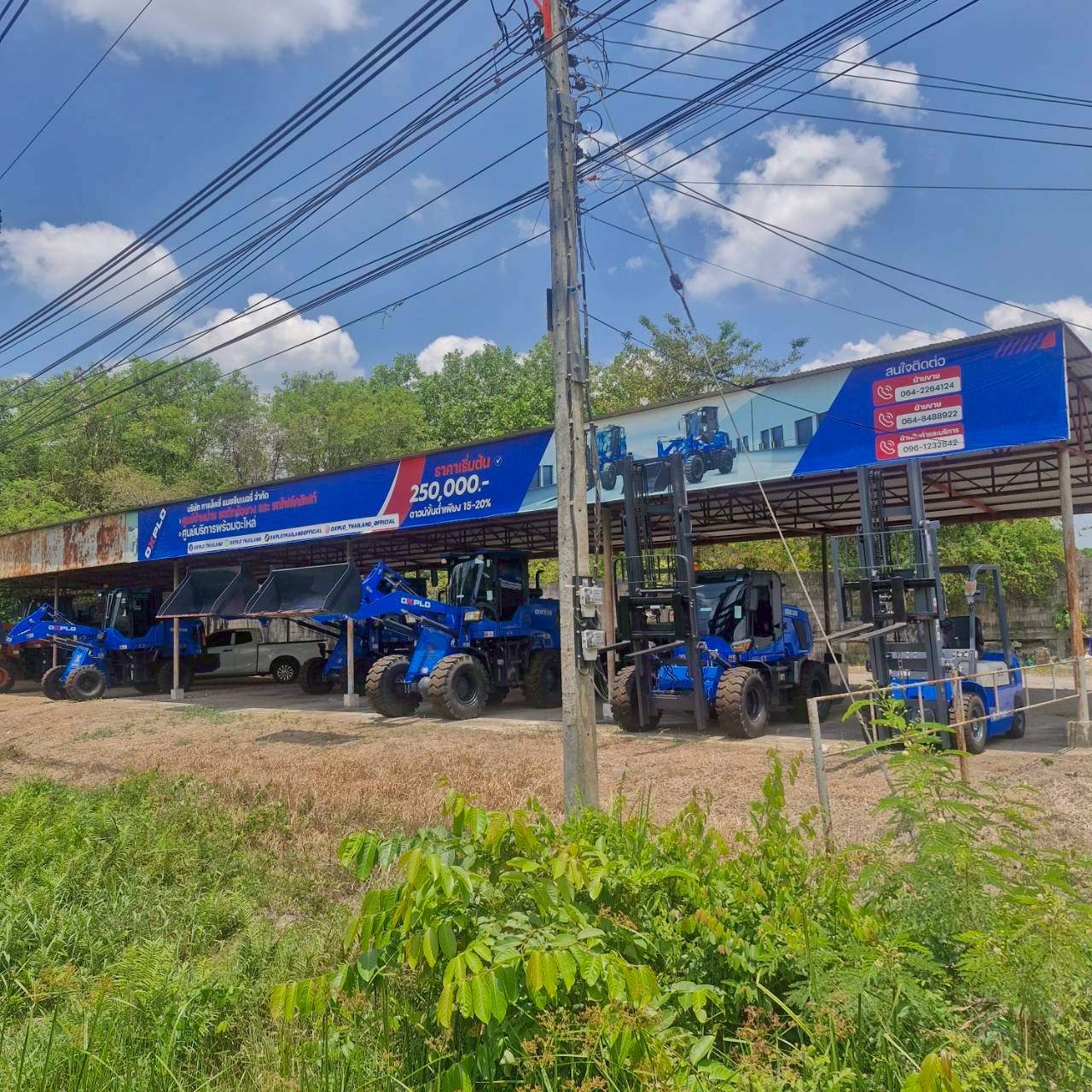
 Thailand-Ayutthaya
 Thailand-Khon Kaen
 Thailand-Nakhon Ratchasima
 Thailand-Ubon Ratchathani
 Thailand-Chiang Mai
 Thailand-Phthalum
, MAGUYAM ROAD, BRGY. MAGUYAM, SILANG, CAVITE") Philippines-ELITE GLOBUS WAREHOUSE(NO. 43 - OXPOWER MACHINERY INC.), MAGUYAM ROAD, BRGY. MAGUYAM, SILANG, CAVITE
Philippines-ELITE GLOBUS WAREHOUSE(NO. 43 - OXPOWER MACHINERY INC.), MAGUYAM ROAD, BRGY. MAGUYAM, SILANG, CAVITE
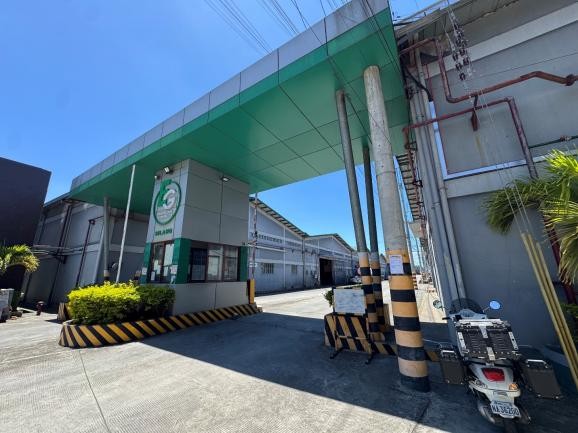
OUR OPERATiONS
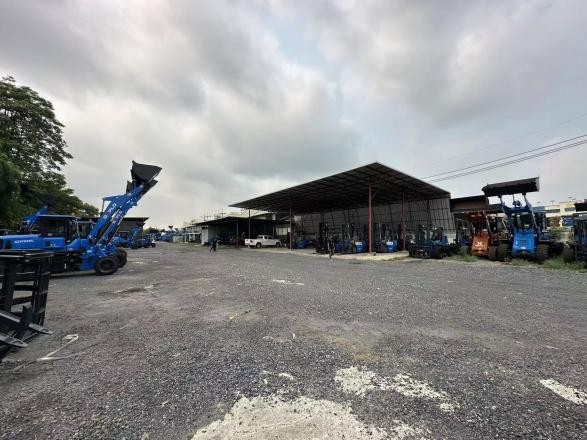
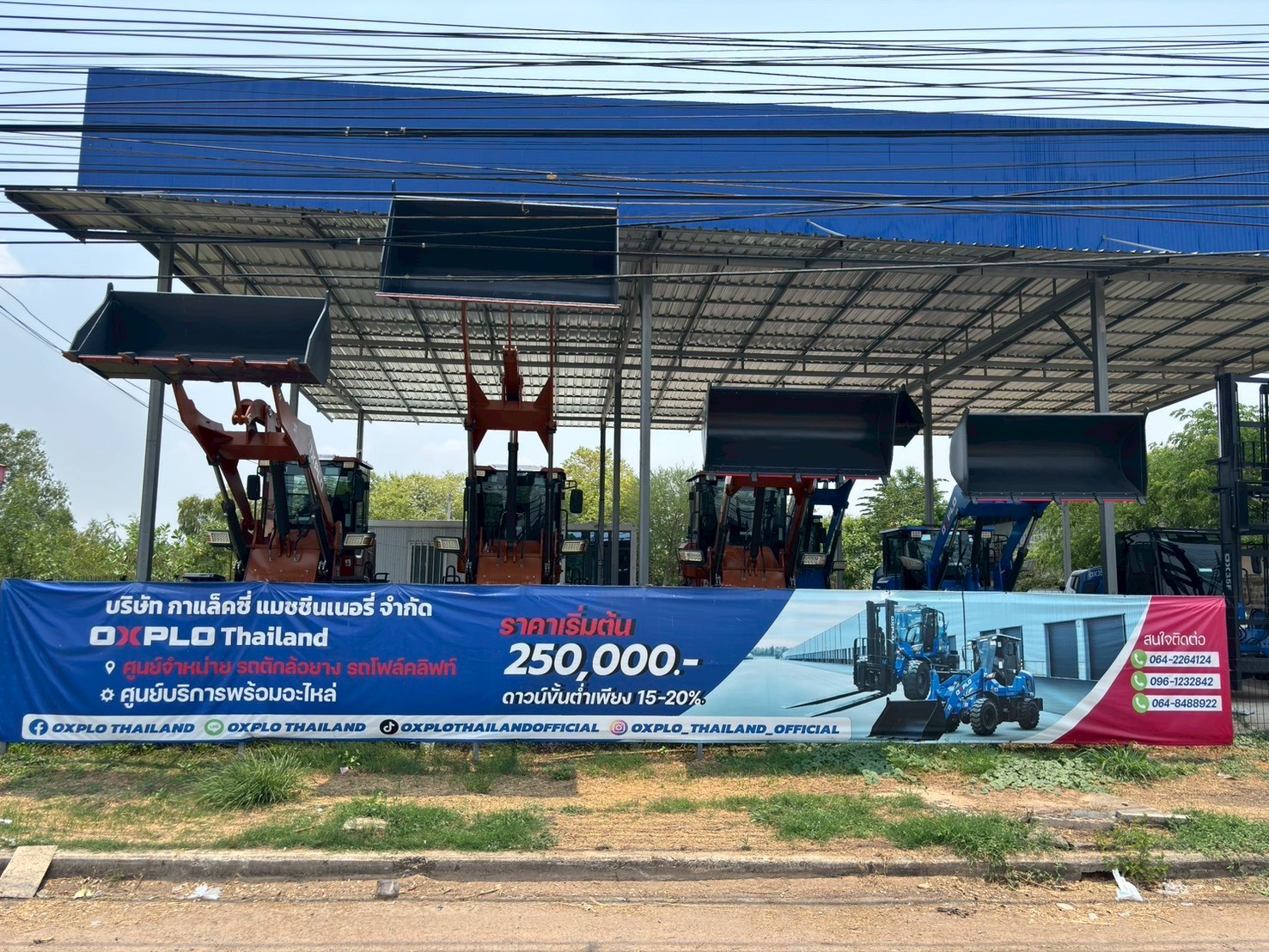
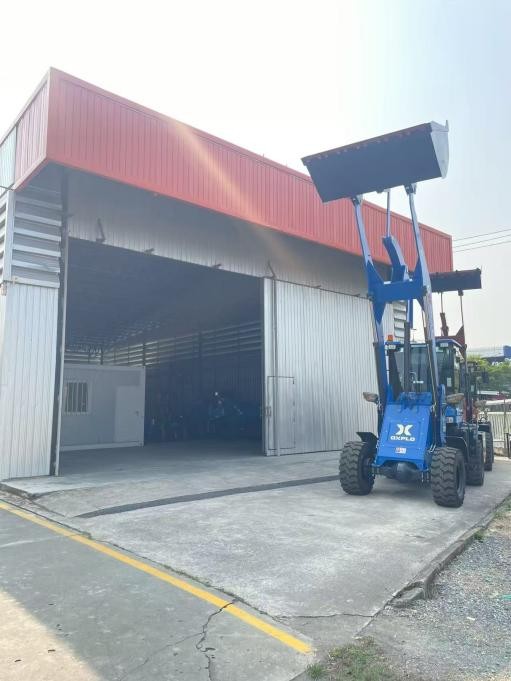
Our regional headquarters are located in Thailand, with independent operations company and service team in the Philippines. This multi-market presence enables us to provide customers throughout Southeast Asia with efficient communication, faster response times, and reliable local support.


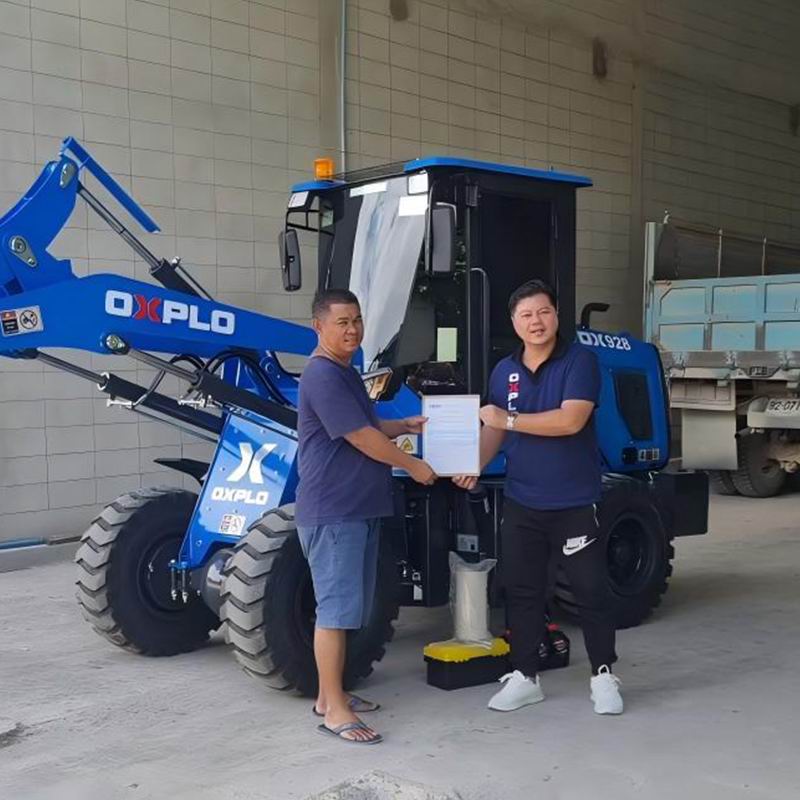
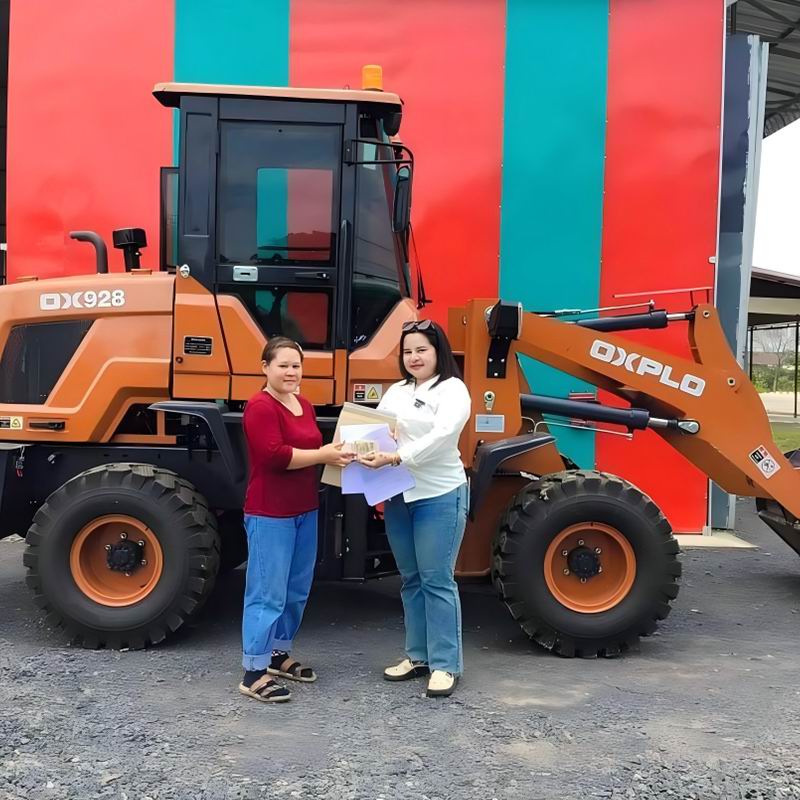
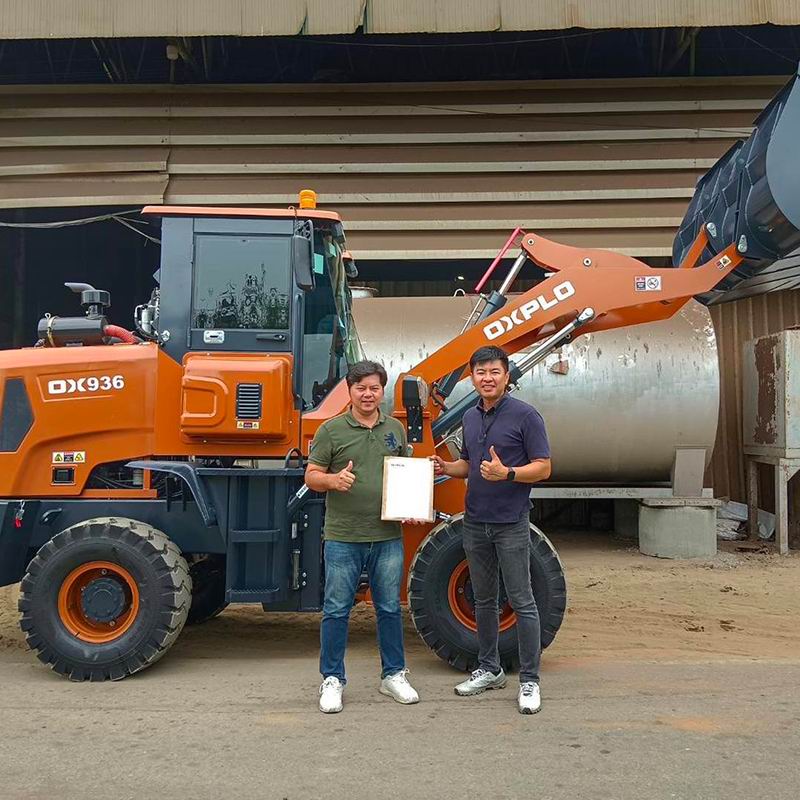
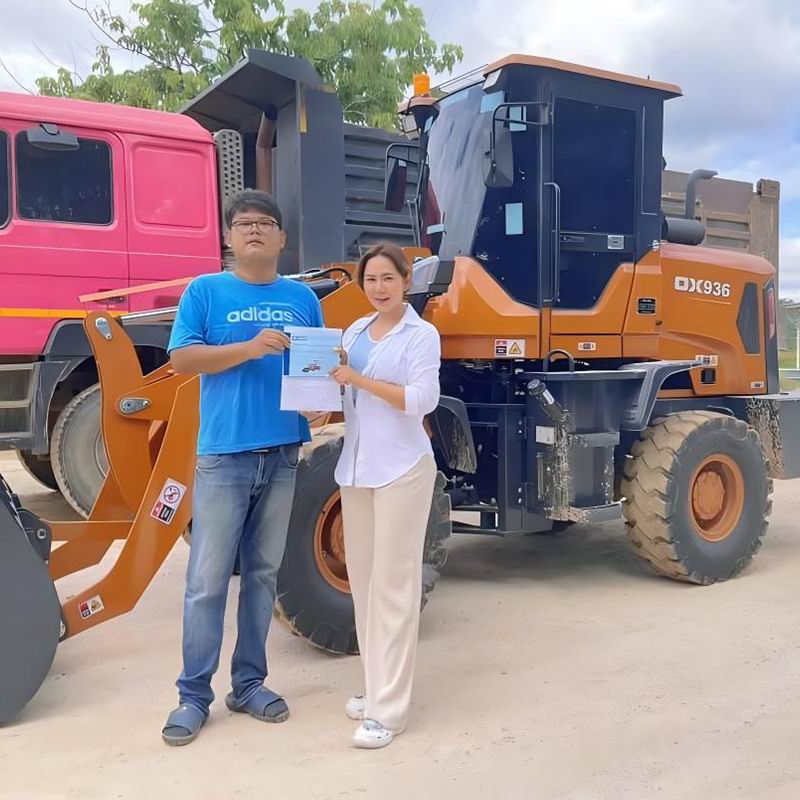
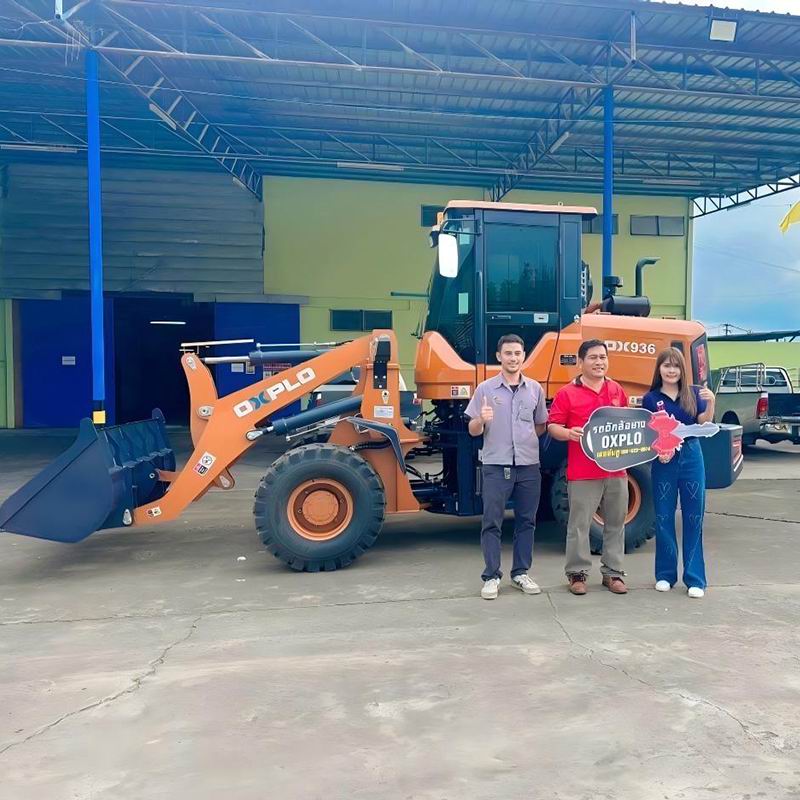
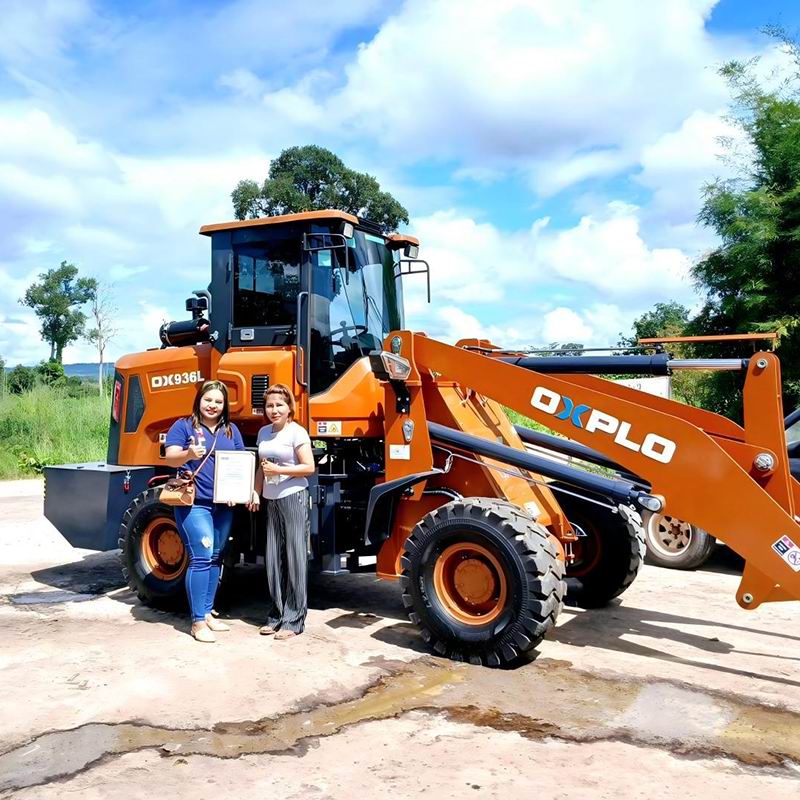
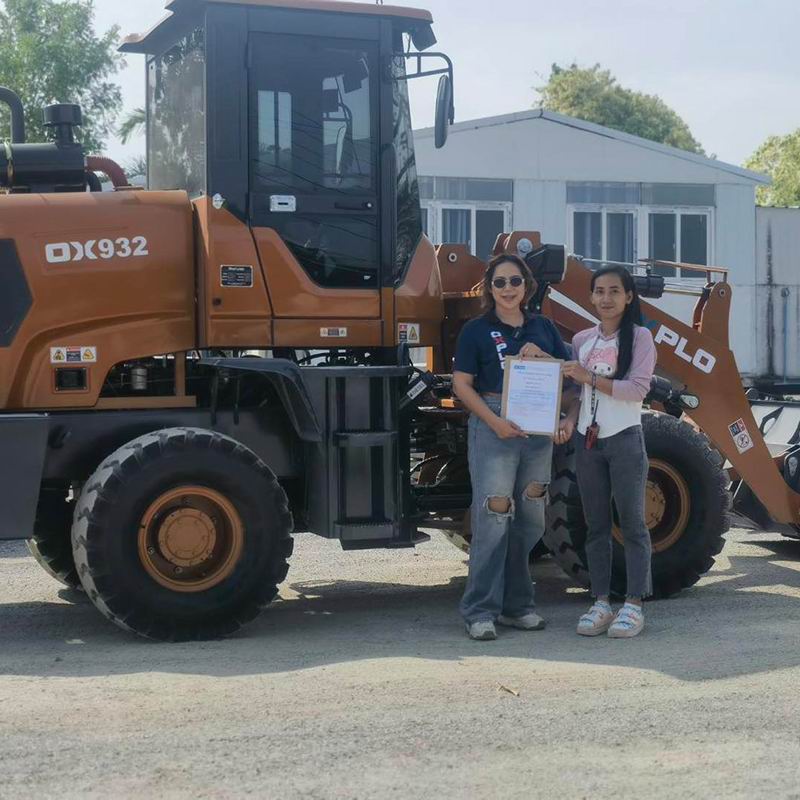
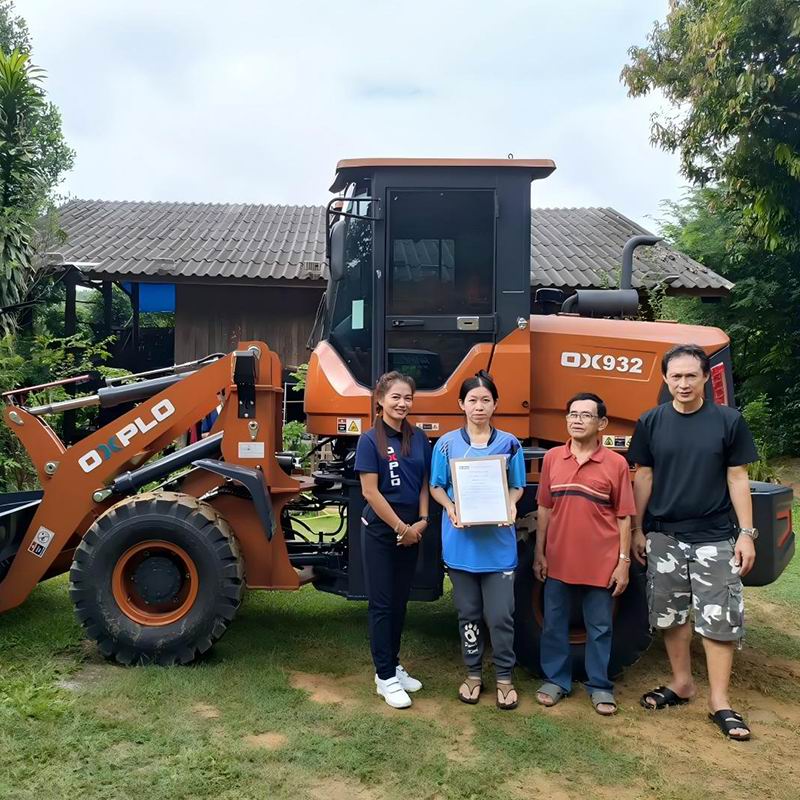
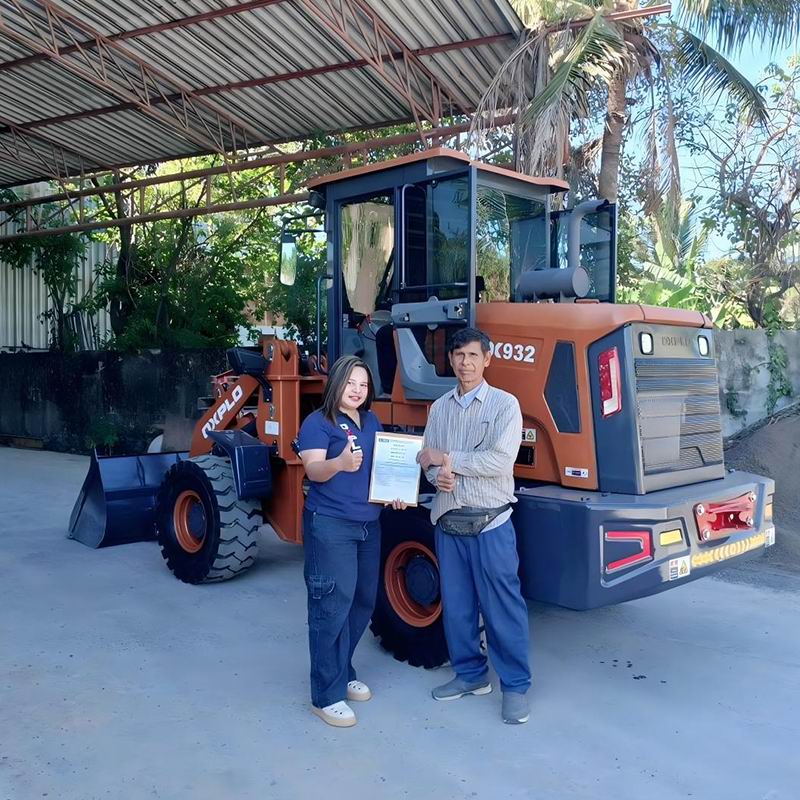
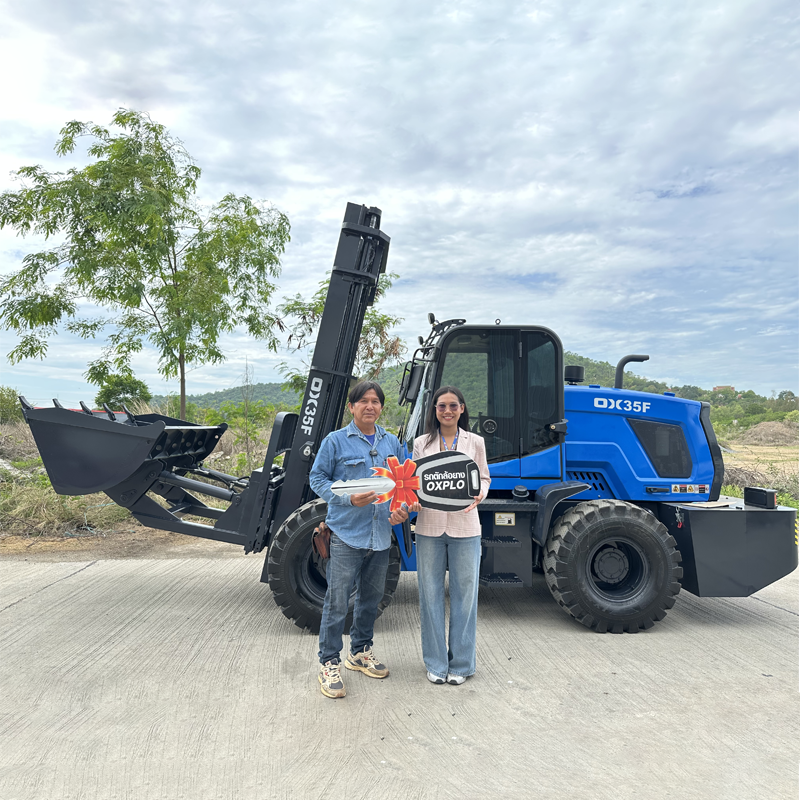
customer case
Wheel Loader Attachments
OXPLO provides a variety of spare parts support.
OXPLO's advantages
Let us introduce our products & factory to you
What makes us different
Why Choose Us
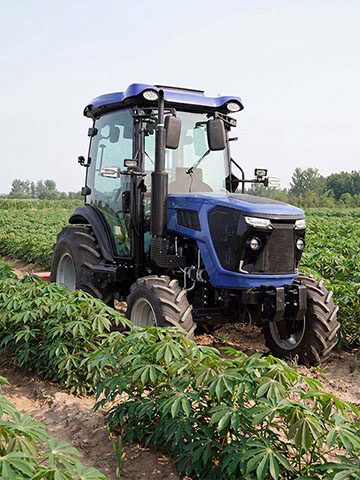
OXPLO specializes in the supply of forklifts, wheel loaders and tractors, providing reliable machinery solutions for material handling, construction and agricultural industries
Thailand Headquarters & SEAN Regional Operations
Headquartered in Thailand, with established firms and local service teams in the Philippines.
Reliable After-Sales & Spare Parts Support
We offer full after-sales care, including maintenance support and spare parts supply.
Factory Direct Supply
Direct factory operation ensures superior quality and a stable supply.
Quick Response & Service
Our local SEAN teams deliver rapid response, on-site service and expert technical help.
High-Performance Equipment
Built for tough jobs, our gear delivers robust power, steady performance and efficiency.
Application Scenarios
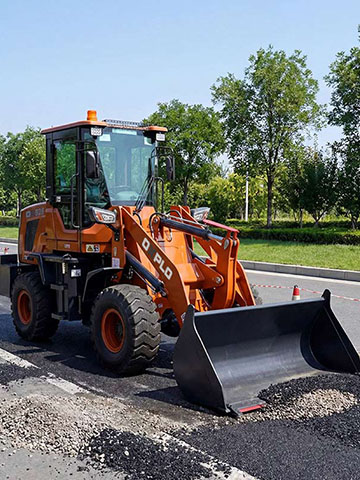
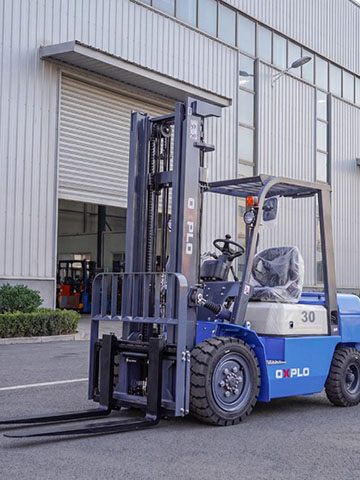
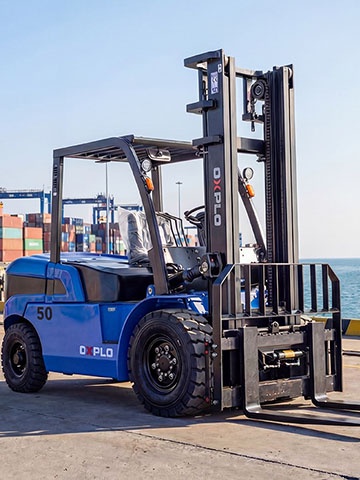
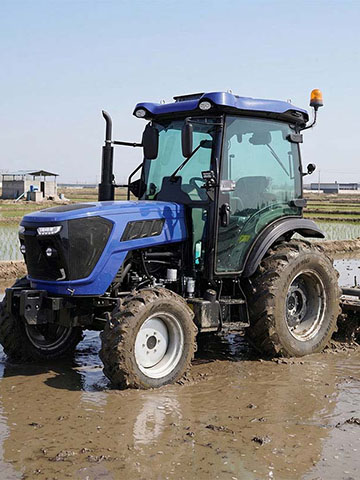
Our products are widely used in various fields such as warehousing,
construction, municipal roads, agriculture
about OXPLO
OXPLO is headquartered in Vannok District, Ayutthaya Province, Thailand, with five new branch offices in Khon Kaen, Nakhon Ratchasima, Ubon Ratchathani, Chiang Mai, and Phatthalung Provinces. The company's core competitive advantage lies in its "fast and efficient after-sales service and on-site problem-solving capabilities." OXPLO provides a comprehensive service guarantee system. Having cultivated the Thai market for many years, OXPLO not only provides excellent loaders, industrial forklifts, and off-road forklifts, but also offers one-stop service from procurement financing to after-sales support through comprehensive local support.







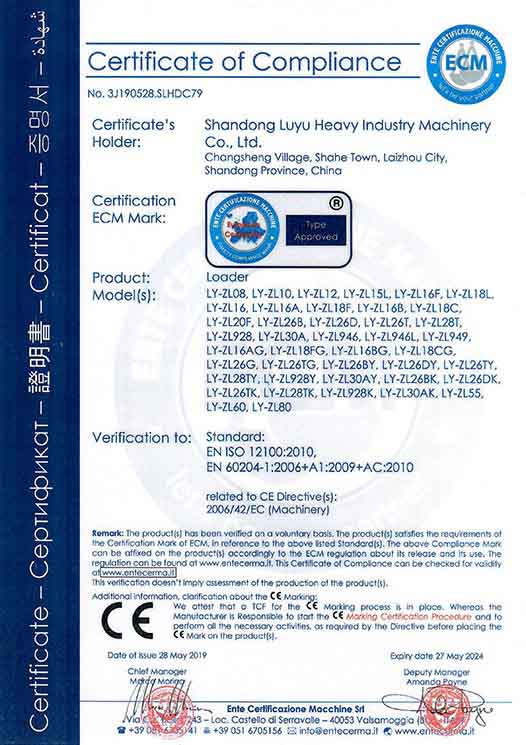
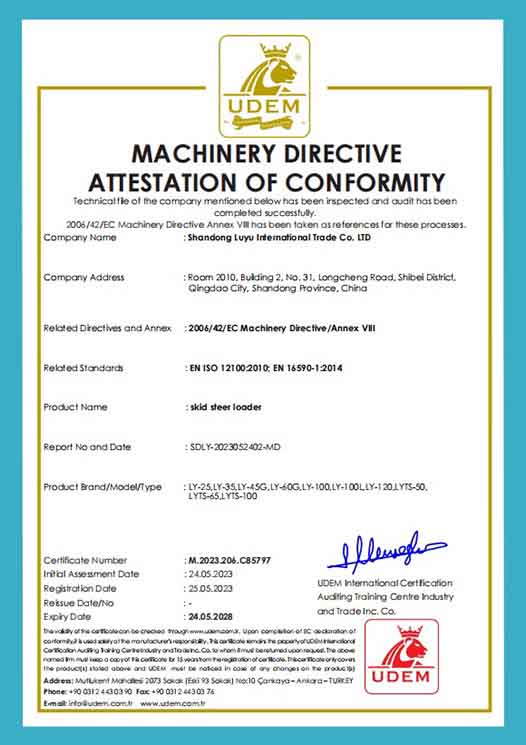
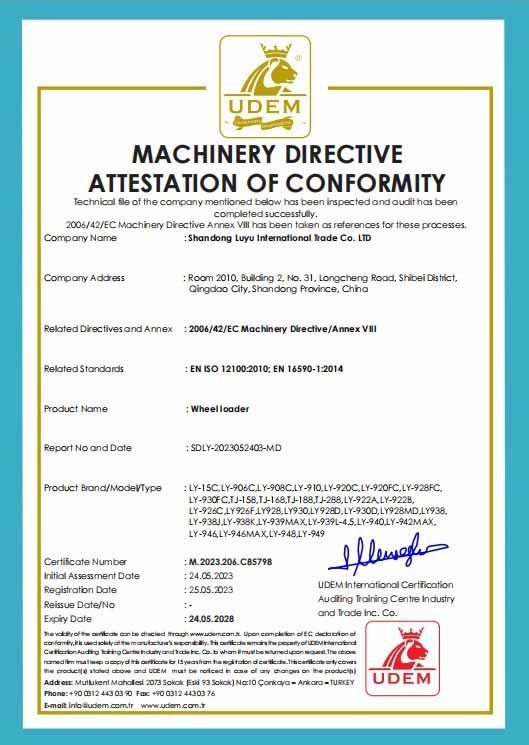
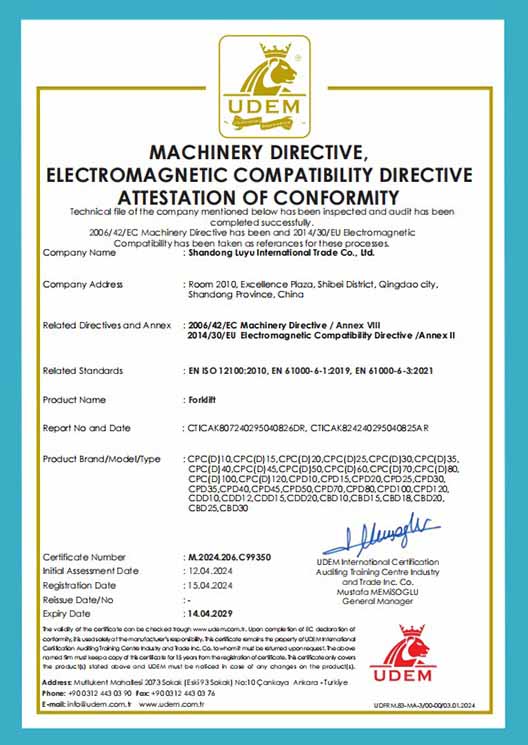
OUR CERTIFICATE
Wheel Loader FAQ
How much does a wheel loader cost?
The cost of a wheel loader varies depending on its rated load capacity, engine configuration, attachments, and optional features. Compact wheel loaders generally cost less than larger construction models. For an accurate quotation, contact OXPLO with your application requirements, preferred specifications, and destination country.
What is the fuel consumption of a wheel loader?
Fuel consumption depends on the loader size, engine power, operating conditions, and workload. Compact wheel loaders typically consume less fuel than larger models used in heavy-duty construction. Proper maintenance, efficient operating practices, and selecting the right machine size can help reduce fuel costs and improve productivity.
What is the lifting capacity of a wheel loader?
A wheel loader's lifting capacity is determined by its rated load. OXPLO offers wheel loaders with rated load capacities ranging from approximately 1.6 tons to 5 tons, making them suitable for agriculture, construction, material handling, and industrial applications. Always select a machine with sufficient capacity for your intended workload.
Can a wheel loader be used with pallet forks?
Yes. Many OXPLO wheel loaders can be equipped with pallet forks through a quick coupler system. This allows the machine to handle palletized goods, construction materials, agricultural products, and warehouse cargo, making it a versatile alternative to dedicated material handling equipment in certain applications.
How often should a wheel loader be serviced?
Regular maintenance is essential for maximizing machine performance and lifespan. Daily inspections should include checking engine oil, hydraulic fluid, coolant levels, and tire condition. Scheduled maintenance intervals vary by model and operating hours, but following the manufacturer's maintenance guidelines can help prevent unexpected downtime and costly repairs.
What is the difference between a wheel loader and a skid steer loader?
The primary difference is size, lifting capability, and maneuverability. Wheel loaders generally offer higher lifting capacities, larger buckets, and better performance for moving bulk materials over longer distances. Skid steer loaders are more compact and excel in confined spaces where tight turning and versatility are required. The best choice depends on your job site conditions and application needs.
What engine brands are available on OXPLO wheel loaders?
OXPLO wheel loaders are available with different engine configurations depending on the model and market requirements. Engine options may include reliable diesel engines designed to deliver strong performance, fuel efficiency, and easy maintenance. Please contact our sales team for specific engine options available in your region.
Do you provide operator training and technical support?
Yes. OXPLO provides after-sales support and technical assistance to help customers operate and maintain their equipment efficiently. Our team can offer guidance on machine operation, routine maintenance, troubleshooting, and spare parts support to ensure long-term reliability and productivity.