


A practical technical and purchasing guide for sugarcane growers, farm managers, cooperatives and agricultural contractors.
A tractor can look powerful in a specification sheet yet become a bottleneck during sugarcane harvest. It may pull a trailer on a dry road but spin its wheels at a muddy field exit. It may cultivate open ground efficiently but crush ratoon stools when the wheel track is wrong. Or it may spend an hour moving cane and another hour waiting for the loading crew.
For farms in Thailand, a search for “Tractor for Sugarcane Farm” should lead to a practical selection process—not simply a contest between 40, 50, 60 and 70 HP. The purchase only makes sense when the tractor fits the field, implements, haulage route and number of productive hours available each season.
This guide explains what to measure before buying, how to distinguish engine power from useful traction, how to evaluate ground clearance and how to calculate the cost of trailer delays. It then applies those checks to specific OXPLO tractor platforms without treating horsepower as a substitute for proper engineering verification.
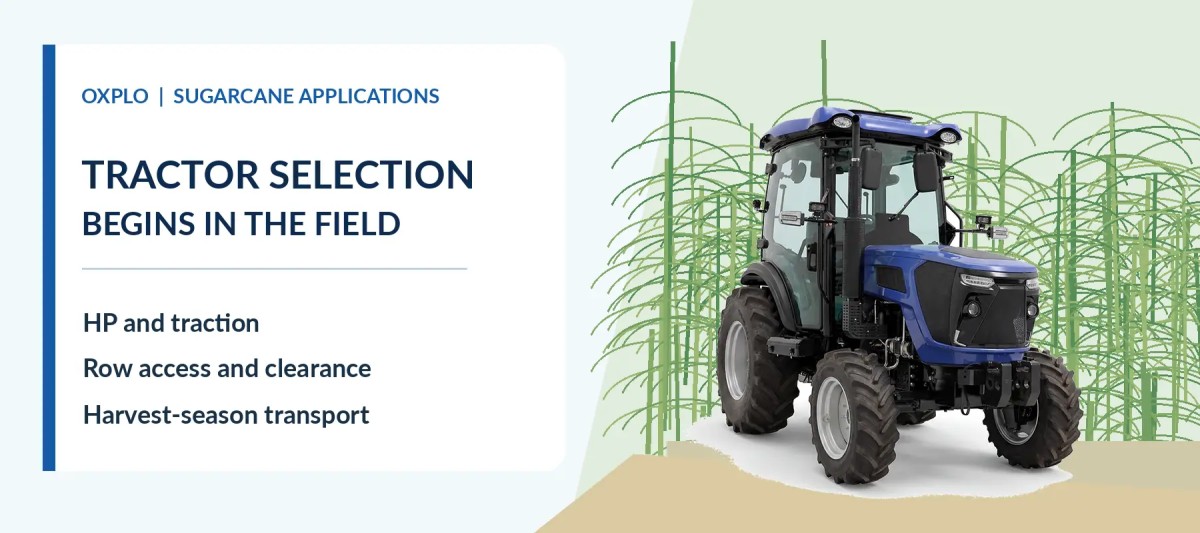
Figure 1. OXPLO tractor reference photo in a stylized sugarcane-field illustration; the field background is conceptual.
I. Why Thai Sugarcane Farms Cannot Afford the Wrong Tractor
A tight cane market makes every operating hour matter
In its April 2026 Thailand Sugar Annual, the USDA Foreign Agricultural Service reported an initial 2025/26 cane price of THB 890 per metric tonne, compared with an Office of the Cane and Sugar Board cultivation-cost estimate of approximately THB 1,358 per tonne. Those figures use industry-level reporting and should not be read as an individual farm profit-and-loss statement, but they show why an unnecessary equipment purchase is difficult to recover. See the USDA Thailand Sugar Annual.
A farm owner does not earn money from rated horsepower. The investment must support work that would otherwise take longer, cost more to hire, or go unfinished at a critical point in the season. The right starting question is which recurring operation causes the greatest verified cost or delay?
Different buyers are solving different problems
A smallholder using a tractor for fertilizer application and inter-row maintenance needs maneuverability, compatible implements and a sustainable annual ownership cost. A cooperative combining field work and cane collection needs a machine that can meet several jobs without being oversized for its narrowest field. A contractor hauling cane for multiple growers needs dependable daily utilization, an approved trailer combination and predictable service support.
A machine optimized for one of these buyers may not suit the others. The recurring job—not farm acreage alone—should establish the horsepower class and chassis platform.
Three mistakes that create hidden costs
· Buying for occasional maximum loads: an oversized machine carries higher ownership and possible soil-loading costs throughout the year.
· Assuming 4WD guarantees wet-field access: tyre grip and soil bearing capacity, not engine power alone, determine whether a loaded combination moves.
· Ignoring loading and unloading time: a faster tractor produces no extra cane deliveries while its trailer sits in a queue.
II. Measure Field Access, Ratoon Risk and Soil Before Comparing HP
Row spacing is a geometry problem, not a catalogue label
Sugarcane rows, ridge profiles and headland layouts differ across Thai farms. Before asking for a quotation, measure the narrowest entrance, row-center spacing, existing wheel lanes, turning area and raised-bed height. Also record the tyre-to-crop clearance required at the intended growth stage.
Do not compare a 1.50 m nominal row spacing directly with a 1.56 m tractor width and declare the machine suitable or unsuitable. The answer depends on where the tyres run relative to the rows, how the tractor turns and whether work takes place in standing cane or after harvest. A simple field sketch and a short driving trial often prevent an expensive mismatch.
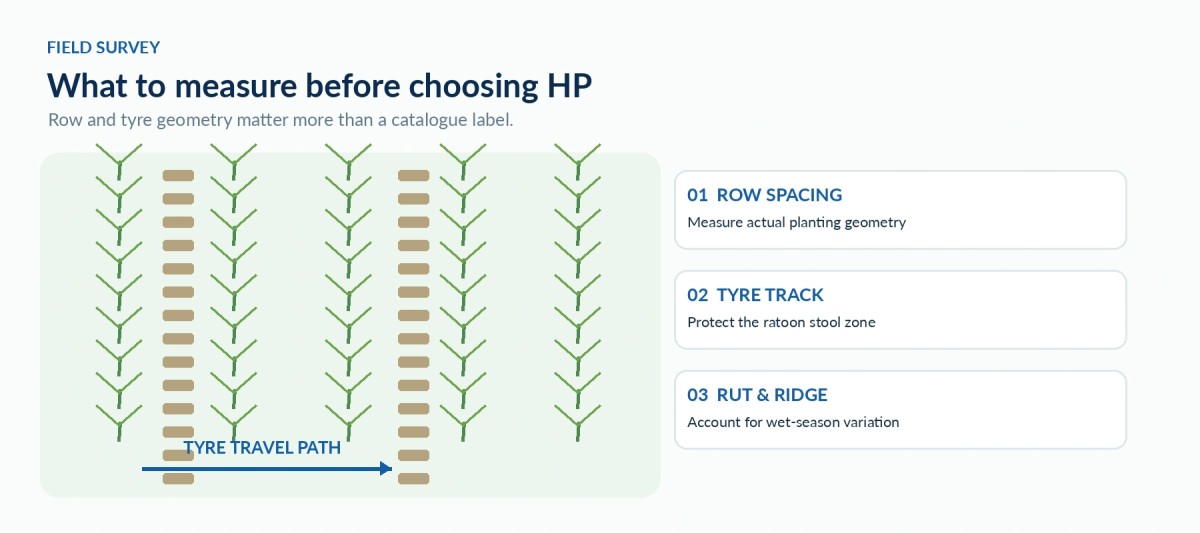
Figure 2. Field-fit inspection: measure row spacing, tyre travel paths and wet-season obstacles (illustrative, not to scale).
Repeated trailer passes can damage next season’s crop
A Thailand-based 2017 study on tractor–trailer haulage measured significantly higher soil bulk density after traffic, with penetration resistance exceeding 3 MPa under the studied conditions. The effect could extend deeper than 45 cm and intensified with increased axle load. This does not establish a universal safe trailer weight; it shows why heavy traffic cannot be assessed by transport output alone.
For ratoon fields, designate repeatable traffic lanes where practical. Avoid unnecessary wheel passes over cane stools and postpone heavy transport when the ground cannot adequately carry the load. A lower number of trips is not automatically better if each trip creates substantially greater axle loading.
Ask for a demonstration in the difficult part of the field
A tractor that works on the farm road may perform differently at a wet gateway or on compacted headlands. Trial the intended implement on representative ground, then inspect wheel slip, rut depth, crop contact and maneuvering time. Document the result before choosing between a smaller and larger chassis.
III. Choose HP Around Draft, PTO and Transport Demands
Engine HP is not drawbar power
Engine horsepower is measured at the engine under specified test conditions. The usable power available to an implement or at the drawbar is lower and depends on drivetrain losses, ground speed, traction and operating conditions. For a simplified steady-speed estimate, drawbar power (kW) = drawbar force (kN) × travel speed (m/s).
If an operation requires 7 kN of drawbar force at 2 m/s, the useful drawbar power is 14 kW. This is not a minimum engine rating or a towing-capacity certification. Starting resistance, gradients, rolling resistance, acceleration, wheel slip and the required power reserve must still be evaluated.
Power classes: the job each one needs to justify
These are screening categories, not promises of implement capacity or permitted trailer mass. A 50 HP tractor may be ideal for one farm and unsuitable for another using a heavier implement in dense soil.
Transmission, hitch and PTO deserve separate checks
An implement that needs 540 rpm PTO input must match the tractor’s supplied PTO setting and have an appropriate power requirement. The rear linkage category, lifting arrangement, hydraulic services and shaft geometry must also be checked. A 12+12 transmission can provide different working-speed choices from an 8+8 arrangement, but the practical benefit depends on the actual ratios, tyres and load.
A Thai agricultural engineering study of a subsoiler for 49–50 HP tractors illustrates why equipment matching matters. Its results refer to a specifically designed two-shank subsoiler and particular test conditions; they should not be generalized to every 50 HP tractor or implement. The lesson is to size the implement and tractor as a system.
IV. Ground Clearance, Tyres and the Cost of Getting Stuck
High ground clearance is only one measurement
A High Ground Clearance Tractor can be useful around raised beds, crop residues and uneven field tracks. But its published minimum clearance does not guarantee passage over an obstacle of the same height. Tyre deflection, load, rut depth and the location of low components all matter. More clearance also does not fix tyres that run across ratoon stools.
Measure the highest obstruction, rut depth and required crop clearance on the farm. Then ask the supplier where the minimum-clearance dimension is measured and whether a different tyre or track configuration changes it.
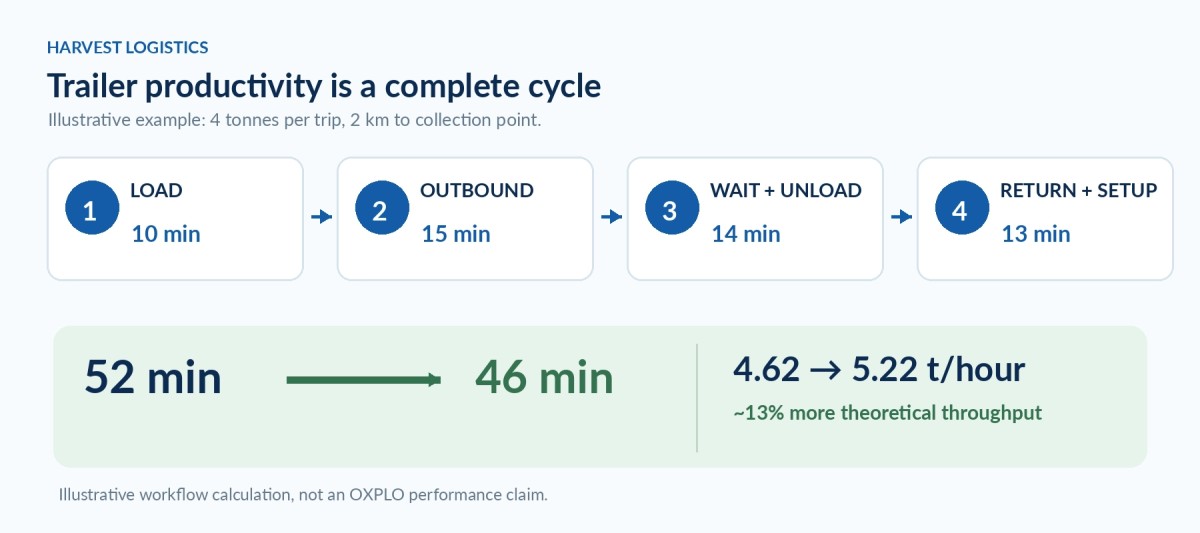
Figure 3. Actual supplied tractor photos: rear mounting area and side profile. Verify the exact configuration for each OXPLO model.
Use tyres and ballast to support traction—not to hide poor soil conditions
Excessive wheel slip wastes fuel and disturbs soil; unnecessary ballast increases axle loading. Tyre size and inflation pressure should be selected for the actual load and speed, within the tyre manufacturer’s limits. Four-wheel drive can help develop traction but cannot make saturated soil safe for heavy traffic.
If the tractor repeatedly struggles at the same wet exit, consider improving drainage, reinforcing the approach or moving the cane-loading point closer to a firm route. These interventions may solve the problem at lower total cost than purchasing a larger engine.
V. Calculate Tractor Trailer Work by the Complete Haulage Cycle
Tonnes per hour matter more than tonnes per trailer
Tractor Trailer Work involves positioning, loading, loaded travel, queueing, unloading, empty travel and repositioning. Farms often compare only trailer payload and road speed. Neither tells the whole story. The critical metric is tonnes successfully delivered per productive hour, subject to safe towing and road-use limits.
Worked example: reducing waiting time instead of increasing HP
Assume a hypothetical 4-tonne trailer travels 2 km between a sugarcane field and a collection point. The combination is assumed to be approved for the load and route. A complete trip looks like this:
At 52 minutes per cycle, theoretical delivery capacity is 4 × 60 ÷ 52 = 4.62 tonnes/hour. If better scheduling cuts queueing from eight minutes to two, the cycle falls to 46 minutes and capacity becomes 4 × 60 ÷ 46 = 5.22 tonnes/hour—approximately 13% more theoretical throughput, with no additional horsepower.
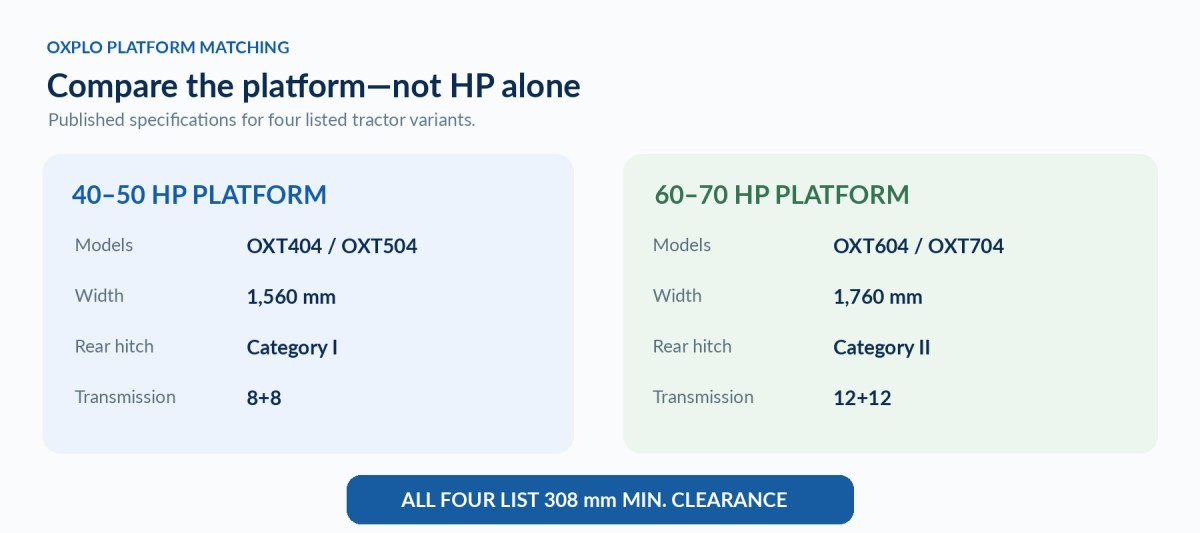
Figure 4. Illustrative 4-tonne haulage cycle: reducing waiting by six minutes changes theoretical output from 4.62 to 5.22 tonnes/hour.
Illustrative calculation only. It is not an OXPLO field-test claim. Actual output depends on cane supply, loading variation, weather, safe travel speed and available working hours.
A trailer that can be pulled is not necessarily safe to tow
Tractor engine rating alone does not establish permissible trailer weight. Confirm manufacturer-approved trailer configuration, drawbar vertical load, hitch strength, tyre and axle load limits, trailer braking and the route’s gradients. Downhill control is especially important. Public-road use additionally requires checking applicable local weight, lighting, registration and vehicle rules.
Where fields are soft but public-road distances are long, it may be more efficient to transfer cane to a suitable road truck at a firm collection point rather than repeatedly drive a heavy tractor–trailer combination through the plantation.
VI. Turn Field Data Into a Defensible Purchase Decision
Calculate cost per productive hour, not purchase price alone
A complete ownership estimate includes depreciation, finance costs, fuel, maintenance, tyres, operators, unplanned repair, insurance where applicable and time lost during the working season. For haulage work, calculate attributable transport cost ÷ tonnes actually delivered. For cultivation, assess cost per hectare or per Thai rai under a defined task and soil condition.
A low purchase price can be expensive if a machine loses harvest days to mismatched implements or unavailable parts. Equally, a higher-power tractor may raise cost per hour without improving the actual bottleneck.
Put a number on avoidable waiting
Suppose a contractor makes six trailer trips per day over 80 working days, with 12 avoidable minutes lost per trip. That creates 6 × 12 × 80 ÷ 60 = 96 hours of waiting per season. At an illustrative attributable cost of THB 850 per hour, the affected time represents THB 81,600.
This is not guaranteed cash savings. Some costs remain fixed and additional revenue appears only if recovered hours are used for productive work. The calculation is a decision tool: compare the value of reducing delays with the additional cost of a larger tractor, second trailer, better loading equipment or an improved route.
Own, share or hire?
For a small farm with only a few days of heavy tillage or cane haulage each season, hiring larger equipment may be more economical. Ownership becomes more defensible when the tractor has repeatable jobs across the year. Cooperatives and contractors should forecast working days by task, not just the peak harvesting week.
VII. Where OXPLO Tractors Fit: Match the Platform to the Problem
The OXPLO 40–70 HP comparison that matters
The OXPLO tractor range covers multiple utility tractor classes. For sugarcane buyers, the main distinction is that the 40–50 HP OXPLO models and 60–70 HP OXPLO models use different published chassis and implement configurations—not simply different engine ratings.
OXPLO lists 308 mm minimum ground clearance for all four models. The smaller OXT404/OXT504 platform has a listed 2,200 kg total weight; the larger OXT604/OXT704 platform has a listed 2,500 kg total weight. These are published specifications and should be reconfirmed for the ordered configuration.
Customer problem → OXPLO configuration → what to verify
What OXPLO can solve—and what must be checked
For customers doing mixed farm work, OXPLO provides an equipment range that lets them compare horsepower alongside hitch category, transmission and physical dimensions. This is useful when a buyer must balance row access with attachment requirements. But OXPLO cannot responsibly promise a specific sugarcane towing capacity from horsepower alone; the proposed trailer and route require technical confirmation.
For Thai customers, OXPLO’s company information identifies operations in Thailand, while its service and support page describes pre-sales configuration assistance, after-sales support, delivery and warranty options. For a harvest-sensitive purchase, ask OXPLO to confirm model-specific stock, spare-parts availability, local service coverage and the actual warranty terms in writing.
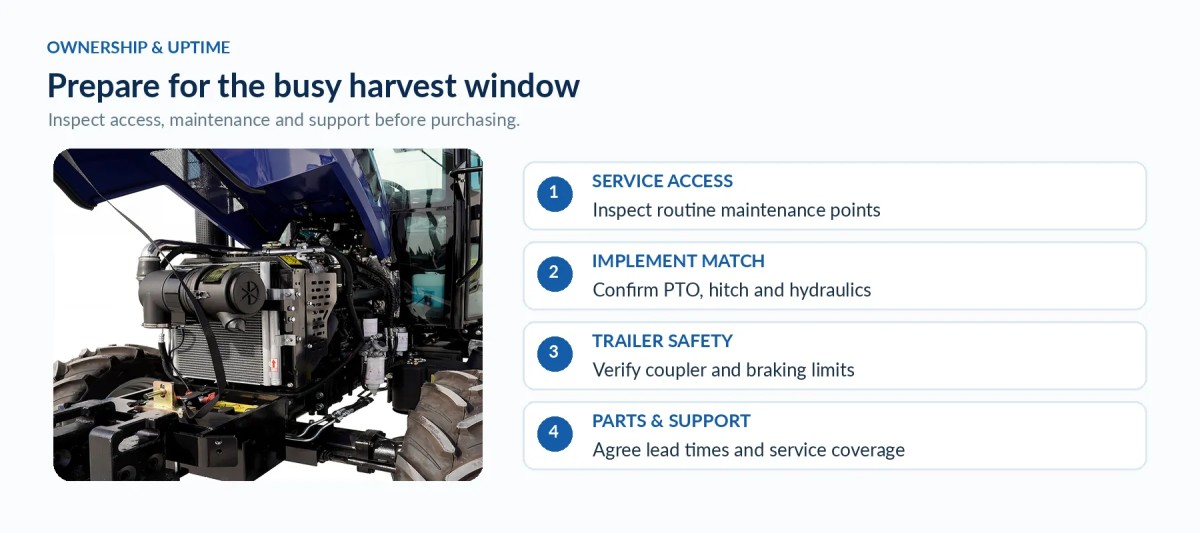
Figure 5. Original engine-bay reference photo and a pre-purchase service, implement and trailer-safety checklist.
Send a useful technical inquiry, not just “price for 60 HP”
A farm manager or dealer can shorten the selection process by sending OXPLO these details:
1. Farm province and whether the main job is cultivation, maintenance or cane transport.
2. Row spacing, narrowest entrance, soil type and expected wet-season working conditions.
3. Existing implement make/model, hitch category, PTO demand and hydraulic requirements.
4. For transport: trailer empty and loaded masses, braking equipment, distance and steepest route.
5. Annual operating hours, service expectations, delivery deadline and required attachments.
With those details, the OXPLO team can discuss whether the smaller OXT404/OXT504 platform or larger OXT604/OXT704 platform warrants further assessment. Browse OXPLO agricultural tractors or contact OXPLO Thailand to request the relevant specification sheets and configuration review.
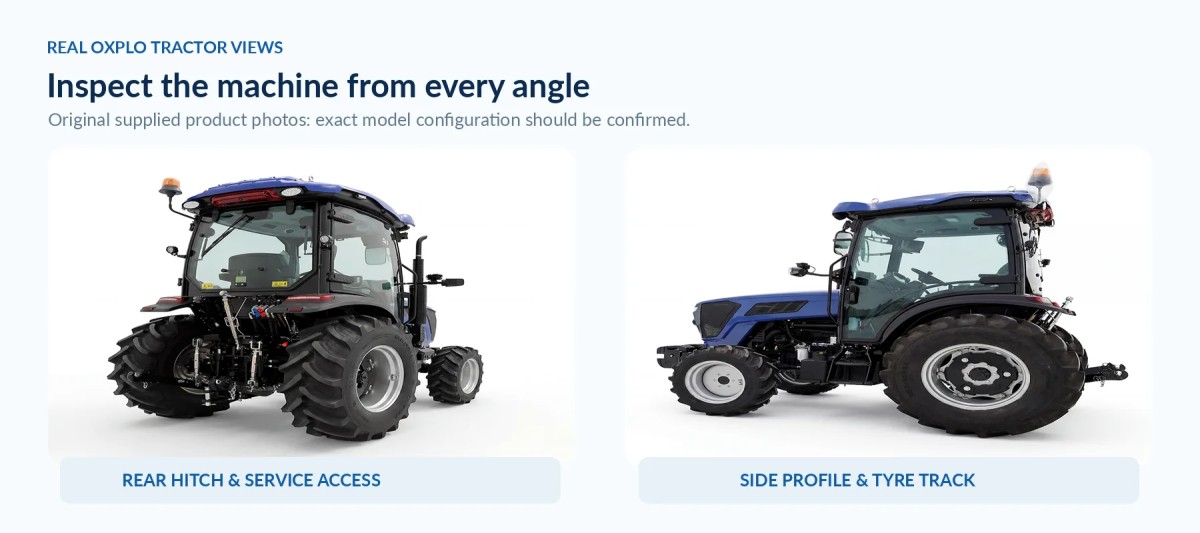
Figure 6. Platform selection summary from published OXPLO model specifications; confirm configuration before ordering.
VIII. Frequently Asked Questions
What is the best HP tractor for a sugarcane farm in Thailand?
There is no single horsepower answer. Start with the main implement or transport task, required daily output, soil conditions and access width. A 40–50 HP utility platform may be worth evaluating for mixed maintenance work; more demanding recurring loads may justify investigating 60–70 HP models. Confirm each proposed implement and trailer separately.
Do sugarcane farms always need a high ground clearance tractor?
No. The need depends on crop stage, raised beds, rut depth and where the tyres must travel. Minimum underbody clearance does not establish crop clearance or row compatibility. Measure the field and run a trial where practical.
Can a 50 HP tractor pull a loaded sugarcane trailer?
Possibly, but 50 HP alone cannot confirm that the combination is approved or safe. The towing limits, coupling, trailer brakes, slopes and soil bearing conditions must be verified against the manufacturer’s instructions and applicable rules.
Is OXPLO OXT504 or OXT604 more suitable?
The OXPLO OXT504 has a smaller published chassis, 8+8 gearbox and Category I hitch; the OXPLO OXT604 uses a wider, heavier platform, 12+12 gearbox and Category II hitch. The choice depends on implement compatibility, access and the actual workload—not horsepower alone.
How can a farm increase cane transport without buying more HP?
Measure the complete trip cycle, including queueing and maneuvering. Better loading coordination, firm access points, repeatable traffic routes and appropriately managed trailer availability can improve throughput without an engine upgrade.
IX. Conclusion: Buy the Tractor That Removes the Real Bottleneck
A tractor selected for sugarcane farm work should be judged by the productive work it can complete safely, the fields it can access and its total cost across the season. Bigger horsepower is useful only when the workload actually requires it. Ground clearance must be assessed together with tyre position and crop geometry. Trailer efficiency depends on the complete haulage cycle, not just engine rating or nominal payload.
For Thailand and wider Southeast Asia, a measured equipment choice starts with field dimensions, implement requirements and a realistic transport calculation. The OXPLO tractor lineup gives buyers several platforms to compare, while OXPLO’s regional presence provides a channel to discuss configuration and available support.
If you are considering an OXPLO tractor for sugarcane work, share your row spacing, soil conditions, intended attachments, trailer configuration and working hours. Contact OXPLO for a specification-based discussion before placing an order. The goal is not to own the largest tractor in the field; it is to own the one that earns its place in the workflow.
Customer Distribution
 Thailand-Ayutthaya
 Thailand-Khon Kaen
 Thailand-Nakhon Ratchasima
 Thailand-Ubon Ratchathani
 Thailand-Chiang Mai
 Thailand-Phthalum
, MAGUYAM ROAD, BRGY. MAGUYAM, SILANG, CAVITE") Philippines-ELITE GLOBUS WAREHOUSE(NO. 43 - OXPOWER MACHINERY INC.), MAGUYAM ROAD, BRGY. MAGUYAM, SILANG, CAVITE
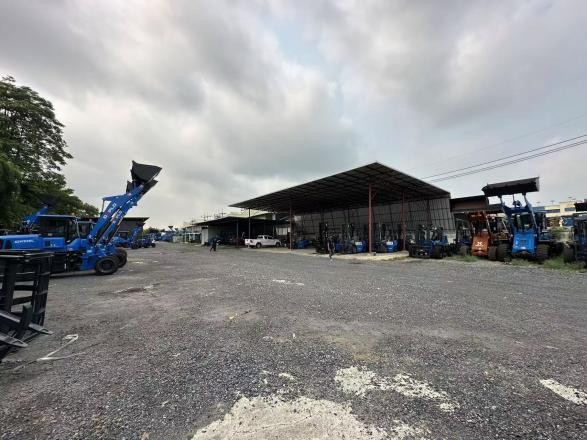
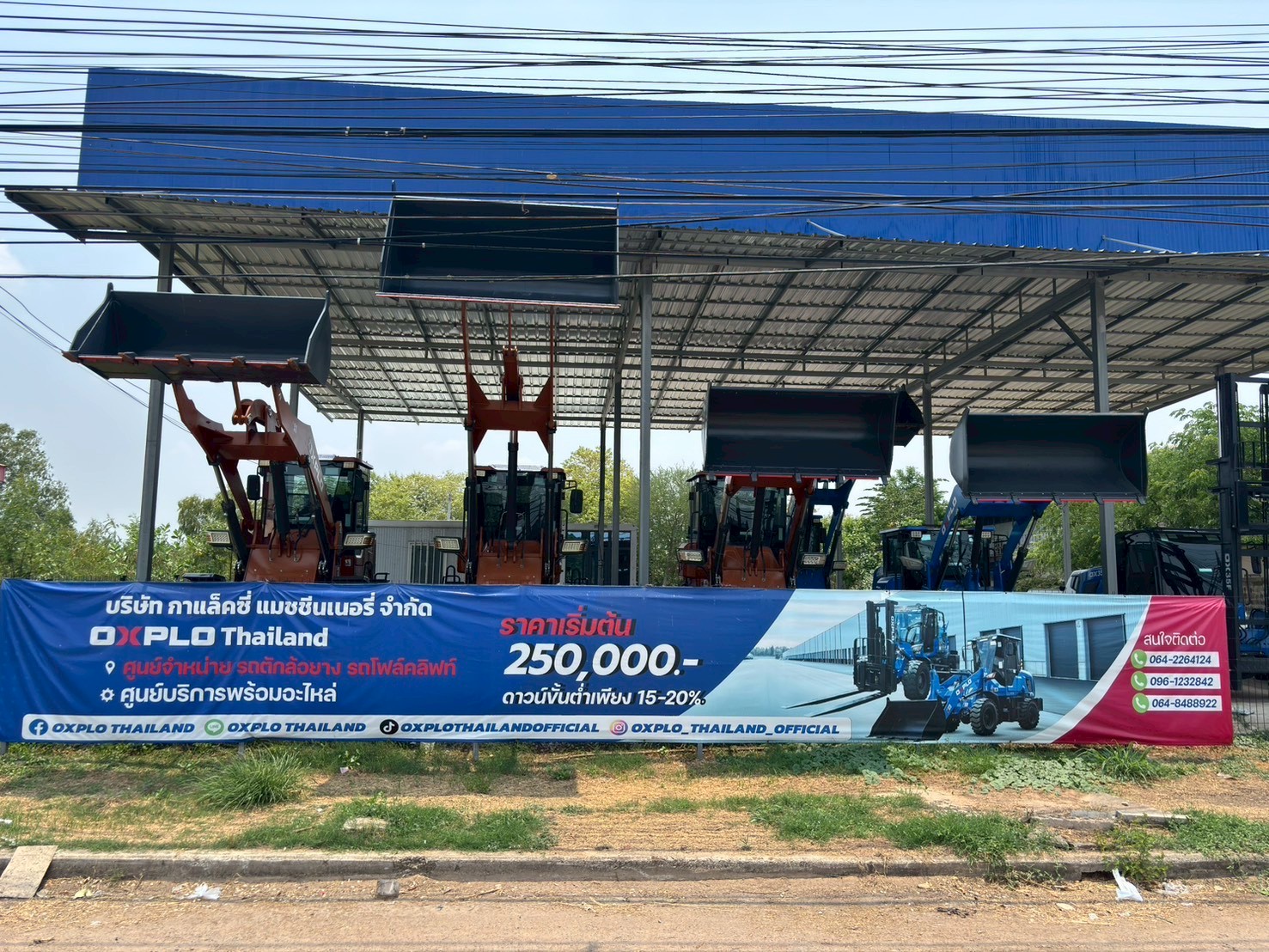
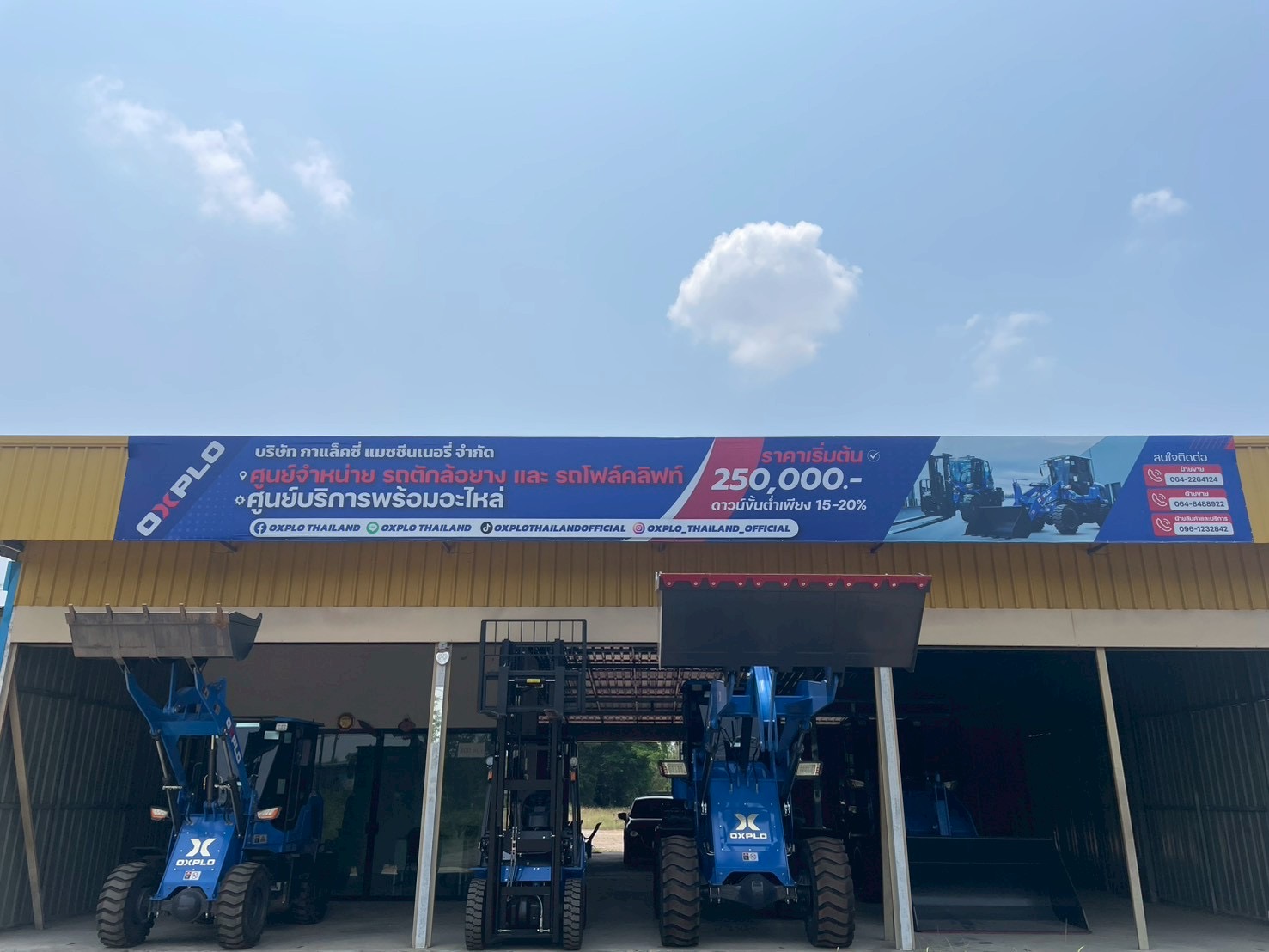
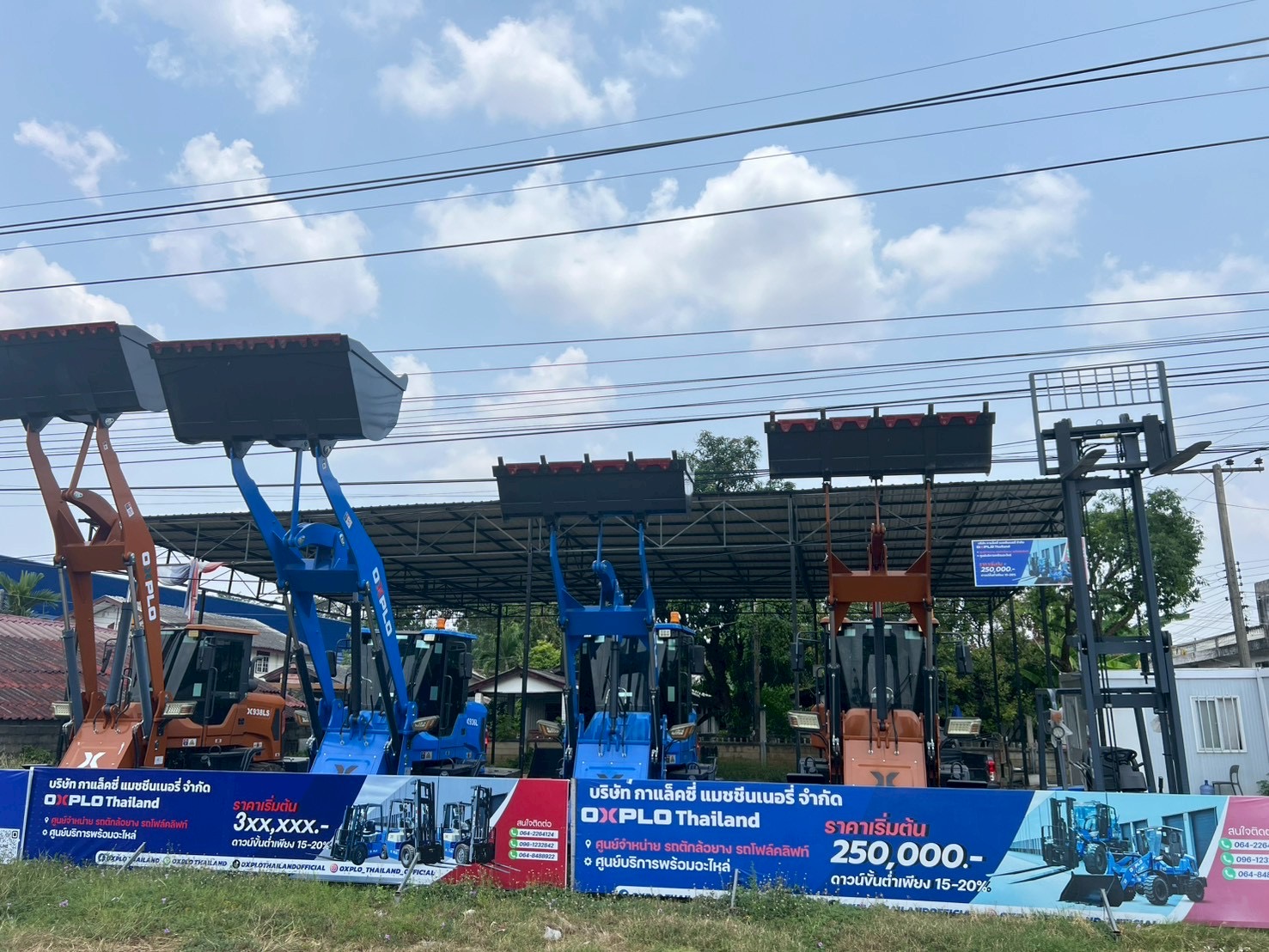
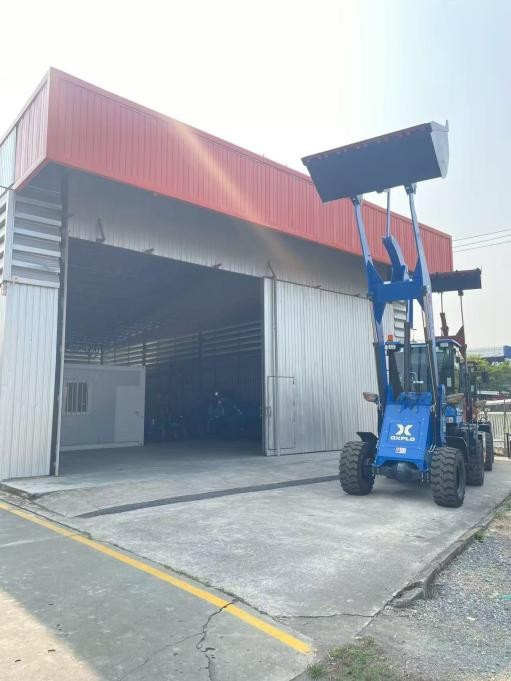
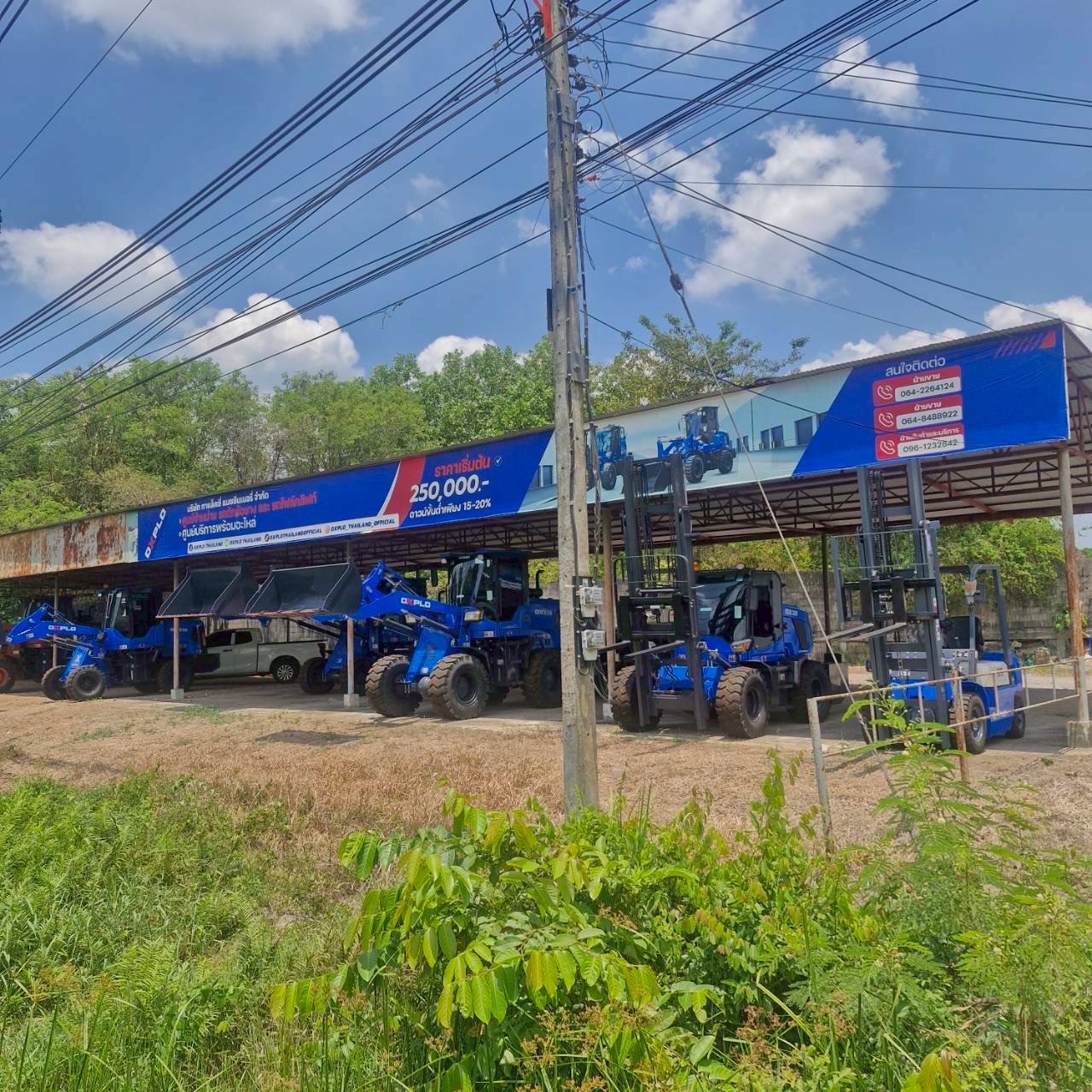
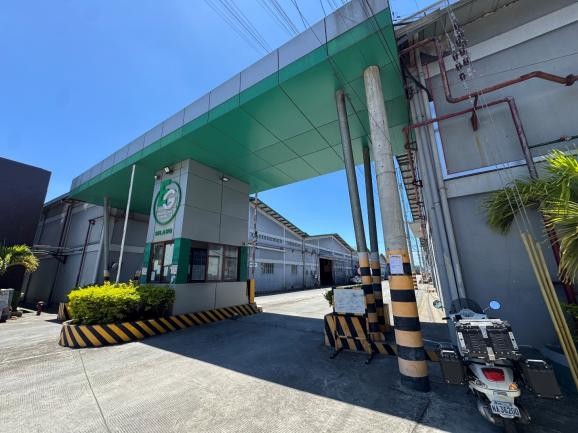
OUR OPERATiONS
Our regional headquarters are located in Thailand, with independent operations company and service team in the Philippines. This multi-market presence enables us to provide customers throughout Southeast Asia with efficient communication, faster response times, and reliable local support.


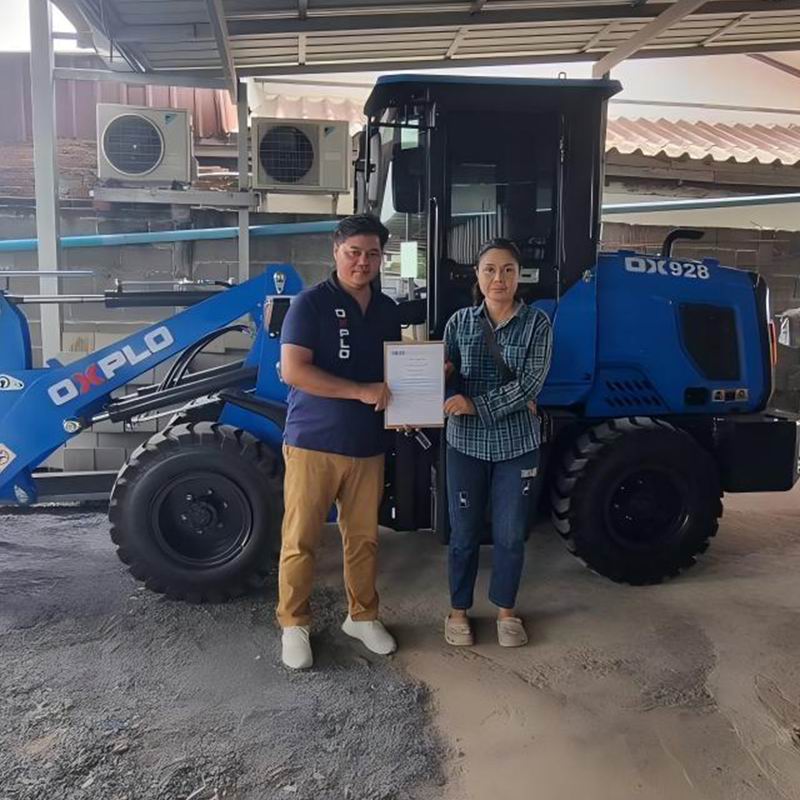
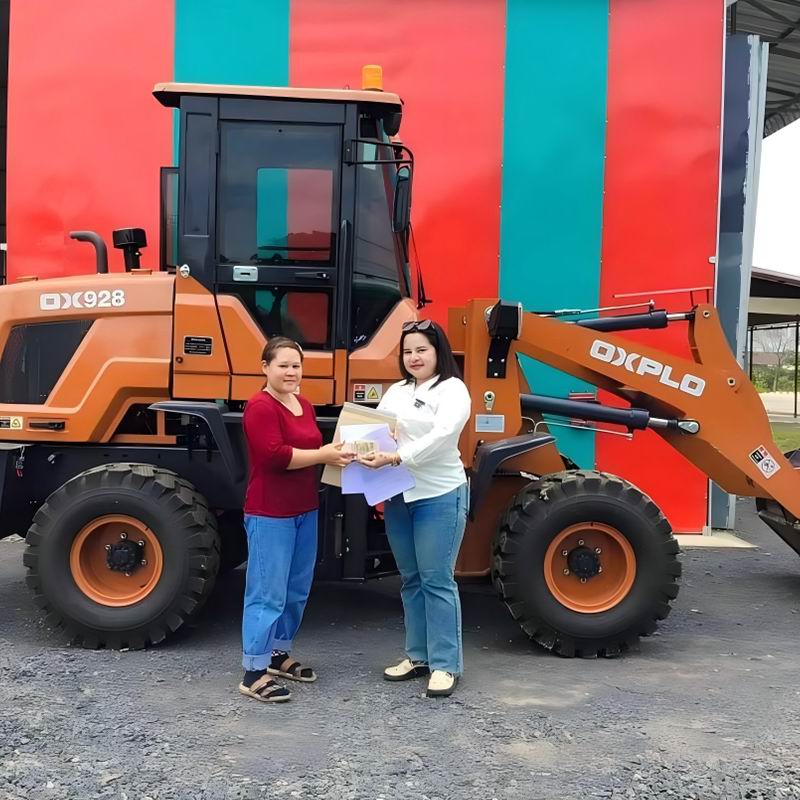
customer case
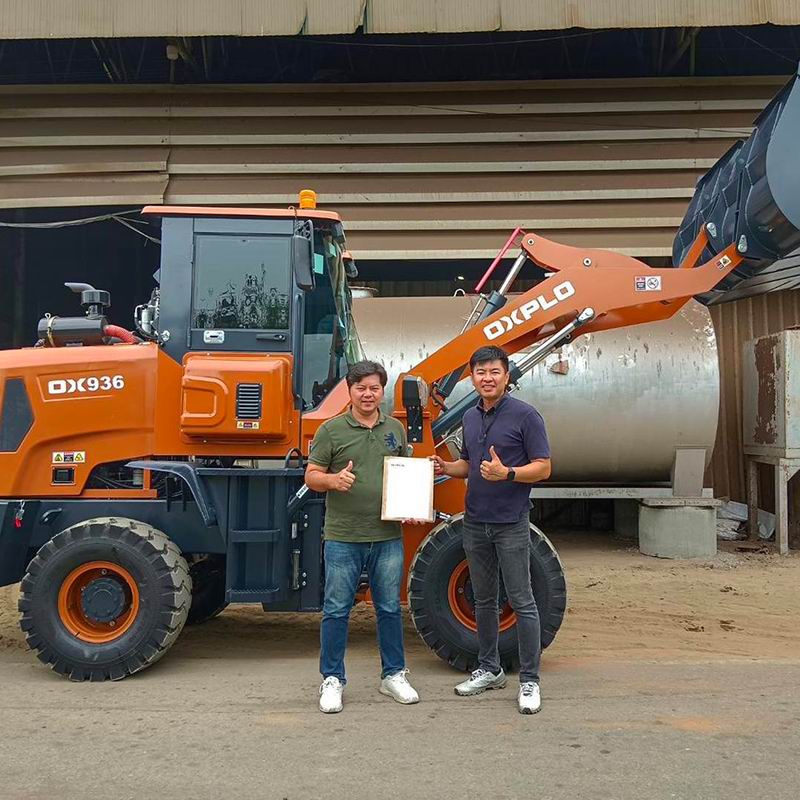
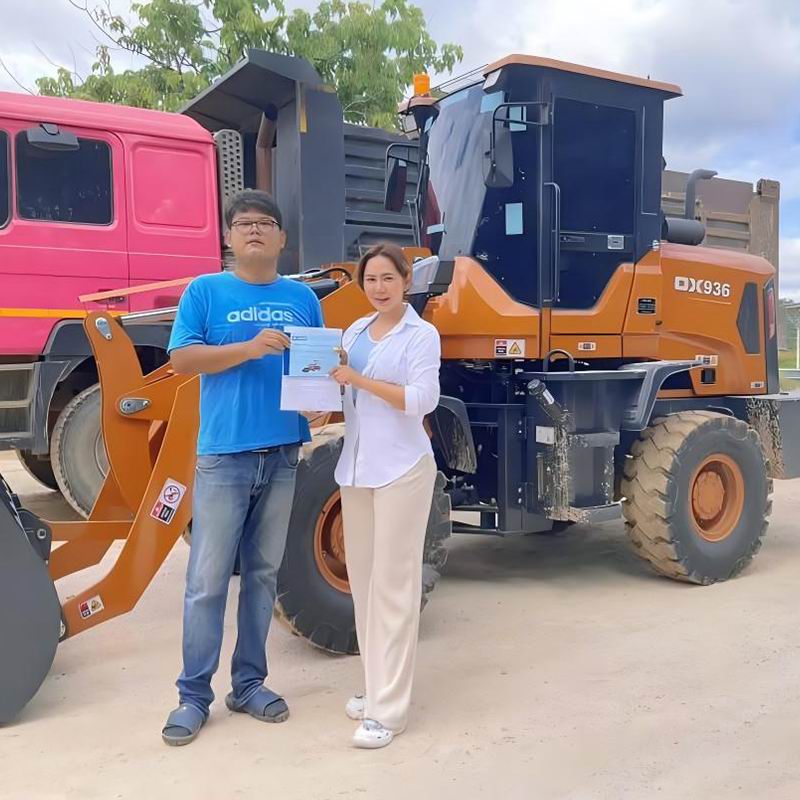
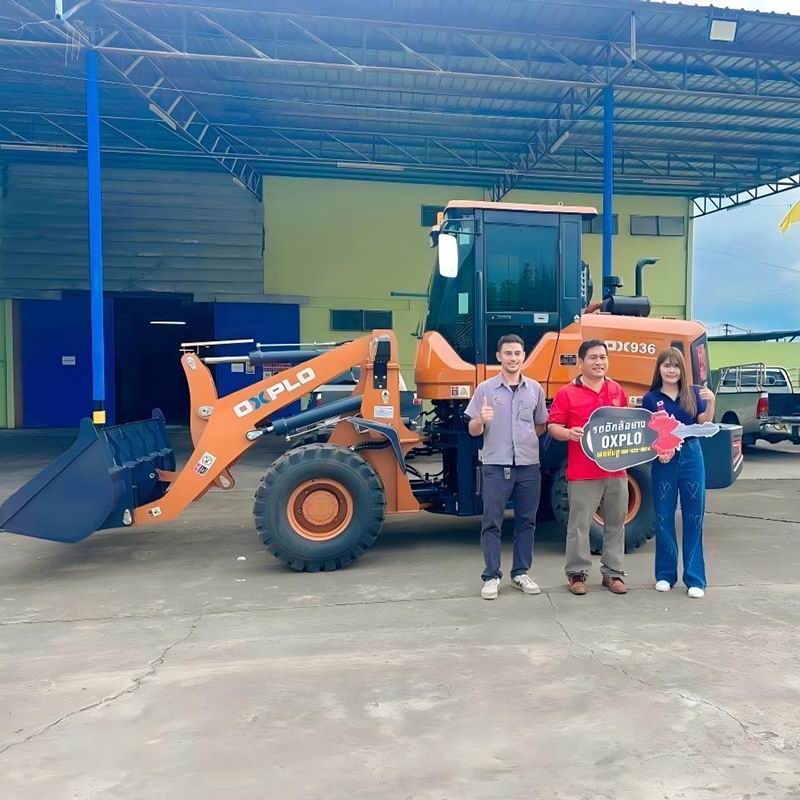
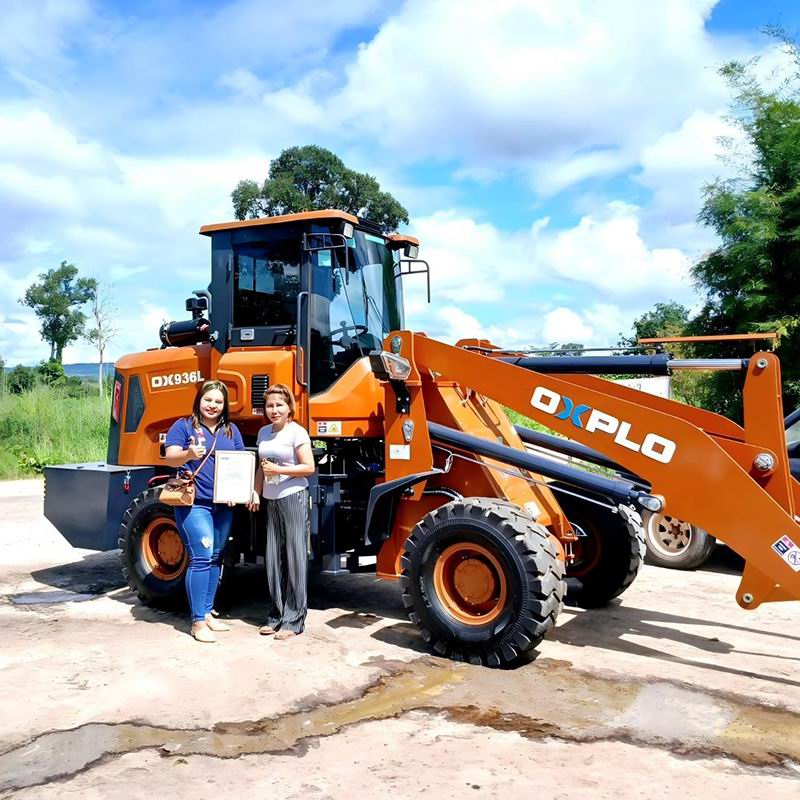
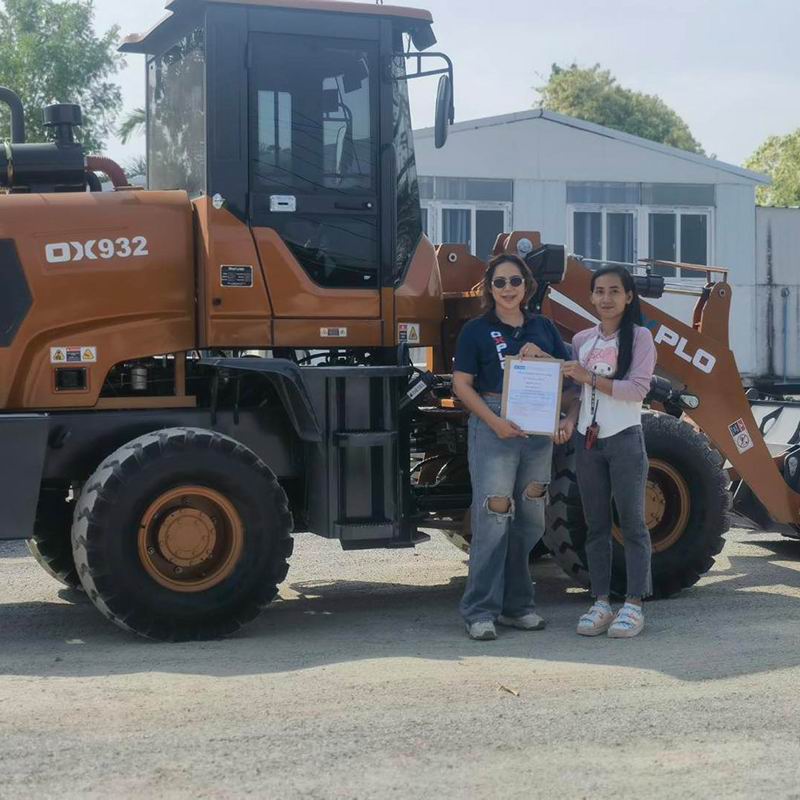
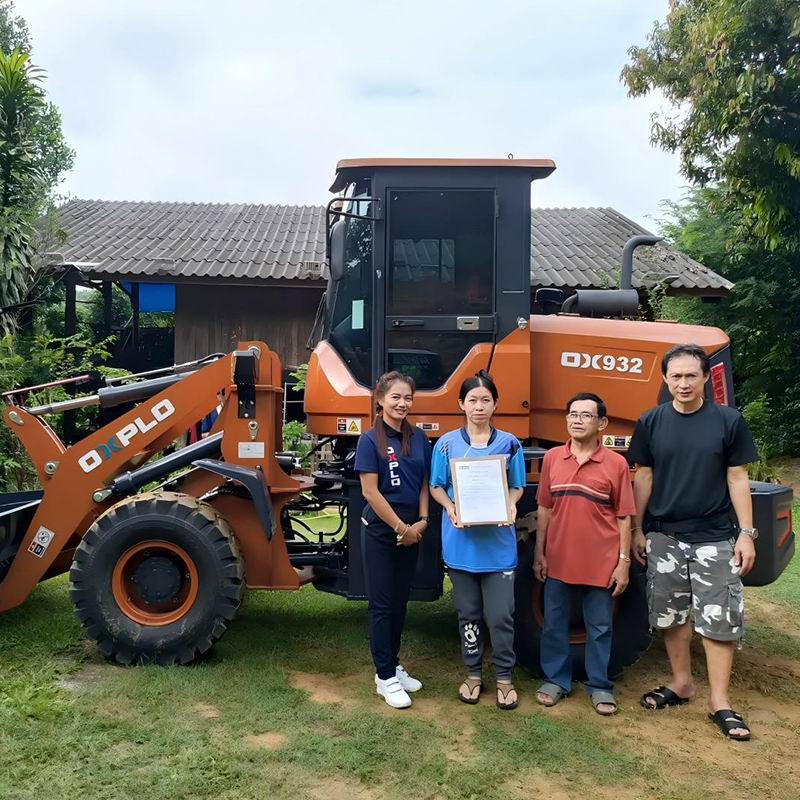
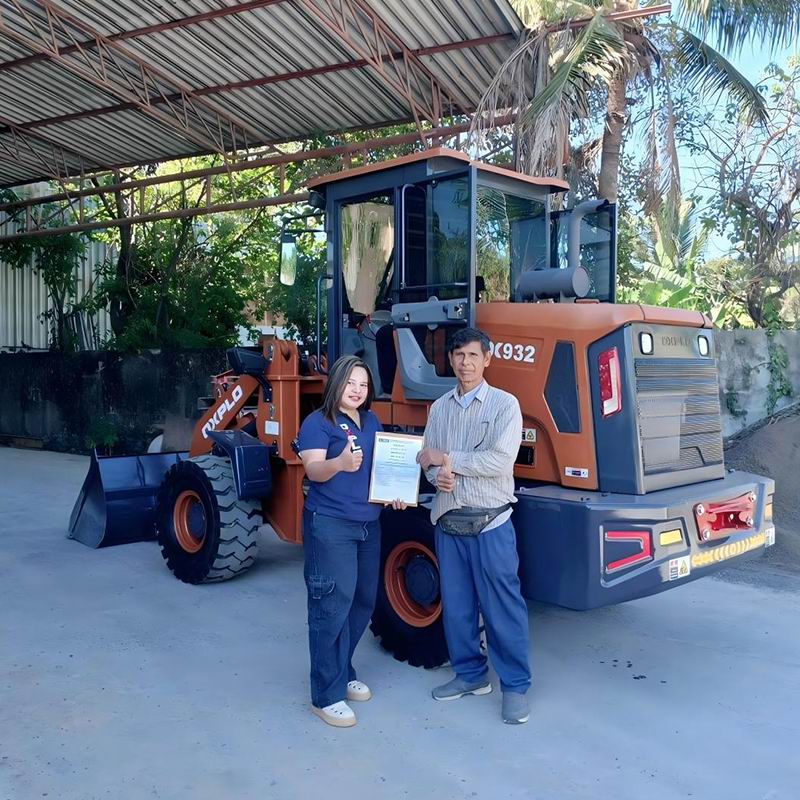
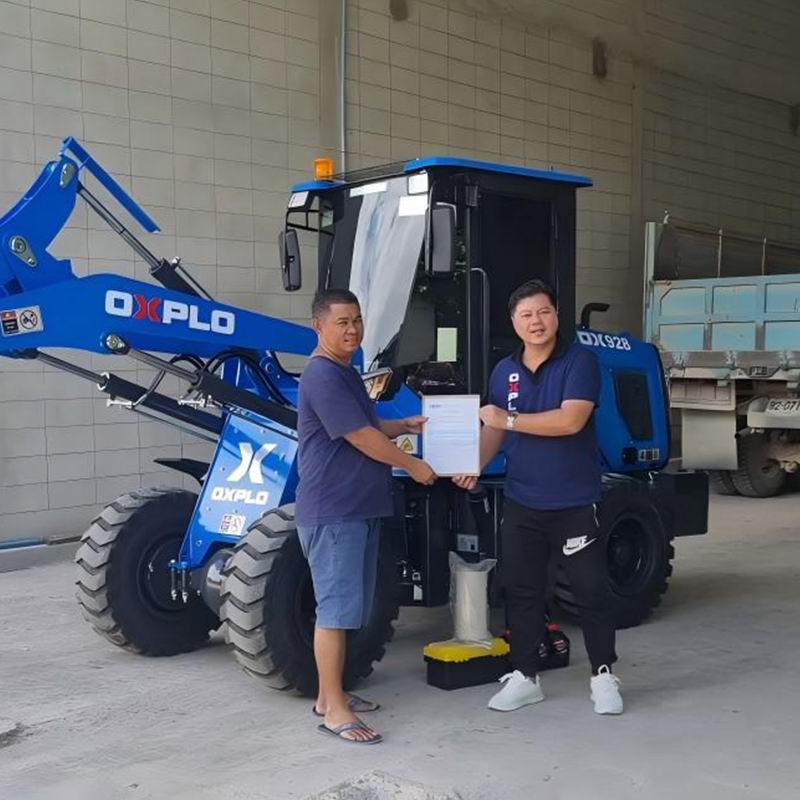
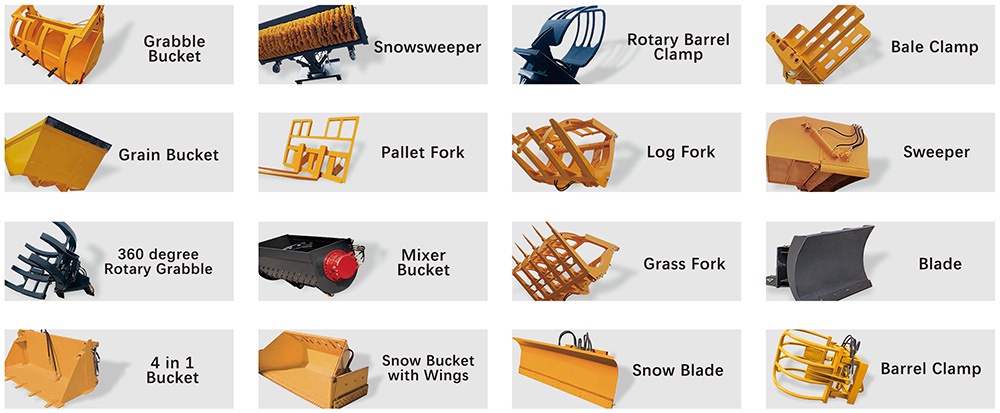
Wheel Loader Attachments
OXPLO provides a variety of spare parts support.
OXPLO's advantages
Let us introduce our products & factory to you
What makes us different
Why Choose Us
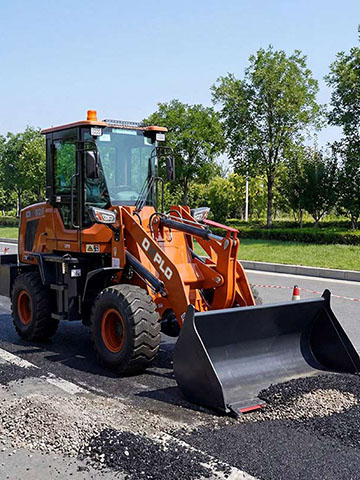
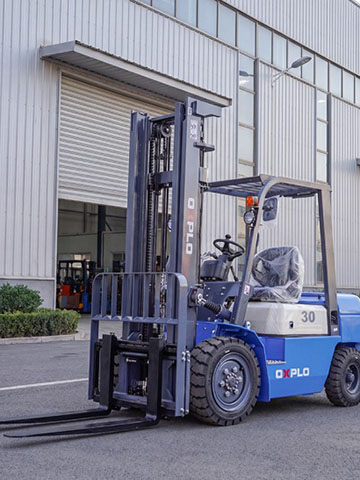
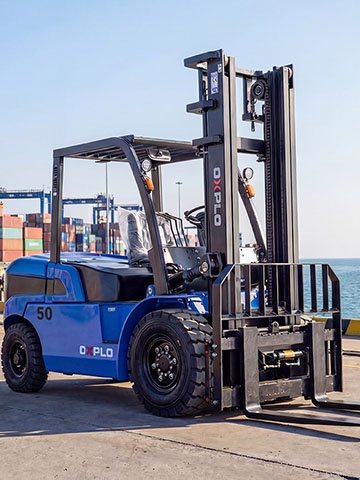
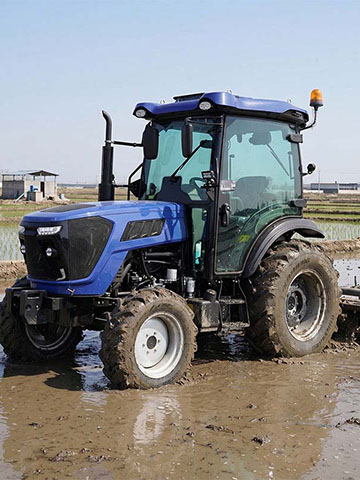
OXPLO specializes in the supply of forklifts, wheel loaders and tractors, providing reliable machinery solutions for material handling, construction and agricultural industries
Thailand Headquarters & SEAN Regional Operations
Headquartered in Thailand, with established firms and local service teams in the Philippines.
Reliable After-Sales & Spare Parts Support
We offer full after-sales care, including maintenance support and spare parts supply.
Factory Direct Supply
Direct factory operation ensures superior quality and a stable supply.
Quick Response & Service
Our local SEAN teams deliver rapid response, on-site service and expert technical help.
High-Performance Equipment
Built for tough jobs, our gear delivers robust power, steady performance and efficiency.
Application Scenarios
Our products are widely used in various fields such as warehousing,
construction, municipal roads, agriculture
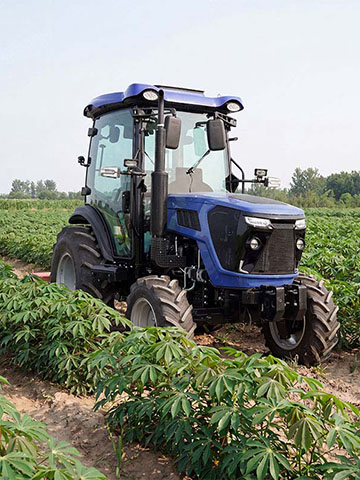
about OXPLO
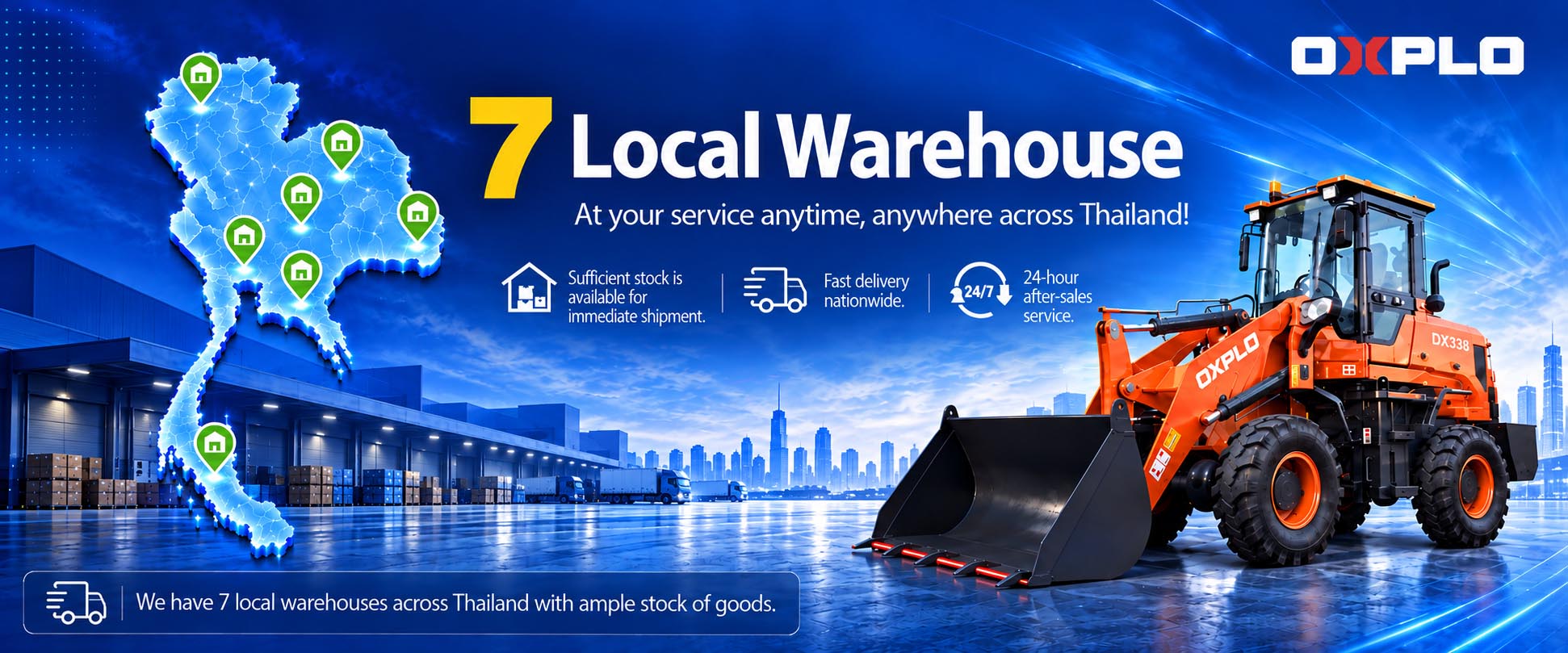
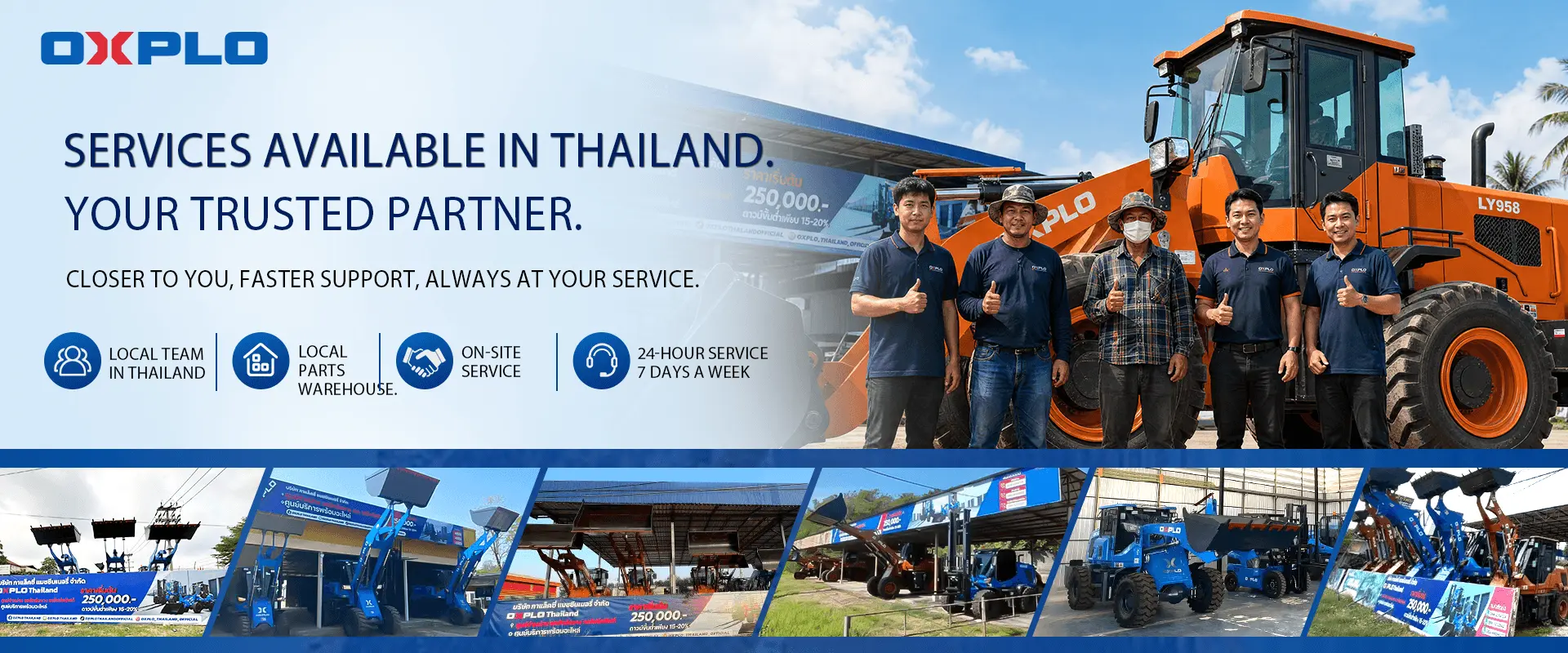
OXPLO is headquartered in Vannok District, Ayutthaya Province, Thailand, with five new branch offices in Khon Kaen, Nakhon Ratchasima, Ubon Ratchathani, Chiang Mai, and Phatthalung Provinces. The company's core competitive advantage lies in its "fast and efficient after-sales service and on-site problem-solving capabilities." OXPLO provides a comprehensive service guarantee system. Having cultivated the Thai market for many years, OXPLO not only provides excellent loaders, industrial forklifts, and off-road forklifts, but also offers one-stop service from procurement financing to after-sales support through comprehensive local support.







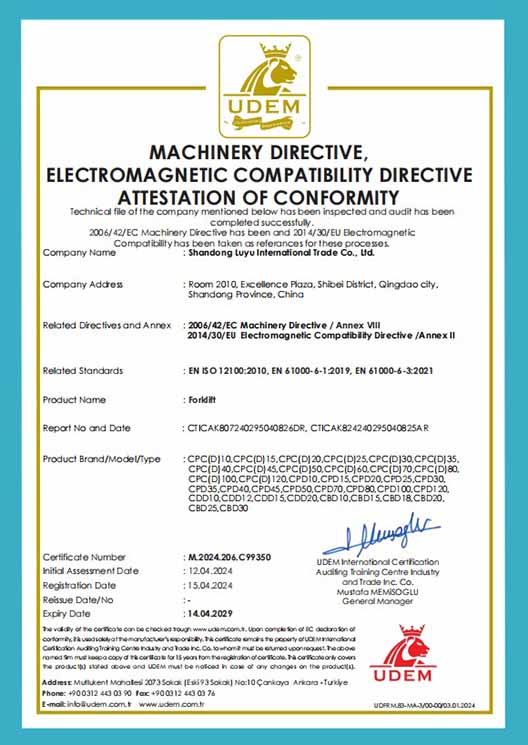
OUR CERTIFICATE
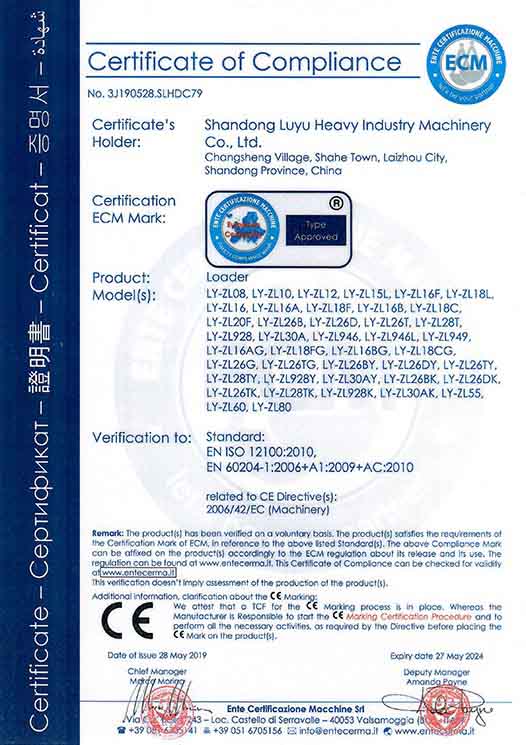
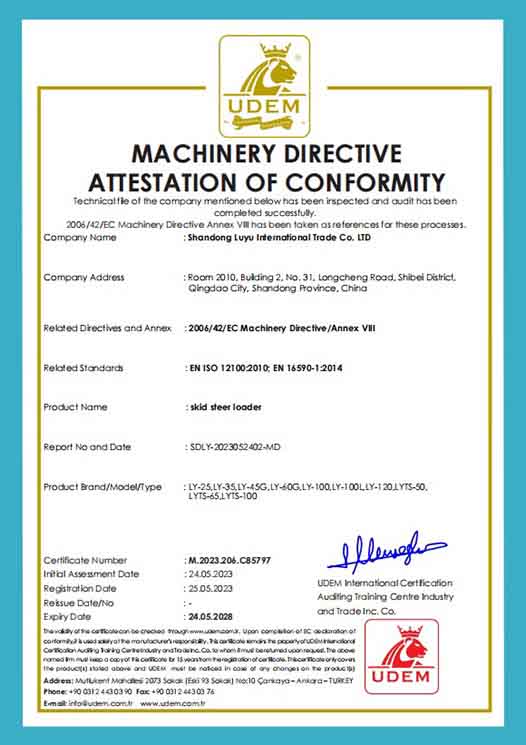
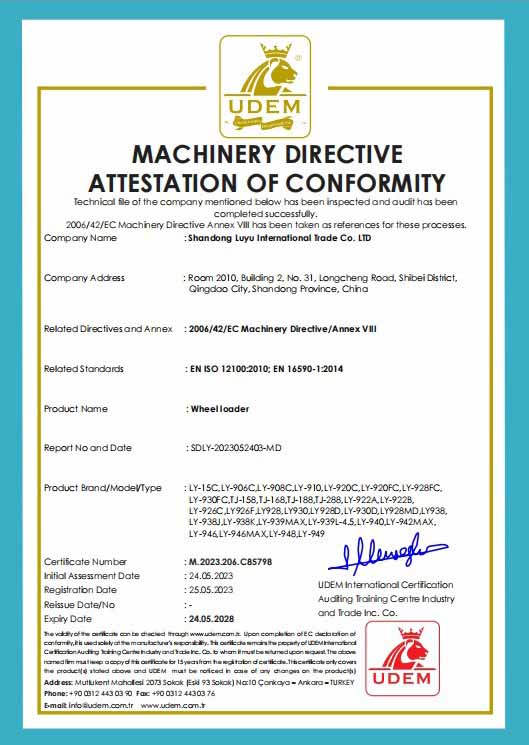
Wheel Loader FAQ
How much does a wheel loader cost?
The cost of a wheel loader varies depending on its rated load capacity, engine configuration, attachments, and optional features. Compact wheel loaders generally cost less than larger construction models. For an accurate quotation, contact OXPLO with your application requirements, preferred specifications, and destination country.
What is the fuel consumption of a wheel loader?
Fuel consumption depends on the loader size, engine power, operating conditions, and workload. Compact wheel loaders typically consume less fuel than larger models used in heavy-duty construction. Proper maintenance, efficient operating practices, and selecting the right machine size can help reduce fuel costs and improve productivity.
What is the lifting capacity of a wheel loader?
A wheel loader's lifting capacity is determined by its rated load. OXPLO offers wheel loaders with rated load capacities ranging from approximately 1.6 tons to 5 tons, making them suitable for agriculture, construction, material handling, and industrial applications. Always select a machine with sufficient capacity for your intended workload.
Can a wheel loader be used with pallet forks?
Yes. Many OXPLO wheel loaders can be equipped with pallet forks through a quick coupler system. This allows the machine to handle palletized goods, construction materials, agricultural products, and warehouse cargo, making it a versatile alternative to dedicated material handling equipment in certain applications.
How often should a wheel loader be serviced?
Regular maintenance is essential for maximizing machine performance and lifespan. Daily inspections should include checking engine oil, hydraulic fluid, coolant levels, and tire condition. Scheduled maintenance intervals vary by model and operating hours, but following the manufacturer's maintenance guidelines can help prevent unexpected downtime and costly repairs.
What is the difference between a wheel loader and a skid steer loader?
The primary difference is size, lifting capability, and maneuverability. Wheel loaders generally offer higher lifting capacities, larger buckets, and better performance for moving bulk materials over longer distances. Skid steer loaders are more compact and excel in confined spaces where tight turning and versatility are required. The best choice depends on your job site conditions and application needs.
What engine brands are available on OXPLO wheel loaders?
OXPLO wheel loaders are available with different engine configurations depending on the model and market requirements. Engine options may include reliable diesel engines designed to deliver strong performance, fuel efficiency, and easy maintenance. Please contact our sales team for specific engine options available in your region.
Do you provide operator training and technical support?
Yes. OXPLO provides after-sales support and technical assistance to help customers operate and maintain their equipment efficiently. Our team can offer guidance on machine operation, routine maintenance, troubleshooting, and spare parts support to ensure long-term reliability and productivity.